

For the past decade, healthcare providers have watched prior authorization evolve from a tool to control costs into a system that actively delays necessary care.
A prior authorization virtual assistant trained in healthcare workflows and payer policies can dismantle this bottleneck entirely but only if they're built for healthcare, not just hired as administrative help.
This article reveals what real healthcare providers face, why generic solutions fail, and how specialized prior authorization healthcare virtual assistant deliver measurable results for your practice.

KEY TAKEAWAYS: What This Article Covers
- Prior authorization delays patient care in 93% of practices and consumes 5–15 hours/week—costing practices $19,500–$44,200 annually per physician in lost staff productivity.
- A specialized prior authorization virtual assistant achieves 95% first-submission approval rates, reduces denial rates from 20% to 5%, and recovers $720,000+ annually for practices submitting 200 PAs per month.
- Real problems: clinical expertise gaps, slow onboarding, HIPAA risk concerns, and communication breakdowns— addressed by Wishup's vetting (top 0.1%), training (120+ AI tools), deployment (60 minutes), and managed oversight.
- Oncology, cardiology, pain management, and orthopedic practices face the highest PA burden; treatment delays in these specialties directly harm patient outcomes, not just finances.
- Wishup's prior authorization VAs differ: US-trained, HIPAA-trained, 36-month retention, quick replacement guarantee, 5-minute response times, and peer oversight—not a commodity service.
The Prior Authorization Crisis Is Crushing Your Practice (And Harming Patients)
In November 2025, a patient with rheumatoid arthritis wrote: "I have been without my meds for 3 months. My doctor of 20 years is just as frustrated with the runaround. The insurance company said my prior authorization request wasn't sent, yet I submitted it 3 times."
This is not an outlier. This is the baseline.
The American Medical Association's 2024 physician survey reveals the scale: Physicians complete an average of 39 prior authorizations per week, spending 13 hours on the process. For specialty practices, the number is higher—often 20+ hours weekly.
What This Means for Your Practice:
- At $25/hour staff cost: $19,500–$44,200 annually lost per physician to prior authorization paperwork
- 93% of physicians report PA delays care; 89% say it contributes to burnout
- 24% of physicians have witnessed a prior authorization delay lead to a serious adverse event (hospitalization, permanent impairment, or death)
Source: American Medical Association 2024 Prior Authorization Survey
What Is Prior Authorization & Why It's Your Problem
Prior authorization is the process of getting approval from a patient's insurance company before providing certain medical treatments, procedures, or medications. It's meant to prevent unnecessary care.
In reality, it's a massive workflow burden that delays patient treatment and wastes your staff's time.
Why This Matters For Your Practice
- Patient Delays: Pending prior auth approval = delayed treatment = unhappy patients
- Staff Frustration: Your team spends hours on phone calls with insurance instead of patient care
- Revenue Loss: Denied authorizations = no reimbursement = lost income
- Compliance Risk: Incorrect documentation = audit risk
- Operational Chaos: No system for tracking pending approvals = bottlenecks
How long does prior authorization take?
Standard requests are generally decided within 7 calendar days, and
expedited requests within 72 hours, under the CMS prior authorization
response rules that took effect for impacted payers in January 2026.
Medicare Advantage has long run on 14 days standard and 72 hours
expedited. Commercial plans vary, and a number of states set their own
tighter deadlines.
Those are the deadlines. The lived timeline is usually longer, and the
gap is where practices lose weeks.
Where the time actually goes
Before submission — hours to days. Assembling the chart notes,
confirming the diagnosis supports the order, checking eligibility is
still active, and documenting failed prior therapies. Nothing starts
until this is complete, and an incomplete packet restarts the clock
rather than pausing it.
The payer's clock — 72 hours to 14 days. This is the only part with
a published deadline, and it's the part practices worry about most.
Requests for additional information — the hidden delay. A payer
asking for one more note doesn't extend the deadline; in practice it
resets it. Answering within 24 to 48 hours is what keeps a 7-day
approval from becoming a 3-week one.
Denial and appeal — 30 to 180 days. Internal appeals typically run
30 to 60 days, expedited appeals 72 hours where the delay would
jeopardise the patient. External review adds more.
Expiry and reauthorization. Approvals carry a validity window.
An approval that lapses before the procedure is scheduled means
starting over.
What Does a Prior Authorization Virtual Assistant Do?
A prior authorization virtual assistant owns five core responsibilities across the approval lifecycle:
- Submission and documentation
- Payer follow-up
- Denial management and appeals
- Pharmacy and procedural authorizations
- Tracking and reporting
Here is the complete prior authorization workflow management that can be handled by your virtual assistant:
Request Submission & Documentation
- Review provider documentation for completeness and FDA/NCCN guideline compliance
- Check patient insurance coverage and verify eligibility
- Gather all required clinical information from EHR
- Ensure diagnosis supports treatment ordered
- Submit request through insurance portals or electronic prior authorization systems
- Maintain detailed records of submission date, reference numbers, and contacts
Insurance Communication & Follow-Up
- Navigate multiple payer portals and submission systems
- Communicate with insurance representatives to clarify requirements
- Follow up on pending authorizations daily
- Escalate urgent cases to expedited review
- Maintain detailed communication logs
- Respond to insurance requests for additional information within 24-48 hours
Denial Management & Appeals
- Identify reasons for denial (medical necessity, documentation, coverage)
- Review insurance policy to understand appeal requirements
- Prepare appeals with additional clinical evidence
- Submit appeals within insurance timelines (usually 30-180 days)
- Track appeal status until resolution
- Escalate denials to care team for clinical input
Prescription Drug & Pharmacy Authorizations
- Navigate pharmacy benefit manager (PBM) portals
- Submit medication prior authorizations
- Manage step-therapy and formulary exception requests
- Track prescription coverage and patient cost-sharing
- Communicate with pharmacies on authorization status
- Help patients access medications during authorization delays
Procedural Authorization Management
- Submit authorizations for surgeries, imaging (MRI, CT), injections, ablations
- Verify medical necessity documentation
- Manage pre-authorization for facility fees
- Track multiple authorizations for complex cases
- Coordinate with hospitals/surgical centers on authorization confirmation
Documentation & Tracking
- Document all interactions in EHR system
- Maintain spreadsheet tracking of pending authorizations (status, timeline, contacts)
- Create daily/weekly reports of pending, approved, and denied authorizations
- Alert care team of expiring authorizations
- Maintain compliance records for audits
You can outsource medical billing virtual assistant services from Wishup.
Why Your Staff Shouldn't Be Doing This
❌ Your Staff Handling Prior Auth
- Takes 5–15 hours/week
- Pulls them from patient care
- Inconsistent documentation
- Higher denial rates (40–50%)
- Burnout from repetitive work
- No specialized training
- Delayed approvals = patient complaints
✔ Prior Auth VA
- Specialist in PA workflows
- Your staff focuses on patients
- Consistent, accurate documentation
- 95% first-submission acceptance
- Happy, engaged VA
- HIPAA trained & certified
- Faster approvals = patient satisfaction
What Are the Benefits of Hiring a Prior Authorization Virtual Assistant?
A prior authorization virtual assistant delivers four measurable benefits: higher first-submission approvals, reclaimed physician hours, faster patient treatment, and recovered revenue.
- Approval rates rise from ~80% to 95% on first submission: For every 100 authorizations, that is 15 additional approvals without an appeal cycle.
- 13 to 20 hours per physician per week return to patient care: At $25/hour staff cost, that is $19,500 to $44,200 annually per physician that stops going to paperwork.
- Patients start treatment sooner: 93% of physicians report PA delays care and 24% have seen a delay cause a serious adverse event. Daily follow-up compresses the approval window.
- Revenue stops leaking: Denial rates drop from around 20% to 5%, recovering $720,000+ annually for practices submitting 200 PAs a month.
- Burnout drops: 89% of physicians say prior authorization contributes to burnout. Removing it removes a daily source of it.
Why Prior Authorizations Get Denied (And How a VA Prevents It)
What Should You Look for in a Prior Authorization Company or Service?
The best prior authorization services combine payer-portal fluency, clinical documentation review before submission, and denial-appeal capability, not just form-filling. When comparing prior authorization companies, the differences that predict results are narrow and measurable:
- Do they review documentation before submitting? 40 to 50% of denials come from incomplete documentation, not medical necessity. A service that submits without a pre-check inherits your denial rate.
- Do they know your payers? UnitedHealth, Cigna, Aetna, Humana, CoverMyMeds, and EviCore each have different portals and rules. Generic admin support learns these on your denials.
- Do they handle appeals, or just submissions? Submission-only services leave your staff owning the hardest part.
- Is there a BAA and documented HIPAA training? Prior auth work touches PHI on every request.
- What happens when they are unavailable? A solo contractor on leave means authorizations stall and treatments delay.
- VAs are trained on major payer portals and 30+ EHRs before placement, review documentation against payer policy pre-submission (producing a 95% first-submission approval rate against the ~80% industry average),
- handle appeals end to end,
- work under an organizational BAA, and
- include backup coverage plus quick replacement, from $1,299/month with no long-term contract.
Why Wishup's Prior Authorization VAs Deliver Different Results
Wishup's hiring, training, deployment, and managed-service model produce measurable outcomes: 95% approval rates, 5-minute response times, $720K+ annual recovery for larger practices.
We Hire Elite Talent, Not Just Anyone Available
Top 0.1% Vetting (Not Top 2%)
Industry standard: "We hire top 2% of applicants." Wishup goes deeper. Our 6-step, in-person vetting process filters ruthlessly:
- ✓College graduate or equivalent professional background
- ✓Aptitude-tested at 99th percentile for accuracy and speed
- ✓Healthcare knowledge verification (not generic admin background)
- ✓Personality & communication fit (healthcare requires patience under stress)
- ✓Professional reference checks (no surprises 6 months in)
- ✓3.7 years retention (unlike freelancers who disappear)
We Train Obsessively in Healthcare Operations
120+ AI Tools & Healthcare-Specific Workflows
After hiring, every Wishup VA undergoes:
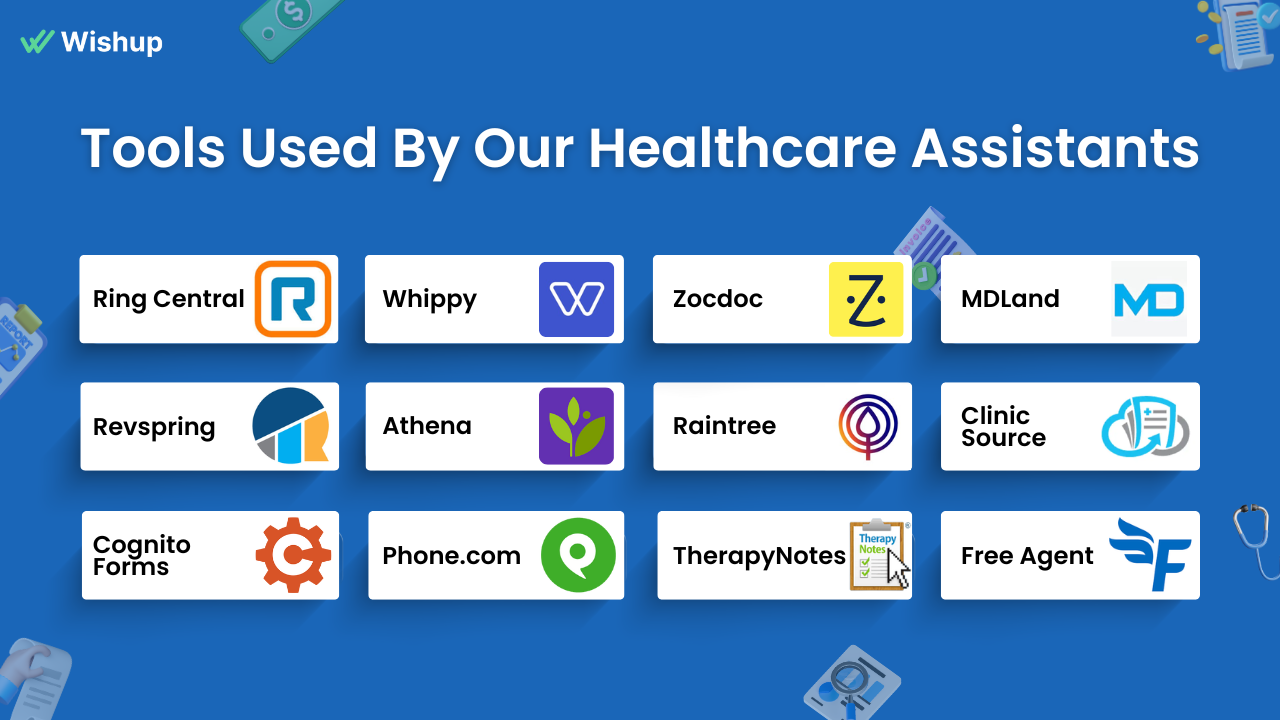
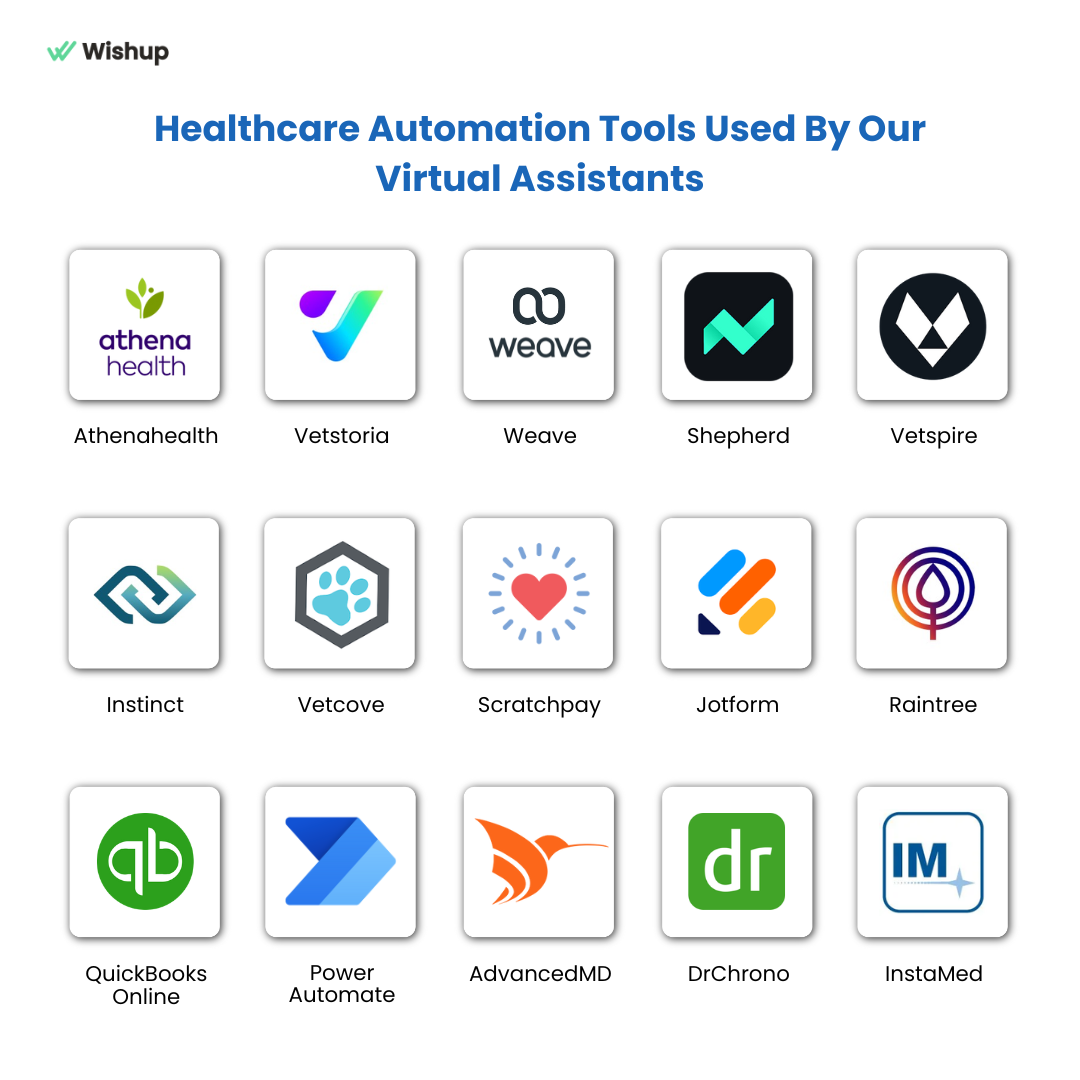
- ✓ Payer portal training: UnitedHealth, Cigna, Aetna, Humana, Medicare, Medicaid, CoverMyMeds, EviCore, Magellan
- ✓ AI tool proficiency: ChatGPT for documentation, Apollo for research, RingCentral for communication, N8N for workflow automation
- ✓ EHR mastery: Epic, NextGen, AdvancedMD, Athenahealth, Kareo, TherapyNotes
- ✓ Healthcare communication: How to speak to payers professionally, escalate appropriately, document clinical nuance
- ✓ Denial analysis: Why claims are denied, which denials are worth appealing, which to resubmit vs. escalate
- ✓ Specialty knowledge: CPT codes, ICD-10 coding, step-therapy protocols, specialty-specific payer policies
We Deploy in 60 Minutes (Not 6 Weeks)
Fastest Onboarding in Healthcare Operations
Most VA agencies: 2 weeks recruiting + 2 weeks training + 2 weeks integrating = 6 weeks before first meaningful work
Wishup model: 60 minutes from acceptance to first day working
How:
- ✓ Your VA is already trained in healthcare before matching (no weeks of generic onboarding)
- ✓ Unlimited same-day interviews with pre-vetted candidates at no cost
- ✓ No recruiter middleman; you speak directly with the person working for you
- ✓ Upon hire, your VA logs in and starts on pending PAs the same day
- ✓ Your team briefs them on practice-specific workflows; they’re productive immediately
We Manage the Talent So You Don't
Full Managed Service (Weekly QA, Replacement Guarantee, CSM Support)
Hiring is one problem. Keeping them effective is another.
- ✓ Weekly QA reviews by your dedicated VA manager checking submission accuracy, denial analysis, communication quality
- ✓ Fortnightly SOP adherence checks ensuring consistency across all submissions
- ✓ Monthly check-ins with your Customer Success Manager to discuss performance, adjust workflows, address concerns
- ✓ Quick replacement guarantee: Quick replacement if your VA isn’t working out, at no additional cost
- ✓ Backup coverage when your primary VA is on leave (no work stops)
- ✓ First-task completion guarantee (we stand behind the work quality)
- ✓ Free lifetime access to Wishup Workforce Management App (live monitoring, reporting, task tracking)
Real Results: What This Actually Produces
95% First-Submission Approval Rate
Industry average: 80% approval rate on first submission. Wishup: 95%. The difference: our VAs review submissions against payer policies before submission, catching errors that would trigger denials. For every 100 PAs, you recover 15 additional approvals vs. industry average.
5-Minute Response Time (Working Hours)
Your providers and staff need status updates. Instead of waiting until end of day or next morning, they get answers within 5 minutes. This eliminates the frustration of "I don't know where the authorization is."
Daily EOD Reports
Every afternoon, you receive a report showing: submitted (with status), approved, pending, denied, and appealed authorizations. You know exactly what's happening in real time. No surprises.

What Does a Prior Authorization Virtual Assistant Cost?
A prior authorization virtual assistant costs $1,299 to $1,999 a month through a managed service, against $52,000 to $60,000 a year for an in-house authorization coordinator once benefits and payroll taxes are counted.
| Option | Monthly | Annual | What it includes |
|---|---|---|---|
| Wishup prior auth VA, part-time | $1,299 | $15,588 | Payer portal training, EHR access, appeals handling, account manager, backup cover |
| Wishup prior auth VA, full-time | $1,999 | $23,988 | Same, at 160 hours a month |
| In-house authorization coordinator | ~$4,500 | ~$54,000 | Salary, benefits, payroll taxes, equipment, recruitment |
The comparison that actually matters is not the salary. At 39 prior authorizations per physician per week, a practice with three physicians is running roughly 470 authorizations a month. The question is what the denial rate on those is, and what an avoidable denial costs in rework and delayed reimbursement.
FAQ: Real Questions Healthcare Practices Ask
What is a prior authorization virtual assistant?
A prior authorization virtual assistant is a trained remote specialist who owns the insurance approval cycle for a medical practice: submitting requests through payer portals, chasing pending authorizations daily, managing denials and appeals, and tracking approvals through to expiry. They work inside your EHR and your payers' systems rather than doing general admin.
They do not make clinical decisions. Medical necessity determinations and treatment choices stay with your providers. The VA assembles the documentation that supports those decisions and gets it through the payer's process.
How do you ensure HIPAA compliance without full-time monitoring?
All our healthcare virtual assistants are HIPAA-trained and sign Business Associate Agreements. We use encrypted platforms, secure EHR access, and monitored workflows. Your VA isn't "trusted" alone—they're bound by legal agreements and system monitoring. We maintain cyber insurance covering data breaches. Plus, you have access to access VAs logs anytime, so you audit yourself if needed.
What if my EHR is unique or less common?
We work with 30+ EHR tools including Epic, NextGen, AdvancedMD, Athenahealth. If yours is less common, we can usually integrate via workarounds (e.g., importing PA lists, manual updates). We discuss this during your demo.
How long until we see a reduction in denials?
You'll see reduced internal phone calls about PA immediately. Denial rate improvements take 2–4 weeks as your VA learns your payer mix, provider documentation patterns, and specialty-specific policies. Revenue impact (higher approval rates, fewer appeals) becomes measurable within 4–8 weeks.
Do you require long-term contracts?
No. We offer month-to-month arrangements. We don't lock you in because our results speak for themselves.
How long does a prior authorization typically take?
Most prior authorizations are approved within 1-3 business days. However, complex cases or appeals can take 7-30 days. With a dedicated prior auth VA, you get daily follow-up to expedite approvals. Urgent cases can often be expedited to 24-hour approval if medically necessary.
Can a prior authorization be denied? What happens then?
Yes, denials happen (typically 20-40% without optimization, 5-10% with a trained VA). Common reasons: incomplete documentation, medical necessity question, coverage issue, or coding error. When denied, you have the right to appeal. Our VAs analyze denial reasons, gather additional evidence, and submit appeals within required timelines. Most appeals are approved on first submission with proper documentation.
Can the virtual assistant handle prior authorization for all specialties?
Yes, with proper training. We have prior authorization virtual assistants experienced in cardiology, oncology, orthopedics, surgery, psychiatry, and many other specialties. Some specialty-specific knowledge is required (e.g., cancer protocols for oncology), so during onboarding we pair your VA with your clinical team to ensure they understand your specific requirements.
What happens to prior authorizations that are about to expire?
Your VA tracks all authorization validity dates and alerts your team 2-3 weeks before expiration. If reauthorization is needed, the virtual assistant proactively submits it so there's no gap in coverage. This prevents treatment delays due to expired approvals.
Do you sign a BAA before touching patient data?
Yes, always. It's legally required whenever an outside party handles patient data, and we treat it that way. Your legal team can adjust our standard BAA to add any state-specific wording you need.
What if patient data is ever exposed?
You hear from us within 24 hours. VA access is cut immediately. You get a written report you can hand to your compliance team. If regulators need to be told, we help you through it.
How long do your VAs usually stay?
On average, 3.7 years. That matters because your patients get to know one voice instead of a rotating cast.
What won't a VA do?
Anything clinical like diagnosing, treatment decisions, crisis response, your physician does that work. Everything else like patient admin, scheduling, EMR, billing, credentialing, they can take.
Can we grow into this as we add providers?
Yes. One VA comfortably covers two providers plus admin. As you grow, we can add a second VA or a medical billing and coding specialist.
What skills and qualifications does a medical authorization virtual assistant need?
A medical authorization virtual assistant needs five core competencies:
- payer portal fluency across UnitedHealth, Cigna, Aetna, Humana, Medicare, Medicaid, CoverMyMeds, and EviCore;
- working knowledge of CPT, ICD-10, and HCPCS coding; EHR proficiency for pulling clinical documentation;
- denial analysis and appeals writing; and
- current HIPAA training.
- Soft skills matter as much, since the role requires patience under stress and professional escalation with payer representatives.
Wishup prior authorization VAs are college graduates with a minimum of three years' professional experience, drawn from the top 0.1% of applicants through a 6-step vetting process, aptitude-tested at the 99th percentile, and trained on payer portals, 30+ EHRs, and denial analysis before they are matched to a practice.
Are Wishup's prior authorization assistants HIPAA-trained?
Yes. Every Wishup prior authorization VA completes HIPAA training before placement and works under a signed Business Associate Agreement.
Access is scoped to your systems, workflows are monitored, and access logs are available for your own audits at any time.
Wishup also carries cyber insurance covering data breaches, and on offboarding, VA access is revoked immediately while patient data stays on your systems, never on Wishup's servers. For the full breakdown, see our guide on hiring a HIPAA-compliant virtual assistant.
