
According to Nucleus, brands that automate their marketing workflow earn an ROI of about $5.44 for every $1 over a three-year period. A modest financial commitment in return for a 500% yield is always a good deal, no matter how you look at it.
But here’s the problem.
While automations can scale your marketing activities, it’s also easy for you to lose control of your message. And the reason is simple. Automation makes execution fast and effortless. This tempts you to let it do the heavy lifting of your work entirely. You start relying on systems to do the thinking, not just the delivery.
Once that happens, your brand operations and messaging start to look and sound flat. Your product’s perceived value starts to fade and blend in with other brands out there. The consequence is lost sales, revenue, customers, and brand equity
To avoid that, you need a balance. Speedy volumic outputs with restraint and clarity for consistency. In this article, we’ll show you how to do that.
What Happens to Marketing When Automation Is Unguided?
The benefits of marketing automation are primarily speed, volume, and efficiency.
You ship content with GPT and other tools faster. AI trims your ad budget and adapts to the market without stopping the campaign. You hit top production in half the usual time. And automation decides who gets an email based on specific triggers.
Interestingly, trigger-based emails, whether by event or behaviour, are 42% more likely to be clicked than newsletter campaigns.
However, there’s one downside. The thrill of achieving these results often leads to lax restraint, poor oversight, and overpolished results. This is what happens after:
Inconsistent messaging
Your content team hits the blocker first because they outsource ideation, research, and writing entirely to AI, with little to no human input or proper oversight. This results in monotonous content, with some containing little but costly accuracy mistakes, from captions and scripts to marketing blog posts.
Who notices first before your dashboard? Your customers. They notice the disconnect, the inconsistency, and how your outputs seem over-polished, lacking the same feeling it initially had.
Increased customer fatigue
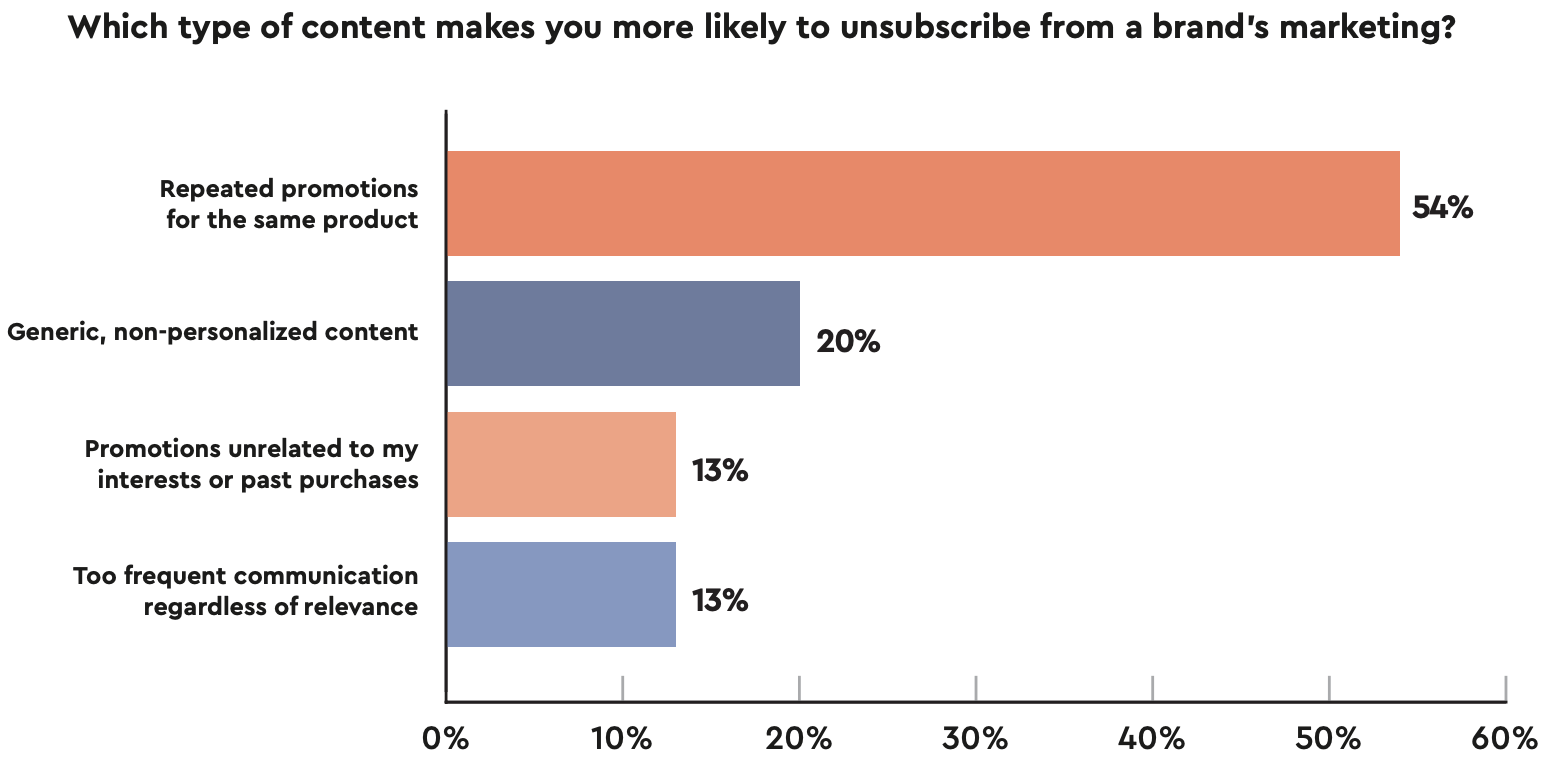
Then, your customers hit the blocker next. Automation gives you the super muscle to blast your customers with emails. But too many of those emails are unnecessary in the first place. According to Optimove’s consumer marketing survey, over 70% of the respondents have unsubscribed from at least three brands in the last three months.
And guess what? 54% ditched a brand’s newsletter because the brand bombarded them with repeated promotions for the same product. That’s the result of, “Oh yeah, configure the tool to send an email every three days if they don’t respond.”
Eroded long-term trust
Automation has gotten better since AI came in. However, over 46% of consumers say they would perceive a brand that uses AI to generate content negatively, and 43% would likely choose not to buy from that brand. Maybe it’s time to say bye-bye to GenAI? Not really.
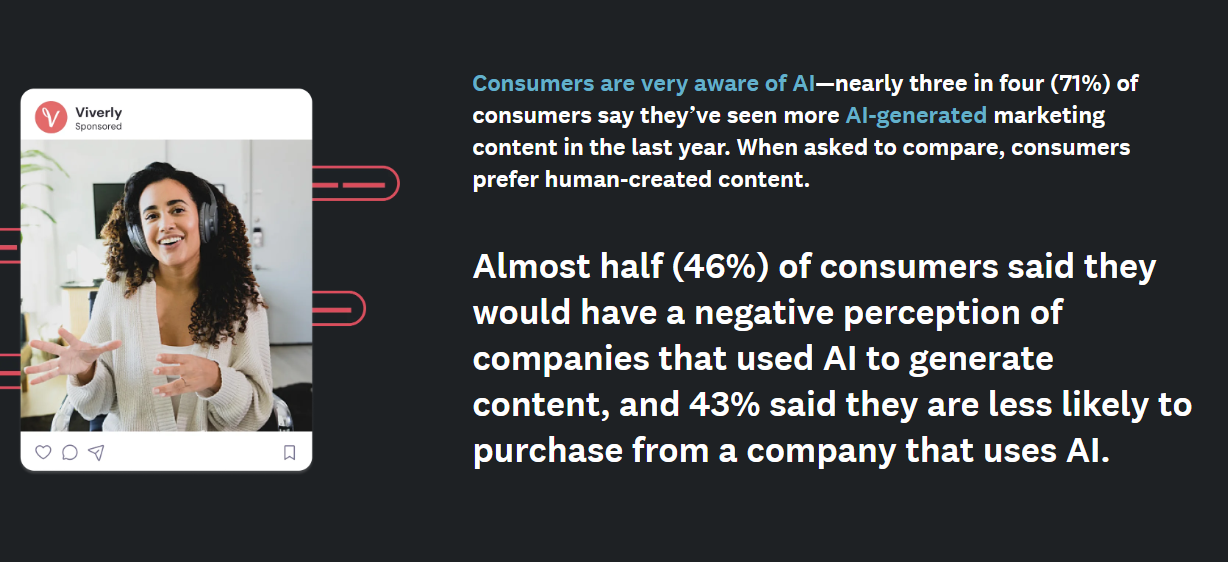
Consumers hate automated content generation because teams leave AI to do the whole work. Like expecting ChatGPT to add empathy to a sales copy? That’s an overreach, for now. If you want to build trust, the human touch is inexcusable.
Lost brand equity
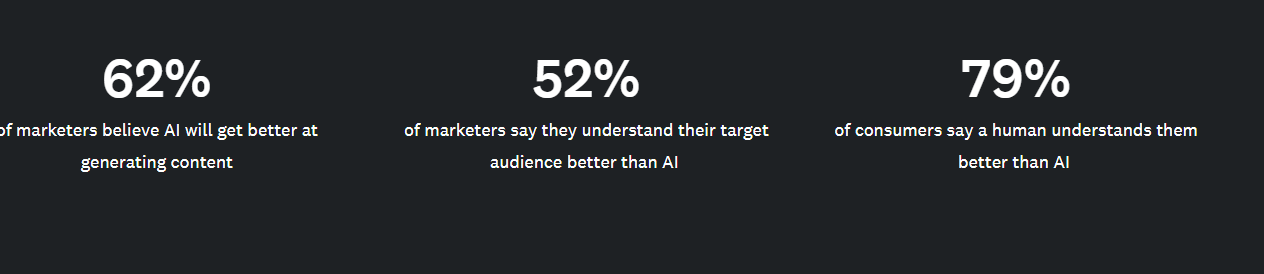
According to SurveyMonkey’s 2025 report on the state of marketing, 79% of consumers say a human understands them better than AI. Of course, even better than a non-AI marketing workflow.
The moment they find out you’ve let AI overhaul your marketing processes, often starting from recognizable AI-isms inside marketing copies, the perceived value of your product drops. What’s brand equity without product value? Nothing.
3 Steps to Protect Your Brand Equity Without Underusing Automation
So, there’s the good part of automating your marketing workflow, and there’s the bad part. But the bad part isn't that marketing automation is wrong, but that you’re treating it as the primary brain and letting it overhaul your processes.
Here’s how to use it right and protect your brand equity:
Set clear brand rules for automation
60% of CMOs are adopting content-dedicated guardrails to protect their brand from the deception and brand-dilution risks of unguided GenAI. Your brand needs to do the same, and here’s how:
- Document a GenAI usage SOP. Spell out where AI can be used, where it cannot, and what level of human review each use case requires. For instance, you can indicate that content ideation is allowed, whereas final copy for ads, pricing, or legal pages is not
- Define fixed language boundaries. List banned phrases, unsupported claims, tone limits, and formatting rules. These rules apply whether content is written by a human or generated by AI
- Standardize prompts across your teams rather than allowing individuals to invent them in isolation. Approved prompts reduce variation and prevent off-brand output
Personalize your SOPs per operation. For instance, Facebook managers should have an SOP for Facebook automation detailing how far automation should go, which tasks require professionals, and which it can handle entirely.
Align triggers with customer intent
Linear customer journey is dead. What’s left now is a zig-zag trail, with your customers jumping from one channel to the next with different expectations and readiness levels. Google calls it micro-intent moments.
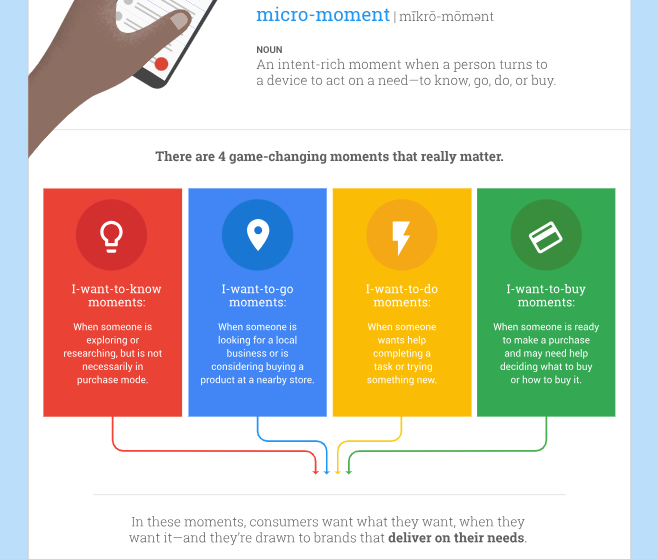
One moment, they need information. The next moment, they are ready to buy. You barely see the usual cycle playing out in full. Sending a “How-to-do” email when they’re ready to buy is a gross mismatch and tells the prospect you don’t know what they need.
That’s why you need to tweak your automation to meet customers at the exact moment they are in the zig-zag customer journey. And that starts with finding out what users are asking.
- For marketing ads, use Google Trends to know what your audiences are currently searching for, or Optmyzr for smart keyword management
- Create heatmaps for your touchpoints to see what pages they spend more time on and what problems they intent to solve
- Track event-level behavior with tools like GA4 or Mixpanel to understand actions that signal intent, such as pricing views, repeat visits, or feature exploration
You also need to monitor AI-driven discovery using reputable platforms like SE Visible to see the questions users ask on ChatGPT, Gemini, and similar tools. SE Visible also extracts sentiment analysis to decode micro-intents within each question, so you can configure your automation to trigger at the appropriate time.
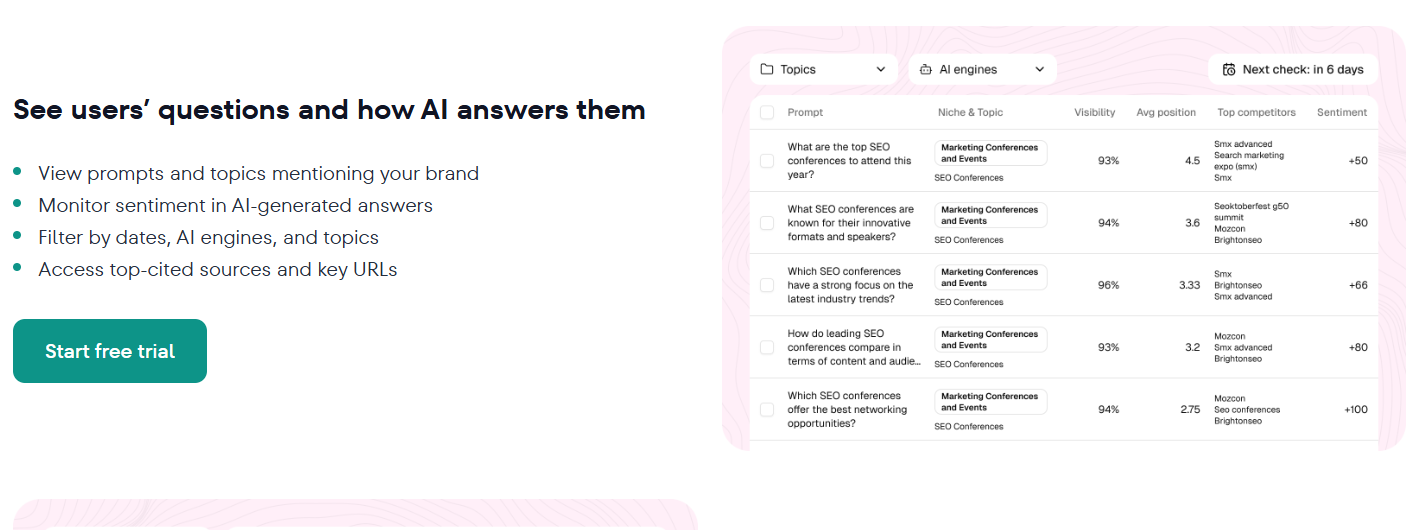
Once you’ve gathered the right questions across your messaging channels, translate them into categories of intents that your marketing automations should use. This could include “pricing intent”, “discovery intent, or “validation intent.”
For instance, a user asks ChatGPT, “Is X worth the price?”
- They then land on your pricing page through GPT’s recommendation, scroll, and stay longer than average
- That behavior triggers a pricing intent workflow
That’s different from generic triggers based solely on clicks. According to MoEngage’s benchmark report, behavioural triggers result in up to 300.7x more conversions.
Apply human oversight to critical touchpoints
The crux of it all? Don’t let AI do the heavy-lifting of your entire marketing operations. Yes, we get it. Automation can handle repetitive tasks in a jiffy and save you money. But human oversight is more crucial than ever, especially as customers dislike anything monotonous.
Besides, there are growing legal constraints from various state and global laws. You’re likely to wake up to €35 million or 7% of total global turnover in Europe due to discriminatory biases on a social media post you didn’t bother to cross-check. Or more in other regions.
To avoid that:
- Incorporate an oversight team into each of your operations. For instance, a human unit for content marketing copies, human agents for support tasks, and an ad manager for campaign oversight
- Establish a legal review unit to go through every content generated by AI. There should be legal checklists in place for every team to cross as well. If full-time costs are a blocker, you can opt for Wishup’s professional virtual legal assistants
- Use a multi-gated review system, where each output is vetted before, during, and after being generated, before going live
Also, mandate trial testing of every operation, including A/B for ads, to know which one aligns with audiences’ needs and sentiments more
Conclusion
Automation is here to stay. Sounds cliché, but that’s the truth. However, the consequences of unguided use are also glaring. So, what you need is balance. Chase speed and volume in content generation, but prioritize accuracy and empathy by applying effective human oversight.
Set clear rules that guide operations across all marketing units, from graphic and video creators to marketers and support. Everyone should know the extent of automation, when and how to use it, and the red lines.
Most importantly, align your marketing triggers with customer intent and behaviours. You can figure those out using Google Trends, GA4 analytics results, and SE Visibile to see what questions they’re currently asking and optimize your automations accordingly.
