
Summary - TL;DR
- What it is: Back office support is the behind-the-scenes work that keeps a business running (billing, HR admin, data updates, reporting, tool access, documentation, internal workflows).
- What it does: It standardizes execution, reduces bottlenecks, keeps systems clean, and removes repetitive admin from founders and managers so the core team can focus on growth and delivery.
- Why it matters: It prevents revenue leaks (late invoices, missed follow-ups), reduces decision fatigue, and improves operational consistency.
- Why Wishup: Wishup provides managed back office support with trained VAs (including automation-trained assistants), fast onboarding, and flexible coverage so you get consistent execution without adding payroll overhead.
Back office support is the behind-the-scenes work that keeps a business running: billing and invoicing, payroll and HR documentation, data updates, reporting, vendor coordination, tool access, and internal workflows. Customers rarely see it, but when it breaks, everything slows down.
Support functions like finance, IT ops, HR, and procurement quietly rack up a huge bill. In many global companies, they can add up to 20% of total expenses, according to McKinsey, and here’s the problem: most of that spend doesn’t directly drive revenue. So when costs start creeping up, these teams become the first place leadership looks to “trim.”
But cutting costs isn’t the same as fixing. A better move is to reconfigure how support work gets done with back office support and push repeatable back-office execution to a reliable outsourcing model.
A Bain example makes the point well. Bain studied 37 companies across industries and showed that redesigning support functions, from HR, finance, to procurement, and more, is typically smarter than blunt headcount cuts. Why? because taking back office support services reduces waste while protecting outcomes.
Therefore, this blog will essentially cover everything you need to know about back office support and how to avail its services effectively through Wishup. But let’s start at the beginning.

What Is Back Office Support?
Back office is the part of a business that does the internal work required to run operations, but doesn’t directly interact with customers.
Back office support denotes the work that keeps a business running even when customers never see it.
You can say that it is the behind-the-scenes engine: the processes, systems, and admin that make sure money is tracked, documents are organized, teams stay coordinated, and operations don’t fall apart when things get busy.
If the front office is “what the customer experiences,” the back office is “what makes that experience possible.
What Are Back Office Support Services?
The back office support services generally cover essential tasks important to business operations done behind the scenes. Keep in mind, they only create, manage, and support; their task does not entail strategy.
In general, any task that is critical, yet does not require a senior decision every time, belongs in back office support. Therefore, the following are some key functions that the back office supports:
- Finance operations: This kind of support ensures billing, invoicing, expense tracking, and payment follow-ups happen consistently, so revenue doesn’t leak through delays, missed paperwork, or scattered approvals.
- HR: This type of support keeps onboarding, employee documentation, policy updates, and routine people-ops coordination running without leaders becoming the default admin for every internal request.
- IT and admin-related tasks: This kind of back office management allows tool setup, access provisioning, vendor coordination, and ticket follow-ups so teams don’t lose hours to “Who has access?” and “Can you set this up?” loops.
- Operational support: Operational support is most important as it maintains workflows, SOPs, recurring checklists, reporting cadence, and internal coordination so execution doesn’t depend on memory or last-minute follow-ups.
- Data and documentation: It keeps CRMs, trackers, files, and compliance paperwork accurate and organized, so decisions are made using reliable information.
Properly executed back office management allows SMEs to shift their focus solely on their tasks. You can say, without them, the tasks will not be streamlined for daily operations; at least not without errors and delays. Although, apart from this, there are major reasons why we consider a back office support service to be important.
Back Office Support Trends
With the ascension of AI and its influence in the ever evolving organizational structure, a back office support service also has to keep up with it. So, let us explore a few future trends in the support segment that you need to keep an eye on while availing their service:
1) AI
It is a given in this era that there is no single segment that AI hasn’t touched. Back office is no exception. In fact, AI-powered tools will play a large role in the functions because of how it can help reduce repetitiveness and increase productivity and accuracy.
2) Remote Work
What started during the global pandemic, COVID, will likely continue, thanks to cloud-based solutions. Moreover, with good collaboration and productive tools out there, back office support will easily adapt to the needs of a distributed workforce.
3) Integration of Systems
Various back-office systems need to be integrated to enhance efficiency and data accuracy. A unified platform provides the organization with a holistic view of operations across HR, IT, and finance departments.
Why are Back Office Support Services Important?
Most operational breakdowns don’t happen in customer-facing work; they happen when the invoices go out late and the cash flow becomes unpredictable. This happens when follow-up gets missed, and so does the sales lead.
This also comes in the form of tools and access that aren’t being managed properly, so the whole workforce suffers and loses hours to small blockers. Back office support removes the drag that comes with inefficiencies. Therefore, here’s what strong back office support looks like:
1. Streamlined Service
Back office support management starts with organizing the workflow. Let’s say an invoice has to be sent, or an internal request has no clear owner, or onboarding, procurement requests, or reporting cadences are all over the place.
This is when back office support helps. The service not only improves accuracy in tasks such as data entry and financial back office processes, but also improves the overall quality of the work.
2. Improved Customer Experience
A well-managed back office is that cog in the wheel that keeps the whole machine running smoothly.
Generally, back office tasks are repetitive, so when these tasks are handled seamlessly, it will positively impact customer interactions, thus contributing to customer loyalty and satisfaction.
3. Reduced Operational Cost
A streamlined back office function can support the growth of any business. If one decides to outsource the non-core tasks to specialized back office support solutions, companies can reduce operational costs.
A streamlined and automated back office support service can save 20% of annual savings, said PwC. Moreover, accessing a pool of skilled back-office resources from a global platform will allow a business to invest its time and energy in strategic initiatives towards expansion.
4. Reduce Operational Bottlenecks
When internal requests come with no clear owner, let’s say access setup, document retrieval, approvals, etc, naturally, works stall. Back office support services centralize ownership so tasks move without multiple handoffs, constant reminders, or last-minute escalation.
5. Get Improved, Accurate Data Across the System
CRMs, trackers, payroll inputs, and operational sheets degrade quickly when they’re updated inconsistently. Back office support services keep records current and standardized, which makes reporting trustworthy and prevents teams from operating on outdated or conflicting information.
6) Save Time and Reduce Decision Fatigue
When managers spend their day approving minor tasks, searching for files, fixing errors, or following up internally, strategic work gets pushed out. Back office support service focuses on removing repetitive execution from leadership calendars so leaders focus on decisions, not admin.
In summation, you can say back office support represents consistency in workflows, reduces rework, reduces dependency on individual employees, and makes outcomes easier to measure and improve. That is why many businesses have started restructuring, which comes in the form of outsourcing, to achieve efficiency.
How Back Office Support Services Improve Operational Efficiency
However, in Forbes’ recent research, 78% of executives said the current economic environment is influencing their outsourcing decisions, and 31% said it’s having a major impact. They’re actively looking for ways to restructure costs and reduce risk.
But here’s the gap: only 43% are making those calls proactively. If you are one of those who is yet to make that decision, here is one case study that could change your view.
For Kyobo Life Insurance, a Korean company, restructuring for the back office support came in the form of outsourcing. They added an outsourced call centre to support the customers.
They had one goal: to reduce the strain on salespeople’s shoulders who used to regularly provide support. The salespeople’s productivity not only increased, but their focus shifted totally to selling.
The result? They noticed a jump in revenue. Moreover, a dramatic increase in customer service rankings was noticed as well. What’s more significant is that they noticed nearly 40% of savings in back-office costs.
The case study proves that restructuring, or should we say outsourcing global talents, has become a widespread act with strong impact. It can contribute to 40% of the total savings.
That’s not all, the Bain & Co., Management Tools & Trends Survey also revealed that three out of four respondents outsource some functions in their companies in the hope of reduced strain in the said department.
Services like:
- Data Entry
- Document Processing
- Transaction Processing
- Finance and Accounting
- Invoice Processing
- Workflow Automation
- Customer Relations & Support
- Administrative Support
- Assistance with product listings, order management, and supply chain coordination.
- Specialized support for updating databases, managing pipelines, and organizing files.
Can be located and organized in such a way that, in an organization, they can perform effectively at a low cost. In short, one has to align back-office functions with core goals to notice efficiency.
- This alignment can allow the organization to harness the full potential of its operational frameworks.
- That, in return, will drive not only efficiency but effectiveness in their service delivery.
- Moreover, if the back office support service is automated, businesses can easily streamline the processes.
- Automation can also reduce redundancies within the organizational processes and maximize resource utilization.
Therefore, what your organization needs is a responsive, technologically aligned back office support service for operational efficiency. This is where Wishup comes in.

Challenges in Back Office Support Services
The greater the dependency, the more challenges the back office support team will face. There are many challenges a back-office support faces that need to be addressed:
1. Financial Resource Constraints
Several organizations, let’s say non-profit and SMBs, operate under limited resources due to financial constraints. This not only makes it difficult to invest in the required technology for automation, but also makes it straining to invest in effective back-office support.
2. Inability in Data Management
Handling a large amount of data is no joke; in fact, one needs to be trained or have experience in handling it. Ensuring data accuracy while maintaining security and compliance with the law and regulations requires effort, knowledge, and expertise.
3. Continuity in Advancement
To stay ahead in this competitive landscape, what one needs to do is arm themselves with knowledge and skills that come with continuous learning. At the pace technology is advancing, it has become paramount for the back office support to keep pace. Regular updates and training sessions need to be conducted to ensure back office teams are adept with the latest tools and technologies.
4. Balancing Efficiency, Automation, and Personalization
Technological automation is supposed to boost efficiency; however, in the case of some back office functions like HR, and customer support services, a personalized touch is required. It becomes vital to strike the correct balance between all these for the sake of employee and customer satisfaction.
5. Maintaining Organizational Compliance
Organizations need to navigate themselves through the complex landscape of regulations to maintain compliance. Starting from labour laws, data protection, to financial reporting and more, compliance to all these regulations will require continuous monitoring, learning, and adaptation.
A “full” back-office support solution does more than just provide “people”. It gives you consistent execution with clear ownership, standardized workflows, clean reporting, and the ability to scale support without adding internal management overhead.
What most teams actually need: reliable back-office execution that stays consistent even when the business gets busy. This is where Wishup comes in.

How Wishup Excels in These Use Cases
Wishup is built to remove the anxiety that comes with the challenges in availing a back-office support service with a managed model, trained talent, and clear operational ownership. This is how it happens:
1. Solve Budget Constraints Without Adding Payroll Overhead
With Wishup, you get a pre-vetted, pre-trained assistant fast. Moreover, Wishup owns the heavy lifting of hiring and supporting you. If your goal is to get a service that is built to reduce the overhead that usually comes with back-office hiring: recruiting, onboarding, training, and ongoing admin, Wishup is it.
Because you can hire a general VA, a personal assistant, or a specialized automation expert VA based on the workload, you’re not forced into one expensive “do-everything” role. Wishup explicitly supports both 4-hour and 8-hour schedules for PAs, which helps control cost while still getting consistent output.
2. Fix Data Chaos With Consistency and Process
Wishup’s advantage here is that it provides training with repeatable execution and monitoring.
Our VAs are screened and put through structured training that includes workflows and automation, so “keep the CRM clean” and “make reporting reliable” become a weekly habit, not a monthly cleanup project.
Moreover, with Wishup, you get a fully managed service where hiring, training, QA, and support are handled for you, which matters because data quality usually fails at the oversight layer.
3. Keep Up With Tools and Workflow Changes Without Re-Training from Scratch
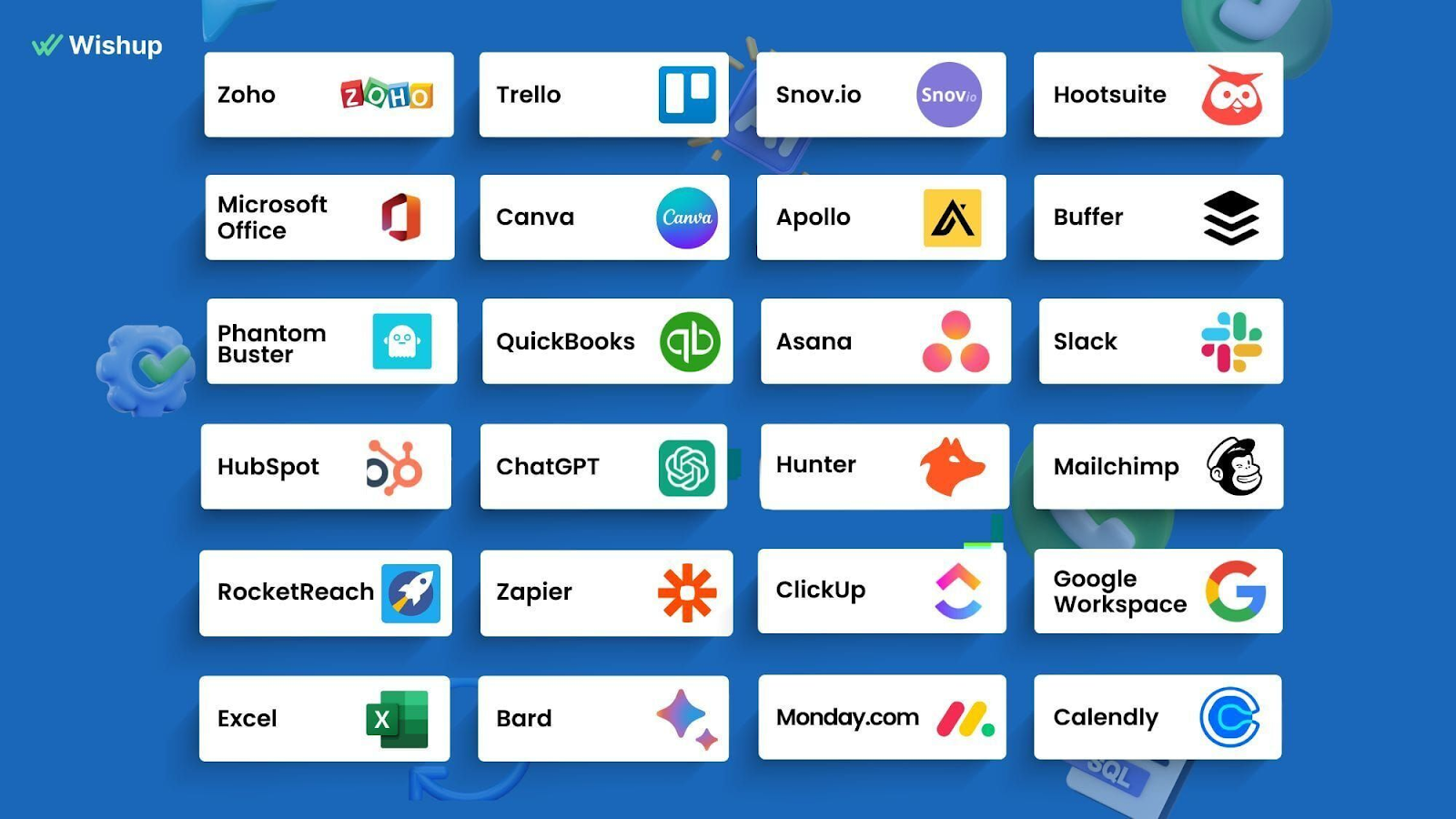
Our VAs are trained in workflow automation and have exposure to 120+ AI/no-code tools. Moreover, our Automation Expert VA comes pre-trained on tools like Zapier and Make.com, which reduces ramp time and the “training tax.”
4. Balance Automation With the Human Touch When Work Needs Judgment
Automation is great until the work needs judgment, coordination, or context. HR workflows, internal coordination, scheduling, and admin support often require a human who can handle nuance. We provide:
- Personal assistants can support coordination across time zones, which helps with real-time internal handoffs and follow-through.
- Wishup supports work across common communication channels like email, phone, Slack, and video calls, which reduces “lost in tools” delays.
- Automation specialists help make smarter choices about what to automate and how.
So you get the efficiency benefits of automation without losing the human layer that keeps the back office stable.
Summing Up
Wishup isn’t just about “outsourcing back-office tasks.” With us, you can outsource back-office support services with experts who have been trained, are responsive, and efficient. To lean on automation-trained assistants when your back-office workload demands systems, not just labor, contact our sales team.

FAQs
What is another name for back office support?
Back office support is also commonly called back-office operations, administrative support, operations support, or shared services. In outsourcing contexts, you’ll also hear back-office outsourcing or back-office BPO.
What is an example of a back office service?
Common examples include invoice processing, billing and collections follow-ups, data entry, document processing, payroll coordination, HR documentation, CRM updates, vendor coordination, and reporting. These are operational tasks that keep the business running, without being customer-facing.
Is the back office a BPO?
It can be. “Back office” describes the type of work (internal operational support). BPO (Business Process Outsourcing) describes the delivery model (a third party runs that process for you). So when a company hires an external provider to handle invoicing, payroll admin, data entry, or documentation, that back-office work becomes back-office BPO.
