
Telehealth is now a routine part of U.S. healthcare, with over 70% of physicians using it weekly (up from 25% in 2018).
But virtual care adds new administrative burdens: scheduling across states, pre-visit tech checks, digital paperwork, insurance verifications, and more.
A dedicated telehealth virtual assistant trained in medical administrative professional can handle these tasks, freeing clinicians to focus on patient care.
In this in-depth guide, we explain what a telehealth VA is, why your practice needs one, and how Wishup’s HIPAA-trained, US-based virtual assistants deliver top-notch support.
🚀 Meet Wishup in 30 Seconds
Wishup is a US-based (Delaware) virtual assistant company that offers remote virtual assistants to busy founders and executives worldwide. Our trained VAs handle everything from admin tasks to specialized work, helping you focus on what truly matters.
- ✅ 10+ years in the industry
- ✅ 1,500+ founders served across 50+ industries
- ✅ 200+ skill areas, 70+ no-code tools, 50+ AI tools
- ✅ Clients from Harvard and Y Combinator-backed startups
- ✅ Onboards trained VAs in just 60 minutes
- ✅ 98.8% client satisfaction | 99% on-time delivery
- ✅ Top 0.1% talent only – pre-vetted & ready to start
- ✅ 6-step vetting process (aptitude, cognitive, English, and more)
- ✅ Flexible plans starting at $1299/month — no long-term contracts
- ✅ Lifetime satisfaction guarantee
What Is a Telehealth Virtual Assistant?
A telehealth virtual assistant is a remote professional who handles medical admin and coordination tasks for a clinic or medical practice conducting telemedicine.
They manage routine duties like appointment scheduling, patient intake, reminders, follow-ups, insurance checks, prescription coordination, and EMR updates all via phone, email, or video, and always under HIPAA privacy rules.
In short, they take on the housekeeping of virtual visits so providers can focus on care.
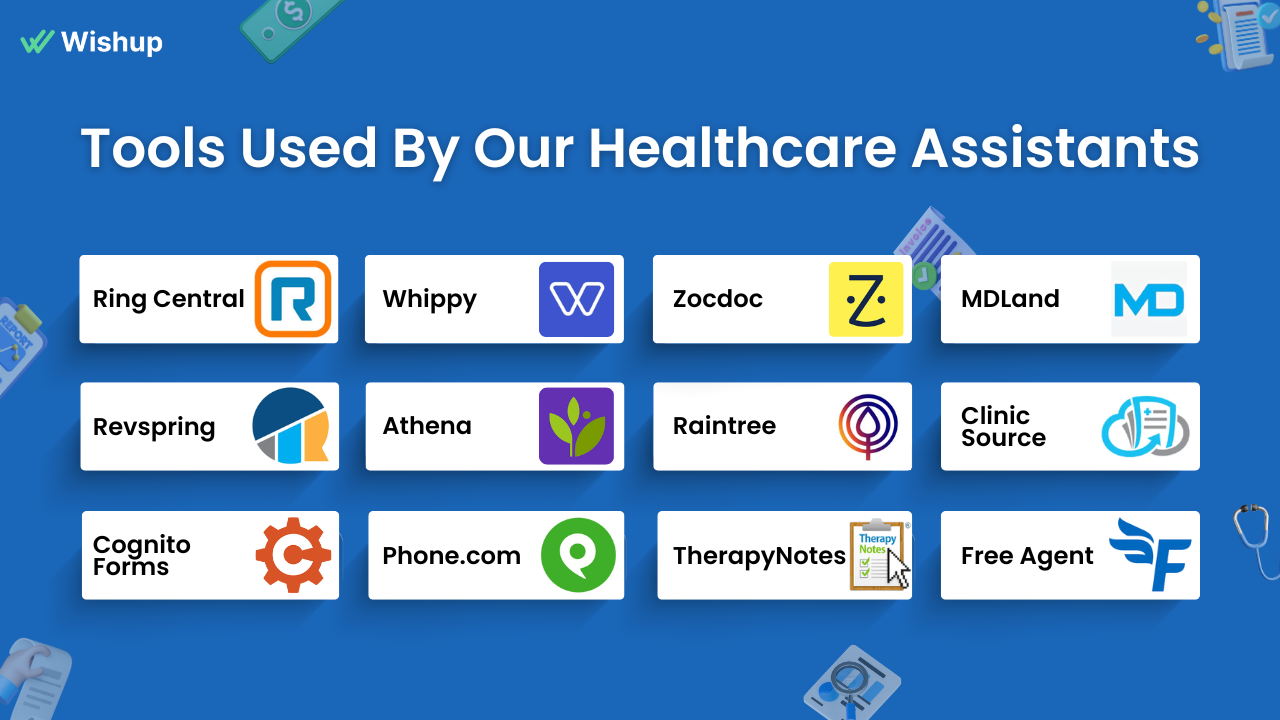
Every Wishup telehealth virtual assistant is a full-time employee (never a freelancer) with healthcare office experience, HIPAA training, and proficiency in tools like Athena, Epic, eClinicalWorks, Kareo, Practice Better, Zoom, Doxy.me, and more.

Why Telehealth Creates More Administrative Work
Telemedicine expands access, but it also shifts work online.
According to the AHA, telehealth adoption in U.S. hospitals climbed from 72.6% in 2018 to 86.9% in 2022. Now 71% of doctors use telehealth weekly.
However, virtual visits still require all the same preparation and paperwork as in-person visits plus new tasks.
For example, telehealth workflows must cover scheduling, billing, check-in, consent, documentation, and triage differently than before. Practices often add roles like a “telehealth coordinator” to manage these changes.
Pre-visit steps can include sending reminders, guiding patients on technology use, collecting digital intake forms, and doing technical checks.
All these steps demand time.
Meanwhile, staffing shortages and burnout leave remaining employees overloaded: AMA data shows U.S. physicians spend about 7.3 hours per week on admin tasks on top of 50+ hour workweeks.
According to a research, 82% of clinicians report burnout symptoms. Telehealth also often involves multi-state coordination (different licensure, patient portals) and follow-up on lab work or referrals.
The bottom line: without dedicated support, telehealth can bottleneck your office.
What Does a Telehealth Virtual Assistant Do?
A telehealth virtual assistant handles nearly every non-clinical task involved in virtual care.
Below are common responsibilities:
Scheduling & Calendar Management
Book telehealth appointments (often across providers and states), send automated reminders, and reschedule no-shows. Prioritize urgent requests to minimize patient wait times. (clear scheduling processes and reminders)
Patient Intake & Forms
Contact patients before visits to complete intake forms, consent documents, and insurance information online. Follow up immediately if forms are missing. Ensure all patient data is entered into the EMR (e.g. Athena, eCW, Epic) to prepare providers.
Tele-visit Preparation
Conduct technical check calls with patients to confirm they can connect (audio/video settings) and troubleshoot basic issues. Provide guidance on using the telehealth platform (Zoom, Doxy.me, patient portal).
Insurance Verification
Verify patient insurance eligibility and benefits for telehealth services. Handle benefit investigations and prior authorizations before visits. This helps prevent claim denials later.
Virtual Receptionist
Greet patients in virtual waiting rooms, answer incoming calls and chats, route messages to providers, and provide basic information (office hours, location, etc.). A 24/7 front-line VA ensures no patient inquiry is missed.
Referral & Prescription Coordination
Coordinate specialist referrals or lab work resulting from telehealth consults. Process prescription refill requests by liaising with pharmacies.
EHR Documentation Support
Update electronic health records with appointment notes, billing codes, and encounter summaries (though not clinical notes). They ensure schedules and patient charts are up to date.
Follow-Up & Patient Engagement
After appointments, call or message patients for satisfaction surveys, follow-up on test results, or schedule next visits. Send post-visit summaries and education materials if needed.
Platform Troubleshooting
Assist providers and patients with login issues, audio/video troubleshooting, or platform navigation (Zoom, Healthie, etc.) to keep visits running smoothly.
Each telehealth virtual assistant role can be tailored.
For example, a VA supporting mental health teletherapy may handle crisis helpline transfers and coordinate with counselors, whereas a VA for a dermatology teleclinic may specialize in processing photo submissions and insurance codes for cosmetic vs. medical procedures.
At Wishup our virtual assistants specialize by industry and we deploy assistants with relevant background.
Tasks a Telehealth Virtual Assistant Cannot Perform
It’s important to define the tasks a telehealth virtual assistant is not eligible to perform.
So a telehealth VA is not a medical professional and must not engage in any clinical care. They cannot
- Diagnose, prescribe medications, interpret test results, or give medical advice.
- Chart clinical findings from a consult (that’s the provider’s job).
- Perform any exam or counseling
Your telehealth virtual assistant can work on tasks that don't require the knowledge or skills of a certified doctor or nurse.
All VAs at Wishup sign strict HIPAA-trained confidentiality agreements and only access patient information as needed under a Business Associate Agreement. Any activity they do (chart updates, scheduling notes, etc) is fully logged in the practice’s own EMR audit trail.
Signs Your Practice Needs a Telehealth Virtual Assistant
If your practice is struggling to keep up with patient communication, appointment management, or administrative workloads, it may be time to consider a telehealth virtual assistant.
As patient expectations continue to rise, even minor inefficiencies can lead to missed appointments, delayed responses, and staff burnout.
Below are some common signs that indicate your practice could benefit from virtual assistant support.
Staff burnout
Doctors or nurses regularly staying late to handle scheduling, insurance, or tech support.
High no-show rates
Appointments frequently unattended, pushing providers to empty slots. A VA can send reminders and reschedule quickly.
Slow response times
Patients or referring clinics call and wait too long for callbacks. A VA can ensure phones and messages are answered promptly.
Billing/Insurance backlog
Claims are getting denied due to missing authorizations or eligibility checks.
Scheduling bottlenecks
Providers or patients struggle to coordinate available telehealth slots across time zones or states.
Lost paperwork
Intake forms and consents slip through the cracks for tele-visits.
Low patient satisfaction
“The lines are always busy,” or “I got no follow-up” are indications your front desk is overwhelmed.
If you recognize these issues, a telehealth virtual assistant can target them.
For example, one Wishup client cut accounts receivable by 60% by delegating daily insurance follow-ups to a VA. Another healthcare CEO regained work-life balance when a VA took over his admin tasks.
Benefits of Hiring a Telehealth Virtual Assistant
Bringing in a telehealth virtual assistant offers multiple advantages:
Reduced Admin Burden
Routine tasks (calling patients, verifying benefits, data entry) get offloaded, so your team spends more time on care. Clinics can serve more patients without burnout.
Improved Patient Experience
Prompt scheduling, reminders, and follow-ups mean patients feel supported. No more “hold music” frustrations. Studies show 80% of patients use online scheduling when available. A friendly VA greeting their call (even virtually) boosts satisfaction.
Higher Revenue and Productivity
With administrative efficiency, providers see more patients per day. Fewer no-shows and billing errors means fewer lost dollars (no-shows cost U.S. practices ~$150B/year).
Cost Savings
Compared to hiring more in-office staff or suffering inefficiencies, a telehealth VA (especially via Wishup’s managed service) is more affordable. You pay a fixed monthly rate (starting$1299) with no payroll or benefits overhead. Yet you get experienced, full-time support.
Scalability
As your telehealth volume grows, the VA role can expand. You can scale the service up and down anytime with Wishup by simply telling your customer success manager.
HIPAA Compliance
A Wishup HIPAA trained medical virtual assistant operates under strict data security protocols (NDA, BAA, training). This reduces risk of costly breaches or penalties (HHS enforcement is high).
Your Patients Trust You With Their Data.
We Take That Seriously.
Enterprise-grade safeguards designed to protect patient information, maintain compliance, and ensure operational accountability.
Real-Time Activity Monitoring
We use time-tracking and computer security audits, including mouse and keyboard activity monitoring for transparency and accountability.
Physical, Electronic & Procedural Safeguards
Secure transmission and storage practices, including antivirus protection, encrypted systems, and firewall security.
Strict Access Control by Role
Assistants only access the information necessary for their role, with permissions revoked when no longer needed.
Secure Password Management
Sensitive credentials are stored in encrypted password-management systems, with customizable access controls per application.
NDA-Based Confidentiality
Built-in NDA protection across both client and assistant agreements, with customizable confidentiality clauses.
Device & Application Controls
Strict device verification, application-level controls, and encrypted communication systems.
Technology & Automation
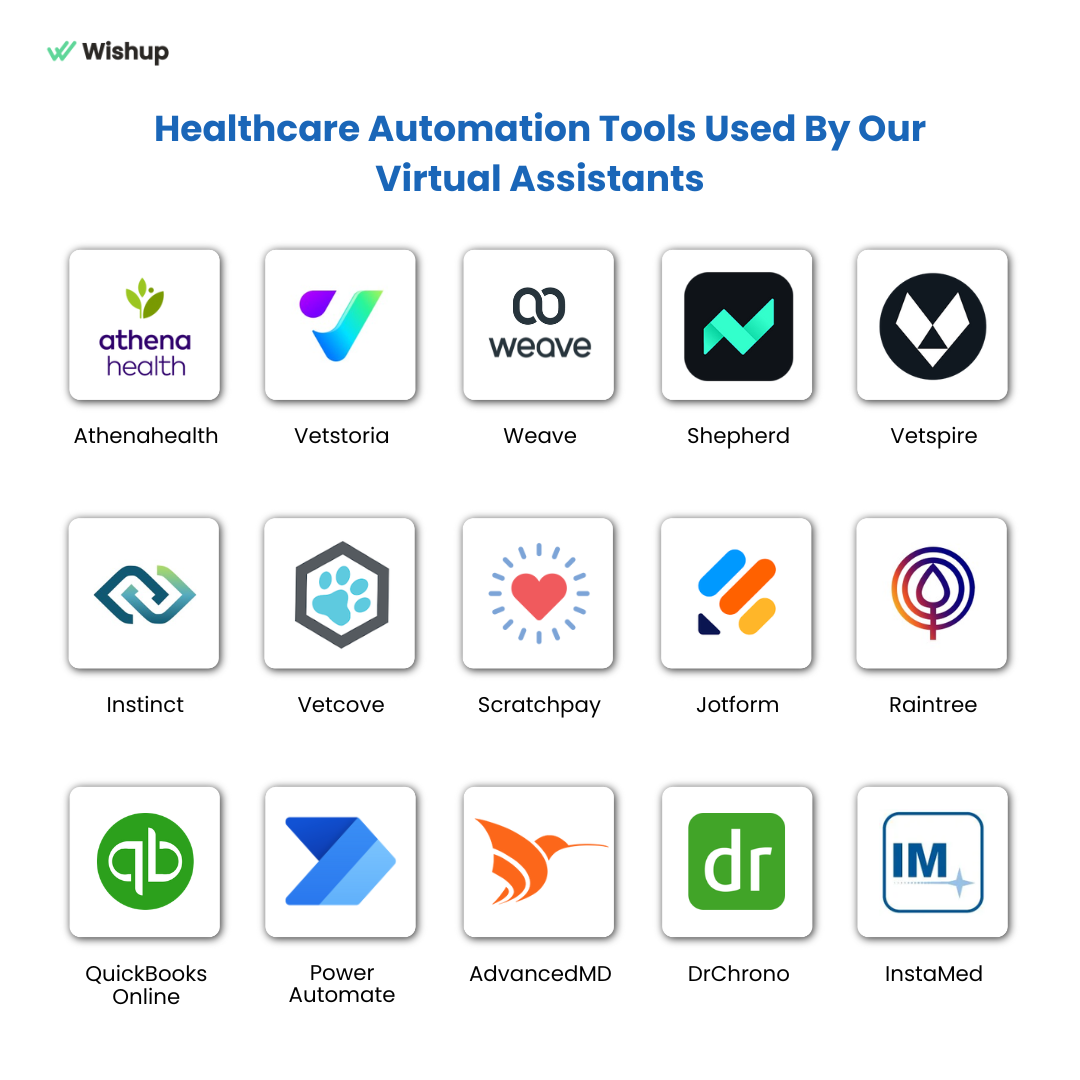
You can automate many of the clinical workflows tasks with Wishup telehealth virtual assistant trained on 120+ AI and automation tools, meaning they can set up appointment reminders, form autofill, and even small workflows.
In short, a telehealth virtual assistant delivers a dedicated, high-volume admin resource without the complexities of hiring and managing an in-house employee.
Skills and Software Experience
A top telehealth virtual assistant should have:
Healthcare Ops Knowledge
Familiarity with medical front-office workflows, insurance types (HMO/PPO), CPT coding basics, and telehealth best practices.
EMR/EHR Proficiency
Experience with electronic records is crucial. Wishup VAs are trained on 70+ EHR systems (Epic, Athena, eClinicalWorks, Kareo, Practice Better, Tebra, AdvancedMD, etc.) so they can adapt to your platform.
HIPAA & Compliance Training
Must know patient privacy rules. Wishup ensures every VA is HIPAA-certified before work. (Reminder: your practice is still ultimately responsible for HIPAA compliance.)
Communication Skills
Excellent phone and email etiquette, with a polite, professional demeanor (even via chat or video).
Organizational Ability
Strong time management, attention to detail, and ability to multitask. They often juggle several provider schedules at once.
Tech Savvy
Comfort with telehealth platforms (Zoom, Doxy.me), office software (Office 365, Google Workspace), and productivity tools. At Wishup we train our VAs on 50+ automation and no-code tools (Zapier, n8n, Monday.com, etc.). This means they can build simple workflows (e.g. auto-reminders, CRM updates).
Problem-Solving Mindset
Troubleshooting video glitches or insurance issues requires initiative. Wishup VAs undergo scenario-based training with physicians, so they learn common edge cases (e.g., delayed auth, connectivity).
Our telehealth virtual assistant have been placed in 60+ medical specialties, bringing relevant expertise to each role.
For example, a VA serving a psychiatric telepractice knows to monitor crisis protocols, whereas a VA for a cardiology teleclinic is familiar with EKG report handling and cardiology claim codes.
Telehealth Virtual Assistant for Different Specialties
No two healthcare practices are the same, so Wishup matches you with a VA specialized in your field.
We have trained VAs for therapists, dentists, veterinarians, chiropractors, optometrists, psychiatrists, oncology, cardiology, mental health, and many more areas. (In fact, our assistants support 50+ practice types.)
For example:
- Psychology/Psychiatry Clinics: Virtual assistants for psychotherapists or virtual assistants for psychiatrists handle sensitive intake calls, insurance CPT codes for therapy, crisis interventions, etc.
- Dental & Orthodontic Offices: Virtual assistant for dentists manage insurance referrals, sedation consents, and coordinate x-ray requests.
- Therapy Practices (PT, OT): Virtual assistants for therapists schedule follow-ups for physical therapy, bill therapist availability, and work with electronic paperwork in TherapyNotes or other portals.
- Veterinary Telehealth: Virtual assistant for veterinarians handle pet owner triage, pharmacy refills for pets, and tele-triage scheduling.
- Chiropractic Clinics: Virtual assistant for chiropractor set up digital records for adjustments, manage neck/back injury case documentation, and coordinate care plans.
- Ophthalmology/Optometry: Virtual assistant for optometrists schedule post-op vision tests, verify vision insurance, and handle digital charting of prescriptions.
- Oncology: Virtual assistant for Oncology VAs know oncology CPTs, chemo consents, and coordinate with infusion centers.
- Cardiology: Virtual assistant for cardiology arrange remote EKG readings, treadmill test prep, and medical record access for specialists.
- Urgent Care: Virtual assistant for urgent care center handle rapid scheduling for same-day televisits, triage phone lines, and admission documentation.
- Dermatology: Virtual assistant for dermatologists manage photo intake from patients, e-prescription follow-ups for skin medications, etc.
The key is, Wishup doesn’t force a one-size-fits-all VA; we match based on practice type and needs, leveraging our pool of healthcare veterans (pharmacists, scribes, clinic managers, etc.).
Our healthcare virtual assistant can even support “boardroom” roles in smaller practices (handling billing, credentialing, or operations as they scale).
Healthcare Automation Expert Virtual Assistants
In addition to manual tasks, Wishup telehealth virtual assistant are automation specialists.
They can build custom workflows to streamline your telehealth practice.
For example, a VA might use tools like Zapier, n8n, Integromat, or EHR API integrations to:
- Auto-Reminders: Send SMS/email reminders 24h before tele-visits, reducing no-shows. (80% of patients use online scheduling and reminders.)
- Intake Automation: Use online forms (JotForm, Cognito Forms) linked to your EMR to automatically populate patient charts.
- Insurance Checks: Automate daily eligibility queries via clearinghouse APIs or Availity to immediately flag coverage issues.
- Follow-Up Funnels: After a visit, trigger a sequence (e.g., text thanking patient, send survey, schedule next appointment).
- Billing Pipelines: Automate coding and claims submission processes: e.g., when a visit note is entered, auto-create a claim in billing software.
- Data Sync: Connect phone or chat leads (e.g. from RingCentral or Calendly) into your EMR or CRM to track patient inquiries.
Our VAs have achieved over 50 AI/automation projects in the last quarter alone, saving clients weeks of manual effort. (For instance, one primary care clinic automated their appointment reminders and cut administrative hours by 30%.)
In short, our telehealth VAs won’t just do tasks; they help eliminate them through automation, so the benefits keep compounding.
How Wishup Telehealth Virtual Assistants Keep Data Safe
Security and compliance are paramount. Wishup enforces enterprise-grade HIPAA safeguards so that your practice stays protected:
- HIPAA & BAA: We sign a Business Associate Agreement with you before any patient data is handled. All VAs undergo HIPAA Privacy & Security certification training.
- Secure Access: VAs log into your systems using your account credentials; they never see raw passwords. We use encrypted password managers so logins can be revoked at any time. Your VA’s actions appear in your own EMR audit logs, giving you full visibility.
- NDA & Confidentiality: Every VA signs a strict NDA and contract that explicitly covers patient confidentiality. They also operate within our monitored workflows – all activity (screen, mouse/keyboard, time) is tracked via TimeDoctor and reported daily.
- Least Privilege: Assistants are given access only to the specific tools and records needed to do their job; no extra PHI is exposed. When a VA’s assignment ends (for any reason), access is cut immediately.
- Password Management: Sensitive credentials (e.g., EMR login) are stored in an enterprise password manager. The VA’s interface auto-fills these without revealing them.
- Physical & Network Security: Wishup requires device verification and enforces use of VPN/antivirus for any remote work. All file transfers are encrypted.
- Monitoring & Audit: We run real-time activity monitoring. If any data incident occurs, Wishup notifies you within 24 hours and contains it (we carry cyber insurance too).
Put simply, Wishup’s architecture means your data stays with you.
We’re not running patient information through third-party servers. You retain full control: access logs, audit trails, and the ability to revoke any VA’s access instantly.
With 100% HIPAA-trained staff and SOC2-compliant practices, our system meets the rigorous standards required by regulators.
Pricing and Service Tiers
Wishup offers simple, flat-rate pricing for telehealth virtual assistants – no hourly billing surprises. Two main plans suit most clinics:
Each plan includes a dedicated, W-2 employed VA (never a freelance gig). You can choose U.S. or offshore-based assistants on the same terms.
All candidates pass Wishup’s 6-step vetting (see below), and are trained on the most popular healthcare tools before matching. No hidden fees: account management, training, and support are included.
If you need additional services (e.g. bookkeeping, patient calls outside normal hours, automation experts), Wishup has add-ons (like free bookkeeping credits and AI tool trainings) that can be bundled.
How to Hire a Telehealth Virtual Assistant from Wishup
Getting started with Wishup is simple. Our streamlined 3-step process is designed for a same-day start:
Share Your Requirements & Workflow
You tell us about your practice’s needs (telehealth volume, specialties, tasks, systems, hours). We assess which skills you need (billing support, multi-state scheduling, a English-speaking VA, etc.) and set expectations. This initial call is free and no-obligation.
We Match You with Pre-Vetted VAs
At Wishup, we maintain a bench of elite, U.S.-experienced assistants. Within minutes, we propose candidates from the top 0.1% of applicants (each has been tested on aptitude and communication). First match succeeds 90% of the time; our second-match success rate is 100%. You receive full profiles (resumes, skill scores, personality fit) so you can make an informed choice.
Unlimited Interviews; Hire and Onboard
Interview any and all candidates at no charge – including same-day interviews if needed. Once you choose, we finalize the hire. The VA is your employee (with Wishup handling payroll, taxes, backups, etc.). We can have them set up with your systems and start training (introductions, EHR logins, SOPs) in 60 minutes from your go-ahead.
What you’ll see: A brief callback summary each evening (tasks completed, hours worked, any issues).
You also get unlimited direct support from your dedicated Wishup Customer Success Manager.
If the first VA isn’t a perfect fit, we replace them at any time, free of charge – no questions asked.
(Only 4% of clients ever request a change, usually resolved in the first week.)
Frequently Asked Questions
How Quickly can a Telehealth Virtual Assistant Start?
With Wishup, you can have a VA onboarded same-day. Our goal is 60 minutes from approval, since all candidates are pre-vetted and trained.
Are Wishup Telehealth Virtual Assistants HIPAA compliant?
Yes, all VAs are HIPAA-certified, we sign a BAA, and we use secure systems (see data safety section). Wishup itself is SOC2-compliant. Your VA will handle PHI under our enterprise procedures.
Can the Telehealth Virtual Assistant access my EMR?
Yes. The VA will use your EMR account. They log in with your credentials (through our password manager). All actions show up in your own system logs. They only see the data needed for tasks, and we can restrict access as needed.
What if I Need Multi-state Scheduling?
Our VAs coordinate for different licensure just like an in-office coordinator would. They track provider availability across locations and comply with state rules. This is part of their scheduling expertise.
How do I Communicate with my Telehealth Virtual Assistant?
You get a dedicated point of contact at Wishup (a success manager) plus direct channels to your VA (email, phone, chat). You can set work priorities through our Workforce Management app (included free).
Can the Telehealth Virtual Assistant take after-hours calls?
Absolutely, we can schedule the VA’s hours to cover early, late, or weekend shifts if needed. Even if the VA is in a different time zone, they work your schedule.
How do Wishup VAs Differ from Freelancers or Agencies?
We emphasize full-time, committed staff. Each VA is a W-2 Wishup employee (not a contract gig) and we manage backups.
We recruit only 0.1% of applicants through a rigorous process managed by experienced entrepreneurs, ensuring stable, skilled assistants (average tenure 3.7 years).
Freelancer arrangements can leave compliance and reliability risks that Wishup fully takes on for you.
What’s the Difference between a Telehealth VA and a Virtual Medical Receptionist?
A telehealth VA often handles broader duties (scheduling, intake, insurance, follow-ups across locations) tailored to virtual care. A virtual receptionist focus is narrower – answering calls, greeting patients, and basic inquiries.
Wishup offers both: see our virtual medical receptionist guide for specifics.
What Should I do Before Hiring?
First, list your pain points and tasks (front desk, billing, etc.). Next, define required skills (EMR type, communication, HIPAA knowledge).
Check our blog “Things to Do Before Hiring an MVA” for a full checklist.
To Conclude
Hiring a telehealth virtual assistant is an effective way to scale your practice’s capacity without extra in-office staff.
Wishup has enabled thousands of U.S. providers to expand virtual care, improve patient experience, and regain valuable time.
With our 60-minute onboarding promise, 90% first-match success, and fully managed service, getting started is easy.
If you’re ready to streamline your telehealth operations, schedule a free consultation call with us today and interview unlimited telehealth virtual assistants.
