

The global VA market stands at $5.3 billion in 2025 and is projected to reach $6.5 billion in 2026, showing real short-term acceleration. Long-term? It’s expected to hit $43.4 billion by 2035, according to the latest global VA report.
It clearly shows business owners are scaling their VA hiring in a serious, sustainable way.
But here's what nobody tells you.
- Half the advice out there is misleading.
- The other half is blindly optimistic fluff that ignores real challenges.
Let’s get the myths and facts straight in this blog.
The 7 Virtual Assistant Myths Everyone Keeps Repeating
1. "VAs Are Only for Basic Admin Tasks"
The myth: Virtual assistants just schedule your meetings and answer emails.
The reality: You can hire VAs for assistance in critical business areas like marketing, bookkeeping, or customer service. From running Facebook ads to managing Shopify stores, a virtual assistant can be helpful across a variety of business tasks. If you're willing to pay a bit extra, you can also find VAs specialized in complex technical tasks like coding, workflows, automation, and software development.
When do you end up paying for basic admin work?
If you hire on Fiverr or Upwork for $5 per task, you'll get basic work. A Philippines VA at $3-5/hr may not be reliable enough to assist you with your business tasks. You get what you pay for.
2. "VAs Are Unreliable"
The myth: They'll ghost you after two weeks. The work will be sloppy. You can't count on remote workers.
The reality: 82% of companies report more productivity after hiring remote workers. The only catch - only the properly vetted, trained, and managed virtual assistants are reliable because they are monitored by a company. An independent virtual assistant is basically a freelancer who cannot be held accountable for anything. So, get your priorities right - evaluate and choose either a virtual assistant or a freelancer.
| Reliable VA | Unreliable Freelancer |
|---|---|
| Works on a fixed schedule | Works whenever they’re “available” |
| Clear communication & regular updates | Disappears between messages |
| Process-driven and documented | No systems, everything ad hoc |
| Long-term support mindset | Project-only mindset |
| Accountable for outcomes | Focused only on task completion |
What happens when you don't screen a virtual assistant properly?
Of course, you will end up with an unreliable freelancer. If you skip vetting and hire the cheapest Upwork profile, expect chaos. If you don't check references or do trial tasks, you're gambling.
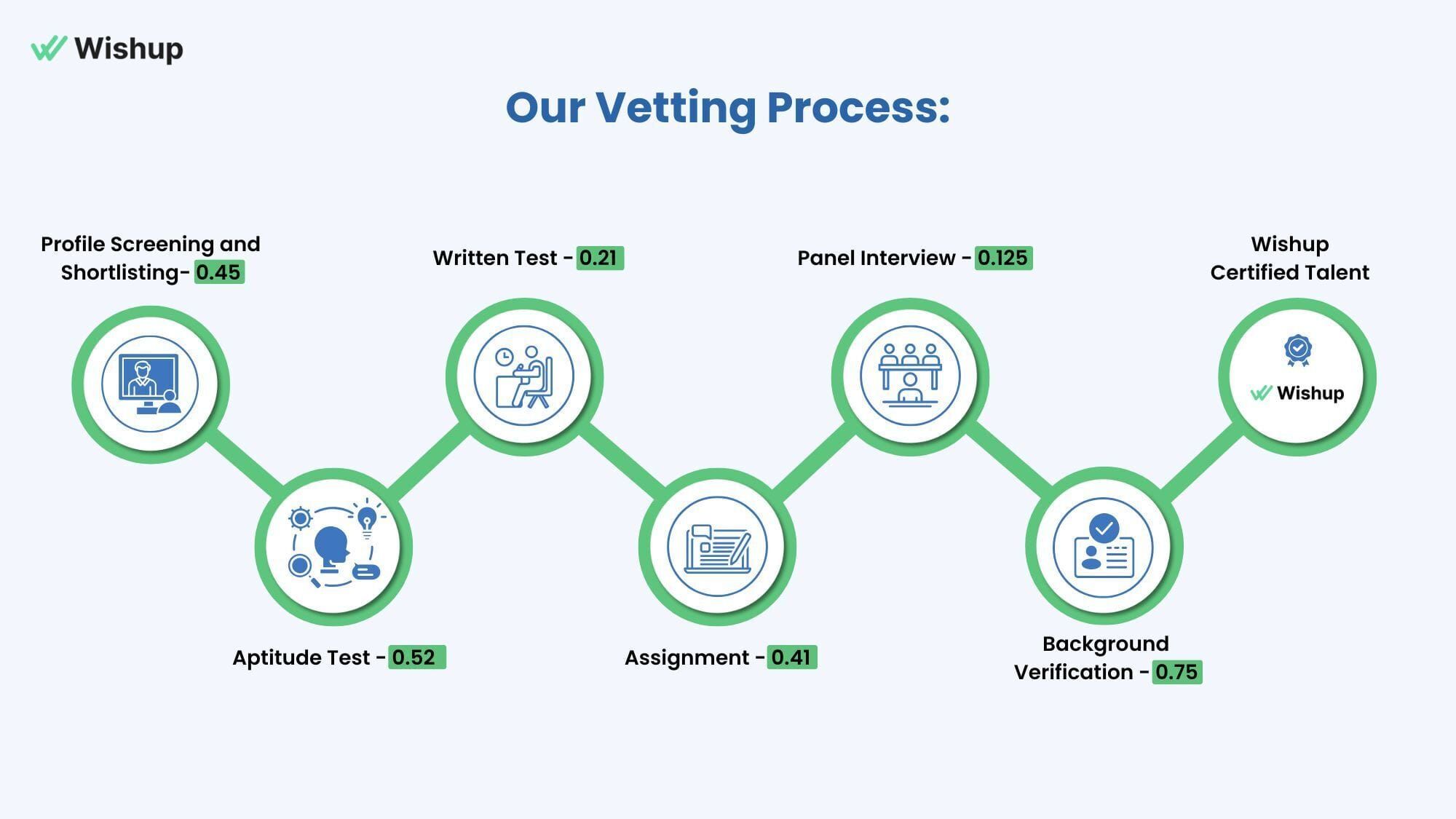
Wishup performs a rigorous 6-step screening process to hire the top 0.1% of virtual assistants. Then, they are matched with busy executives like you.
3. "Communication Is Too Hard"
The myth: Time zones kill you. Language barriers make everything impossible. You'll spend hours clarifying simple tasks.
The reality: Slack exists. Zoom exists. Loom lets you record a 2-minute video explaining anything. Most VAs in the Philippines or India know English (written and oral) better than your neighbor. They know how to communicate remotely. Also, you can hire timezone-specific virtual assistants to work alongside them. That's the flexible perk offered by remote VAs.
When can communication be challenging with a VA?
If you hire someone in Manila and you're in New York with zero overlapping hours, communication gaps can happen. If you hire a VA who doesn't speak your language well and you refuse to use tools like Loom, yeah, you'll struggle.
Wishup virtual assistants work around the clock (90% of the workforce operates in US business hours) with a turnaround time of 5 minutes to operate in tandem with the business owners.
4. "VAs Are Too Expensive"
The myth: Only Fortune 500 companies can afford virtual assistants. Small businesses get priced out.
The reality: On average, Indian VAs cost $8-20/hr and Filipino VAs cost around $4 - $10. You save $30,000+ per year per employee compared to hiring in-house. That's a 78% cost reduction. When you compare the pricing of virtual assistants from top VA companies, you can find 80% of the VAs are affordable.
When can VAs be really expensive? The cost of US-based agency VAs ranges between $3600 per month and $5500+ per month. If you're a solo founder or a small business owner, that'll strain your budget.

Calculate Your True Virtual Assistant Cost for FREE
The only VA cost calculator built for founders.
Stop guessing. Get your real number.
5. "Data Security Is a Nightmare"
The myth: Your VA will leak your customer list. They'll steal your banking passwords. Remote access means zero security.
The reality: Most professional VAs use LastPass, 1Password, and secure file sharing. NDAs are standard practice followed by managed virtual assistant companies like Wishup or Belay. Strict security protocols are naturally baked into their business operations. They've handled millions in client data without major breaches.
When does data security feel risky with a VA? If you hand your business banking login to a random Upwork hire you found in 10 minutes, you're inviting amazing trouble. If you don't use password managers or give VAs direct access to everything instead of role-based permissions, yeah, you're exposed. Use tools. Be smart.
Wishup’s privacy policy is built to protect your data at every level. Every Virtual Assistant signs a legally binding NDA. Strong physical, administrative, and technical safeguards are in place. Payment information is never stored directly. And you can request access to or deletion of your data at any time.
6. "AI Will Replace VAs Anyway"
The myth: Why hire a human when ChatGPT can write emails and schedule meetings? VAs are getting obsolete.
The reality:
AI isn’t replacing VAs. It’s changing how they work. Sure, almost every company says they’re “using AI”. As per our latest VA report, 88% report adopting AI it in at least one function. But only a small percentage have actually rolled it out properly across the business. Most are still experimenting. They stack tools, workflows get messy, and ROI gets fuzzy. The companies that are actually seeing results use AI with humans in the loop. AI handles the volume. A real person reviews it, sharpens it, and plugs it into real workflows.
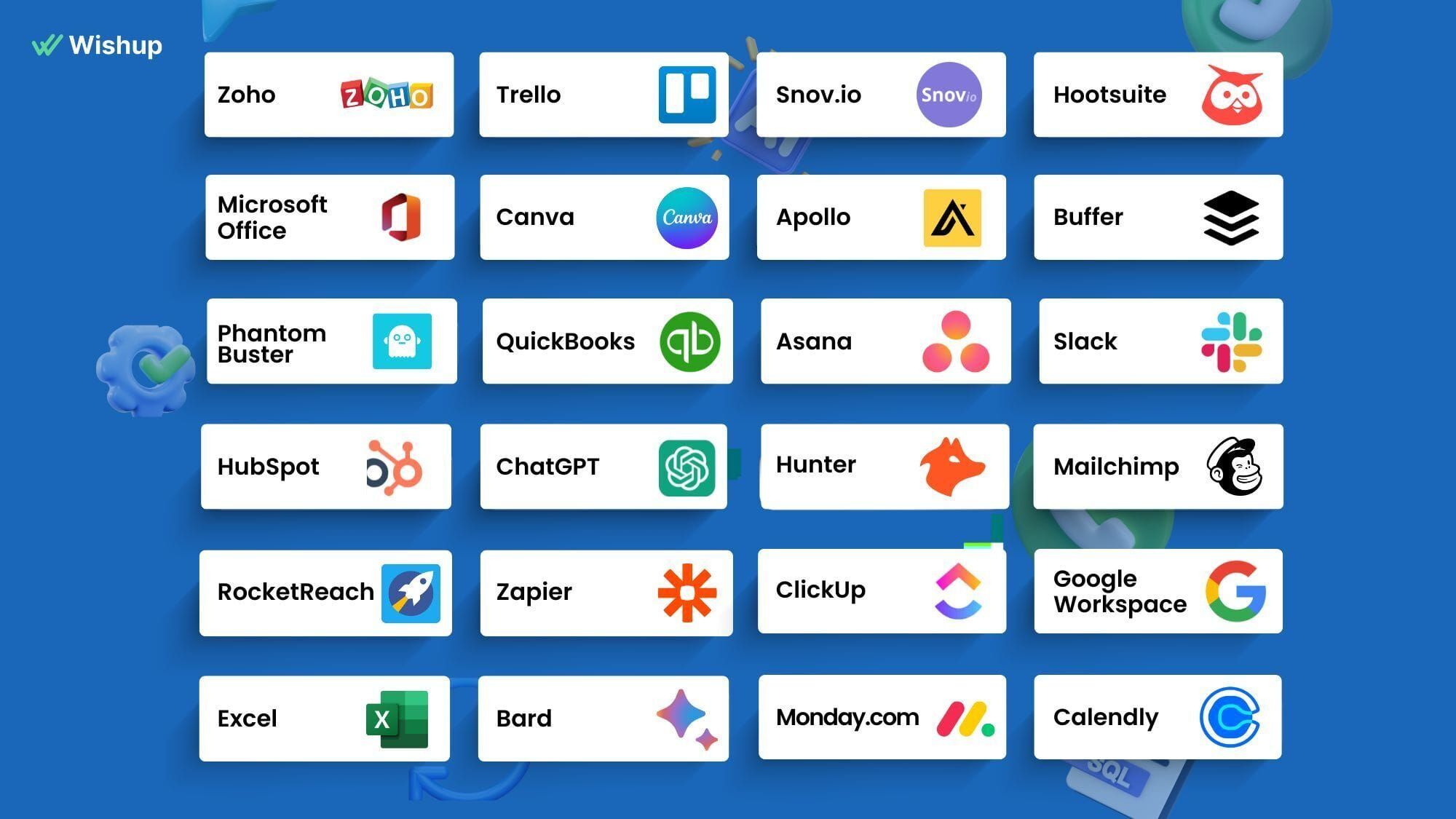
AI can take care of 60–70% of repetitive tasks like drafting, sorting, summarizing, and basic automation. But the last 30–40%? That’s judgment, nuance, client relationships, and anything that can’t afford mistakes.
Over-automate and you risk trust. Under-automate and you waste money.
The real leverage comes from knowing what to automate with AI and what to delegate to human VAs.
When it's actually true: For pure data entry and template emails, yeah, AI is cheaper than even a $3/hr VA. If your tasks are 100% repeatable without needing any human oversight, a Zapier automation beats a human. But most businesses need both.
7. "You’ll Spend More Time Managing a VA Than Doing the Work Yourself"
The myth:
Training a VA takes forever. You’ll have to explain everything. Managing them becomes another full-time job.
The reality:
A properly trained virtual assistant should reduce your workload within the first few weeks. The real issue is a lack of systems, not delegation. When tasks are documented, expectations are clear, and workflows are defined, a VA can operate independently. And if you’re working with a managed VA company that assigns a dedicated CSM (Customer Success Manager), you don’t have to worry about day-to-day supervision at all. The CSM handles performance tracking, feedback loops, and replacements if needed. That layer removes the management burden from your plate.
When will you struggle managing a VA?
If you hire randomly, provide zero documentation, and constantly change instructions, you’ll end up micromanaging.
Where to Actually Find Reliable Virtual Assistants?
Freelance platforms (not recommended)
You’ll find a large talent pool. You are responsible for vetting, interviews, skill tests, onboarding, and replacements. Quality varies heavily.
Best if you have time and a strong hiring process.
LinkedIn or Naukri
You control the full hiring process. You can conduct deep interviews and background checks. Slower than marketplaces. Requires internal HR effort.
Managed VA companies (like Wishup or Belay)
- Pre-vetted and trained talent.
- Faster matching.
- Structured onboarding.
- Replacement guarantees.
- Ongoing supervision and quality checks.
- Best option if you want speed and lower hiring risk.
The Actual Hidden Challenges with Virtual Assistants
1. Hiring Speed
Some providers take weeks to match you. Delays slow down operations.
Faster-matching companies reduce downtime (some match within hours).
2. Timezone & Turnaround Time
Misaligned timezones reduce responsiveness. Slow turnaround impacts workflow.
Round-the-clock VA companies solve this with overlapping shifts.
3. Training & AI Skills
Not all VAs are trained in modern AI tools and automation systems. Skill gaps create inefficiencies.
Managed VA companies typically provide continuous training and tool upgrades. Wishup provides 8-week intensive training to all its virtual assistants before matching them with their clients.
Bottom Line
Hire strategically, use AI where it makes sense, delegate judgment-heavy work to trained humans, and choose a structured provider. If you do this, you can easily unlock leverage.
Ready to Hire Without Guesswork?
If you want:
- Pre-vetted, trained VAs
- Fast matching (not weeks of interviews)
- AI-ready assistants who understand workflows
- Clear accountability and security
Then work with a managed partner like Wishup that has already built the system.
Wishup matches you with the top 0.1% of virtual assistants in 60 minutes.
Every assistant goes through structured screening and an 8-week training before working with clients.
Stop testing random profiles.
Stop wasting founder time.
Hire smart.
Delegate properly.
Scale faster.
👉 Schedule a free interview with a virtual assistant today.
