Accounts receivable (AR) outsourcing means hiring a third party to manage your invoicing, collections, and AR reconciliation.
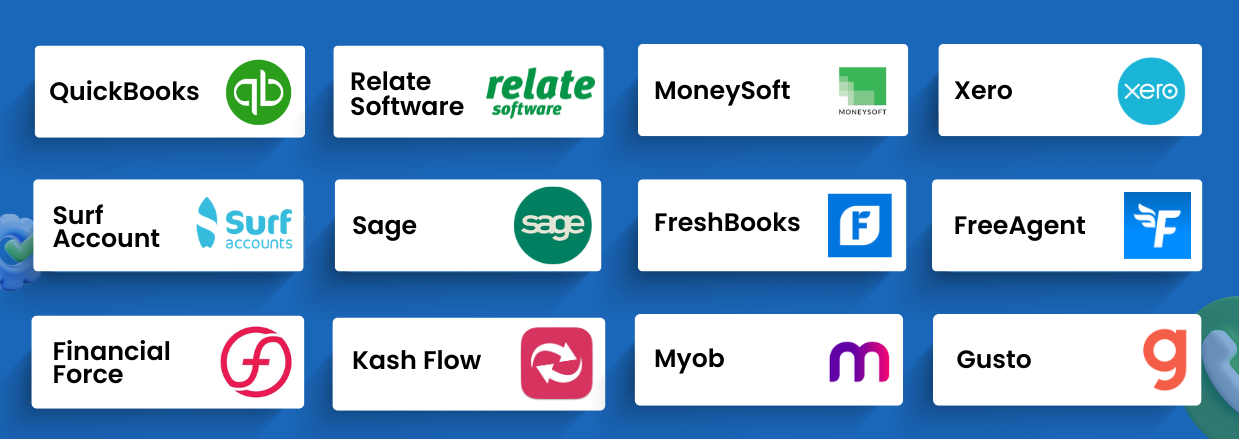
This is exactly the solution Wishup offers: you can hire a virtual bookkeeper to handle your AR using tools like QuickBooks, Xero, or Zoho.
Our bookkeepers are pre-vetted and proficient in 120+ business tools, so you don’t need to train them (and if needed, Wishup’s training team will onboard them in about a week).
In practice, outsourcing AR lets small and medium businesses avoid hiring in-house staff and improve cash flow – all while focusing on core operations.



Why Outsource Accounts Receivable?
Businesses often struggle when customers’ invoices go unpaid or untracked. Delayed payments, high days-sales-outstanding (DSO), and overworked staff are clear signs you need AR outsourcing. For example, if invoices are piling up and collection follow-ups are inconsistent, cash flow suffers. Outsourcing fixes this by providing experts who send reminders, match incoming payments, and report on aging balances. In effect, outsourced AR gives you “a scalable solution that not only reduces overhead and hiring costs but also optimizes processes”. In short, AR outsourcing ensures timely billing and collections so you can focus on growing your business.
Several scenarios call for AR outsourcing:
- Overdue invoices piling up – If you or your small team are scrambling to chase payments, outsourcing ensures consistent follow-ups.
- High DSO (Days Sales Outstanding) – When your DSO is rising, AR outsourcing can slash it (often by 15–30% within months), unlocking cash that’s tied up in receivables.
- Manual bookkeeping workload – Founders or accountants spending hours on routine AR tasks distracts them from strategic work; outsourcing frees their time.
- Lack of AR expertise – If your team isn’t specialized in collections, an outsourced provider brings proven workflows and tools.
- Growing transaction volume – As your invoices grow (e.g. in SaaS, agencies or e-commerce), an outsourced team scales quickly without you hiring full-time staff.
Wishup’s solution fills these gaps. Our virtual bookkeepers act like an in-house AR team without the overhead: they’ll onboard in just 60 minutes, handle billing in tools like QuickBooks or Xero, and follow up on payments around the clock. This keeps your cash flow steady and your customers happy.
Key Accounts Receivable Outsourcing Tasks
Outsourcing your accounts receivable means delegating all routine AR tasks to experts. A Wishup virtual bookkeeper can handle everything from invoice creation to cash application. Key AR tasks include:
Invoice generation and delivery
Create and send customer invoices on schedule (including one-off and recurring invoices).
Payment tracking
Record incoming payments and match them to open invoices in your accounting system.
Collections follow-up
Send payment reminders, make collection calls or emails for overdue balances, and escalate if needed.
Cash application
Apply payments against the correct accounts and resolve partial payments or unapplied cash.
AR reconciliation
Reconcile customer accounts to ensure every payment is accounted for; prepare and update AR aging reports.
Customer support
Respond to customer billing queries and resolve disputes related to invoices.
Reporting and analysis
Generate accounts receivable aging reports, customer statements, and cash flow forecasts for management review.
With Wishup, all these tasks are covered. In fact, our virtual bookkeepers follow a detailed checklist – for example, they create and send invoices, track payments, and follow up on overdue invoices as part of their standard AR duties. Because our bookkeepers are trained in tools like QuickBooks, Xero, and Zoho (over 120+ in total), they can hit the ground running in your systems.
Our teams also go beyond the basics. For instance, Wishup virtual bookkeepers can prepare customer statements, manage credit memos, and even do basic credit checks or credit limit reviews. They ensure every invoice is tracked, every payment is posted correctly, and any discrepancies are flagged. This end-to-end coverage means no AR task falls through the cracks.
Benefits of Accounts Receivable Outsourcing
Outsourcing accounts receivable delivers multiple business benefits. In particular:
Cost Efficiency
You save on salaries, benefits, and software costs. Maintaining an in-house accounts receivable staff can be expensive – it’s not just wages, but also training and infrastructure. By outsourcing, you eliminate the overhead of a full-time team. Many companies see reduced DSO and faster invoice-to-cash, which directly improves profitability.
Improved Cash Flow
Expert collections teams use best-practice strategies to speed up payments. Studies show outsourcing accounts receivable improves cash flow by reducing delays – in one case, a company cut overdue invoices by 20–30% and unlocked significant working capital. Automation tools also speed up reminder cycles and make payment easier for customers.
Focus on Core Business
Instead of juggling routine billing tasks, your team can focus on growth. Outsourcing “lets your team focus on areas that promote growth and strategy, instead of getting stuck with paperwork and collections”.
Expertise and Accuracy
Third-party accounts receivable specialists bring proven processes and technology. They reduce errors (like mis-posted payments) with systematic reconciliation and often include analytics to spot issues early.
Scalability
As your business grows, your accounts receivable volume may spike. An outsourced service can ramp up quickly adding extra hours or personnel as needed without you hiring new staff.
Better Customer Experience
Professional accounts receivable teams maintain polite, consistent communication with customers about payments, improving relationships. They also handle disputes and questions efficiently.
Reduced Risk
Outsourcing providers often offer strict SLAs (service guarantees) and backups. For example, Wishup guarantees the first task completion, weekly quality checks, and even a 24-hour replacement for any unavailable assistant, so your accounts receivable never stalls.
Overall, accounts receivable outsourcing transforms accounts receivable from a cost center into a value-add. It’s not just about saving money; it’s about turning accounts receivable into a strategic, data-driven process. By letting experts handle it, companies often find their cash flow steadier and DSO lower within months of outsourcing.
How to Outsource Accounts Receivable: A Step-by-Step Process
Outsourcing AR successfully isn't just about picking a provider — it's about
setting the engagement up to actually work. Here's the process, regardless
of who you choose to work with:
1. Define your goals. Are you trying to reduce DSO, cut overhead costs,
free up internal staff time, or all three? Clear objectives shape which
provider and service model actually fits.
2. Evaluate providers against your specific needs. Look at track
record, technology stack compatibility, security practices, and how
flexible their service model is — see the criteria below for what to
check specifically.
3. Request a detailed scope and pricing breakdown. Understand exactly
what's included (invoicing, collections, reconciliation, reporting) and
what isn't, so there are no surprises once you're live.
4. Build a short transition plan. Decide what gets handed off first,
who owns communication with your customers during the switch, and how
existing AR data gets transferred.
5. Set clear KPIs from day one. DSO, collection rate, invoice accuracy,
and response time are the standard metrics — agree on targets upfront so
you can actually measure whether outsourcing is working.
6. Monitor and adjust. The first 30-60 days usually surface what needs
tweaking — reporting cadence, escalation rules, or communication
preferences. A good provider treats this as normal, not a red flag.
What to Look for in an Accounts Receivable Outsourcing Provider
Not all AR outsourcing looks the same. Whoever you choose, these are the
criteria worth checking before you sign anything:
Track record and references. Ask for examples of businesses similar
in size and industry to yours, and what results they saw — DSO reduction,
collection rate improvement, or time saved internally. A provider
confident in their results will have specifics, not just testimonials.
Technology compatibility. Your provider should work inside the tools
you already use (QuickBooks, Xero, NetSuite, or your specific ERP) rather
than asking you to adopt a new system. Ask how they handle integration
and whether there's a learning curve on your end.
Security and compliance practices. Since AR involves sensitive
customer payment data, ask directly about data encryption, access
controls, and compliance with relevant standards (SOC 2, GDPR, or
industry-specific requirements like HIPAA if you're in healthcare).
Flexibility and scalability. Can the service scale up during busy
periods or down during slower months without penalty? Fixed-team
providers can struggle here; look for a model that flexes with your
actual invoice volume.
Communication and responsiveness. How quickly does the provider
respond to questions, and who's your actual point of contact day to day?
Slow communication is one of the most common complaints about outsourced
AR — worth asking about response-time commitments upfront, not
discovering them after signing.
Contract flexibility. Avoid long lock-in contracts if you're testing
outsourcing for the first time. A provider confident in their service
shouldn't need to trap you in a 12-month commitment to prove it works.
How Wishup Virtual Bookkeepers Empower AR Outsourcing
Wishup specializes in providing Virtual Bookkeepers as part of a managed outsourcing service.
Our bookkeepers are like dedicated in-house staff, but with Wishup’s support and quality controls.
Key aspects of Wishup’s AR outsourcing service include:
Fast Onboarding
You can onboard a Wishup bookkeeper in as little as 60 minutes. We pre-screen and have talent ready, so there’s no lengthy hiring delay.
Strict Vetting & Training
Wishup’s candidates go through a 5-step vetting process and an 8-week AI & communication training. Only the top 0.1% make it. They learn U.S. business practices and automated tools, so they’re ready to work on day one.
Tool Proficiency
Our bookkeepers are trained in 120+ business tools (including leading accounting software and AI tools). If your company uses QuickBooks, Xero, Zoho, or other systems, the VA already knows them. Even if your niche tool is unfamiliar, Wishup’s training team will bring them up to speed within a week.
Dedicated Support Model
You get a consistent, dedicated or managed resource (your choice). For dedicated hires, a single bookkeeper (part-time or full-time) focuses on your tasks. For managed service, Wishup assigns the optimal team to fit the workload. Either way, it feels like “an in-house employee but without the commitment.”
Continuous Quality Oversight
Every bookkeeper has a dedicated manager. Wishup performs weekly QA reviews, fortnightly SOP checks, and monthly customer success manager checks to ensure high standards. This means your AR work is double-checked and compliant with your processes.
Backup & Replacement
We guarantee continuity. If your virtual bookkeeper is on leave or leaves, we provide a backup or replacement within 24 hours, at no extra cost. You also get the “hire 3 at price of 1” benefit (three VAs share the load of one role), for greater resilience.
Unlimited Free Direct Interview
Wishup promises a 90% first-match success (if not satisfied with the first virtual bookkeeper we propose, the second is 100% successful) and a first-task completion guarantee. We even offer a 30-day ROI report to show the impact on your business in the first month.
Advanced Tools & AI Ready
Our reliable and dedicated bookkeeping team is trained on automation and AI tools to streamline AR (e.g. 50+ automations planned by Q3). This means processes like payment matching and reminders can be semi-automated for speed. Plus, our internal tools (like the Wishup Employee App) give you real-time updates on work.
Pricing is flexible to fit your needs:
- Managed Bookkeeping ($299/month): Recurring bookkeeping support (ideal for light volumes or when flexibility is key).
- Dedicated Part-Time ($999/month): 80 hours/month (about 4 hours/day) of a dedicated bookkeeper. Good for steady mid-volume businesses.
- Dedicated Full-Time ($1,799/month): 160 hours/month (8 hours/day) dedicated. Fits businesses needing daily AR attention.
Each plan comes with a dedicated account manager, guaranteed response times (e.g. 5-minute turnaround on queries during business hours), and no setup or onboarding fees. This means even our lowest plan gives you reliable accounts receivable support with Wishup’s high-quality assurance behind it.
Accounts Receivable Outsourcing vs. In-House
Should you outsource accounts receivable or keep it in-house? Both have pros and cons:
Cost
In-house means salaries, benefits, and software licenses. Outsourcing shifts to a predictable monthly fee. In practice, outsourcing often saves 30–50% compared to full-time hires once you include overhead.
Control & Flexibility
In-house is directly under your roof, but flexible headcount is hard. Outsourcing gives flexibility: scale hours up or down each month, and try before you buy (no long contracts).
Expertise
In-house staff may need time to ramp up on collections best-practices. Wishup’s VAs start with deep expertise and training. The vetting ensures they know AR top-to-bottom.
Reliability
An employee may take leave or quit, disrupting accounts receivable. Wishup provides backups and replacements around the clock. You effectively get a small team covering your accounts receivable rather than one person.
Technology
Wishup brings modern tools and AI in-house. For example, our virtual bookkeepers use QuickBooks Online’s latest features or Xero’s automation add-ons automatically. In-house teams often don’t have access to the same breadth of automation out-of-the-box.
Startup Speed
Hiring in-house can take weeks or months (recruiting, training, background checks). Wishup matches you to a VA in 60 minutes or lets you interview candidates the same day for free.
For most small to mid-sized US businesses, outsourcing AR via Wishup offers the best of both worlds: you get consistent, in-house quality support without the long-term hiring risk. In many cases, businesses find they recover the cost of outsourcing through faster collections and reduced errors.
Who Needs Accounts Receivable Outsourcing?
Accounts receivable outsourcing is ideal for any US-based business that issues invoices – especially small and mid-sized companies that want to optimize cash flow without large overhead.
If you're still deciding between outsourcing just AR versus full bookkeeping support, our guide on hiring a bookkeeper for small business breaks down the difference.
Some examples:
Service Agencies and Consultancies
With clients on monthly retainers or project billing, prompt invoicing and follow-ups keep revenue steady. A Wishup bookkeeper can ensure client billing is accurate and on time.
SaaS and Subscription Companies
Recurring revenue models (Monthly/Annual plans) need automated invoice cycles and payment tracking. Wishup’s team can manage subscription billing in tools like QuickBooks or Stripe integrations.
E-commerce & Retail
High sales volume means many transactions and potential disputes. Outsourced AR ensures every sale translates to collected cash without burdening in-house staff.
Healthcare & Medical Practices
Insurance claims and patient billing can complicate AR. Outsourcing standard patient invoice follow-ups or co-pay collections frees up your office staff.
Small Manufacturers and Distributors
When dealing with purchase orders and credit terms for customers, outsourced teams can handle the order-to-cash cycle (invoice, apply payments, aging).
Professional Services (Law, Accounting, etc.)
Time-based invoicing and client statements often demand detailed AR work. A virtual bookkeeper ensures accuracy and can liaise with clients about invoices.
In fact, Wishup serves businesses across 50+ industries (from startups to real estate to non-profits). Any company looking to improve collections, reduce DSO, or simply save the headache of chasing payments can benefit from AR outsourcing.
This is also exactly where deferred revenue accounting gets tricky — see our guide to bookkeeping for startups for how to handle prepaid annual contracts correctly.
Accounts Receivable Outsourcing Cost & Pricing
How much does it cost to outsource accounts receivable?
Besides Wishup’s packages above, the answer depends on volume and service level:
- Fixed Monthly vs Hourly: Wishup offers fixed monthly rates ($299 to $1,799 as noted). Some firms charge hourly (e.g. $30–50/hour) or per-invoice.
- Complexity Factor: Higher invoice volume, multiple systems (ERP vs. QuickBooks), or international payments can increase cost. Wishup’s fixed pricing absorbs this complexity without surprise bills.
- Value Over Price: Remember, outsourcing AR is an investment. If faster collections or fewer errors frees up a few percentage points of revenue, the return far exceeds the cost of a bookkeeper. Wishup even provides a 30-day ROI report to show this impact.
Compared to hiring an employee (often $45k–$65k/year plus benefits), outsourcing is far more affordable – especially when you only pay for the time and expertise you use. For example, a single Wishup part-time bookkeeper (80 hrs/mo) costs $999, which can cover the work of an entry-level accountant for half the price.
Overall, Accounts receivable outsourcing cost with Wishup is transparent and scalable. You choose the package, and we handle the rest.
Frequently Asked Questions on Accounts Receivable Outsourcing
What's the difference between AR outsourcing and invoice factoring?
They solve different problems. AR outsourcing means a third party manages
your invoicing and collections process on your behalf — you still get paid
by your own customers, just with expert help chasing it. Invoice
factoring is different: a finance company buys your unpaid invoices
outright for a discounted upfront payment, then collects from your
customers directly. Factoring gets you cash faster but costs more; AR
outsourcing keeps you in control of customer relationships while
improving how efficiently you collect what you're owed.
Is it safe to outsource accounts receivable? What about data security?
It should be, with the right provider. Since AR involves sensitive
customer payment information, ask any provider directly about data
encryption, access controls, and compliance with relevant standards. A
reputable AR outsourcing partner will have clear answers to security
questions before you sign anything — treat vague answers here as a red
flag regardless of who you're evaluating.
Will outsourcing AR hurt my relationship with customers?
Not if it's done well. Professional AR teams are trained to maintain
polite, consistent communication — the goal is steady, predictable
follow-up, not aggressive collections tactics. In many cases, customers
actually experience more consistent communication than they would with
an internal team stretched across too many responsibilities.
What size business actually needs to outsource accounts receivable?
There's no strict revenue threshold — the real signal is invoice volume
and how much time collections is currently eating. A business sending a
handful of invoices a month with reliable customers may not need it yet.
Once you're chasing overdue payments regularly, seeing DSO creep up, or
pulling a founder or ops lead off higher-value work to manage collections,
it's usually worth it regardless of overall company size.
