Sunday, 10:14 PM. The demo is Tuesday. Customer support sits 23 tickets behind. QuickBooks, the tab you haven't opened in six weeks keeps flashing a notification you are pretending to ignore. If that is your week, you need to hire virtual bookkeeper support before Tuesday. But before you do, read this.
This is the guide to bookkeeping for startups.
Most outsourced bookkeeping for startups online falls into two camps. Either it sells you software, or it sells you a $599/month service built for VC-backed Delaware C-Corps. Neither helps the 80% of US founders who are bootstrapped, multi-entity, or simply too busy to keep up.
This guide is for the rest of us. Real problems. Real costs. Real options.
What you'll get out of this guide
- The 20 bookkeeping problems we see in nearly every startup we serve
- What bookkeeping for startups actually costs in 2026
- How to choose between DIY, freelancer, and a managed bookkeeping team
- The 50+ tools your bookkeeper should already know
- How to hire a fully trained bookkeeper for your startup in under 60 minutes


The 20 Bookkeeping Problems Every Startup Founder Faces
Bookkeeping breaks quietly. By the time founders notice something is wrong, the damage is usually months deep. Below are the twenty problems we hear from new startup clients every single month.
See how many sound familiar.
Cash visibility and runway
Cash flow problems usually do not appear all at once. Instead, they build quietly through delayed reconciliation, unclear reporting, inconsistent expense tracking, and numbers that no longer reflect what is actually happening in the business.
As a result, founders start making decisions without complete financial visibility.
The problems below are some of the most common signs that bookkeeping has started becoming difficult to manage.
1. You don't know your real burn rate
A founder told us last quarter his company had "plenty of runway." Two months later, payroll bounced. The numbers had been wrong the whole time. Without weekly reconciliation, burn is a guess.
2. Your spreadsheet finally broke
Excel works fine until you cross a few hundred transactions a month. After that, one bad formula hides a five-figure error for weeks. We see this almost every cleanup engagement.
3. Cash flow forecasting feels like throwing darts
Revenue is coming. You just don't know when, or whether it arrives before rent does. Without a forecast tied to clean books, every decision is a coin flip.
4. You mixed personal and business spending again
Your business card and personal card live in the same wallet. Now you can't tell which Amazon charge was for the office and which was for a birthday gift. According to CB Insights, 38% of startups fail due to cash flow problems, and this is usually where it starts.
Records and documentation
Once records become disorganized, even basic bookkeeping tasks start taking longer than they should.
Missing receipts, unreconciled statements, and poorly categorized transactions make reporting harder to trust and tax preparation harder to manage.
Over time, these small gaps create larger financial blind spots that are difficult to clean up without structured bookkeeping support.
5. Receipts pile up in your inbox
Stuffed into folders. Photographed and forgotten. By March, half are unreadable. The IRS explicitly requires supporting documents for every deduction on your return.
6. Bank statements never match your books
Reconciliation should take a few hours each month. For most founders we meet, it takes a few days, if it happens at all. A six-month reconciliation gap can take weeks to untangle.
7. Your chart of accounts is a mess
Marketing spend ended up under "office supplies." Software subscriptions live next to legal fees. Reports come out unreadable. Categorization is one of the highest-impact things a bookkeeper fixes in the first 30 days.
8. You record cash when it moves, not when it is earned
Cash-basis accounting works at $0 revenue. It stops working the second a customer prepays for an annual plan. Most US institutional investors require accrual-basis financials before they will look at a Series A deck.
People, vendors, and payments
As startups grow, payment workflows become harder to track manually. Invoices start going out late, vendor payments become inconsistent, and payroll classifications create compliance risks that founders usually notice too late.
Without organized bookkeeping processes in place, even routine financial operations can start affecting cash flow, vendor relationships, and reporting accuracy.
9. Invoices go out late, or not at all
Customers don't pay faster than you invoice. Slower invoicing means slower cash. The first thing our bookkeepers usually fix is a stalled AR pipeline.
10. You paid the same contractor twice
Without an approval workflow, duplicate payments are common. Reclaiming the money takes weeks. Sometimes it never comes back.
11. Payroll classifications got messy
Contractors got treated as employees. Or the reverse. Either way, the IRS notices eventually. Reclassification penalties have killed otherwise healthy startups.
12. Your accountant keeps asking for the same files
Every quarter. Every audit. The relationship feels like a tax instead of a service. A good bookkeeper produces the CPA-ready packet before your CPA has to ask.
Compliance and tax
Tax and compliance problems usually start long before deadlines are missed.
Incomplete records, incorrect categorization, and inconsistent bookkeeping make it easier for filings, deductions, and reporting requirements to slip through unnoticed.
As the business grows across states, entities, or funding stages, these gaps become expensive problems that are much harder to fix later.
13. You forgot a state filing
Delaware franchise tax. Sales tax in a state you didn't realize you owed nexus in. Penalties stack quickly. We have seen founders hit with five-figure compliance bills they didn't see coming.
14. You missed deductions you legally qualified for
Home office costs. Business travel. Software subscriptions. R&D credits. If they aren't in your books, they don't make it to your return.
15. Your SAFE notes got booked as revenue
This actually happens. The founder paid taxes on money that was technically equity. Convertible debt, SAFEs, and equity rounds belong on the balance sheet, not the income statement.
16. An IRS letter arrived
IRS Publication 583 is clear on what records you must keep and for how long. Few founders read it. Most regret that later.
Hiring and service problems
Bookkeeping support is supposed to reduce operational pressure, not create more of it.
However, many founders end up dealing with inconsistent freelancers, unclear pricing, delayed onboarding, and service gaps that slow work down instead of improving it.
When bookkeeping support lacks structure, accountability, or backup coverage, financial operations quickly become difficult to manage consistently.
17. Your freelance bookkeeper disappeared
Mid-month. With access to your books. No backup. No handoff. This is the most common reason founders move from freelancers to a managed bookkeeping service.
18. Hidden fees showed up after onboarding
What started at $300 a month became $1,200 after "extra hours" and "controller review." Some services charge $400+/hour for CFO time on top of monthly plans without making it obvious upfront.
19. Onboarding took two weeks while unpaid invoices piled up
Traditional agencies and freelance marketplaces have waitlists. Some run one to three weeks. That is one to three weeks your books drift further from clean.
20. You are too busy to pay your bookkeeper's invoice on time
Yes, we have heard this one. More than once. It is a strange irony of running a startup — the people you hired to manage your finances get paid late because you don't have time to manage your finances.
If five or more of these sound familiar, your bookkeeping is costing you more than it should. Not just in fees. In missed deductions, late filings, and decisions made without the right numbers in front of you. We can fix this. Keep reading.
What Bookkeeping for Startups Means in 2026
Most articles define bookkeeping in a sentence and move on. We want to be clearer than that, because most founders we work with have never had the difference between bookkeeping and accounting properly explained.
Bookkeeping for startups is the day-to-day work of recording, categorizing, and reconciling every financial transaction your business produces.
Bookkeeping for startups is the day-to-day work of recording, categorizing, and reconciling every financial transaction your business produces. Good startup bookkeeping is what makes every later financial decision — fundraising, hiring, tax filing — possible in the first place.
It includes invoices sent and received, expenses paid, payroll processed, and bank accounts matched against your accounting software. It is the raw material of every financial decision you will ever make.
Accounting is what you do with that raw material. Tax filing, GAAP-compliant reports, fundraising decks, strategic forecasting and none of it works without clean books underneath.
Startups need both, but at different stages. Bookkeeping starts day one. Accounting becomes critical the moment you take outside capital, hire employees, or cross meaningful revenue.
Why startup bookkeeping is different from small business bookkeeping
A neighborhood retail shop has steady, predictable transactions. A startup does not. Startups deal with:
- Venture capital deposits that are equity, not revenue
- SAFE notes and convertible debt with specific accounting treatment
- Deferred revenue from prepaid annual plans
- R&D tax credits with documentation requirements
- Multi-entity structures (parent C-corp, subsidiary LLCs, foreign entities)
- Rapid scaling that breaks software setups quarterly
- Investor reporting expectations that change by funding stage
A generic bookkeeper trained on dentists and restaurants will miss most of this. A bookkeeper trained on startups will see it before you do.
Accrual vs. Cash-Basis Accounting: What Startups Need to Know
Here's a version of a conversation we have a lot. A founder tells us revenue is up 40% this quarter. We pull the books. Revenue is flat. What actually happened is a customer paid for a year upfront, the whole amount landed in the bank account in one week, and cash-basis accounting counted it as June revenue instead of spreading it across the twelve months it's actually for.
That's not a bookkeeping error. It's what cash-basis accounting does by design, and it's exactly why it stops working the moment you take outside money.
The difference, in practice. Cash-basis accounting records money when it moves. Accrual-basis accounting records money when it's earned or owed, regardless of when it actually lands in the bank. A $60,000 annual contract paid upfront is one cash-basis transaction and twelve accrual-basis ones. Neither is "wrong." They're built to answer different questions. Cash-basis answers "how much money do I have right now." Accrual answers "how is the business actually performing."
Investors only care about the second question. Every institutional check, from a seed round on up, expects accrual-basis financials, because cash-basis numbers can make a business look healthier or worse than it is depending entirely on when invoices happened to clear. A due-diligence team that finds cash-basis books doesn't read that as a red flag on its own, but it does mean redoing the financials before the deal moves forward, which is a bad way to spend the two weeks before a term sheet.
Where this quietly breaks startups specifically:
SAFE notes and convertible debt are the big one, and it's on our problems list above for a reason. A SAFE isn't revenue. It's a promise of future equity, and it belongs on the balance sheet, not the income statement. We've seen a founder pay income tax on a SAFE that got miscategorized, money that was never revenue in the first place.
Deferred revenue is the second one. Annual contracts, prepaid plans, anything where cash arrives before the service is delivered, all of it needs to be recognized over time instead of the day it's paid. Skip this and your P&L tells a story that doesn't match reality by more than a little.
What a due-diligence-ready set of books actually includes, if you want the short version to check yourself against:
- Financials on accrual basis, not cash, going back at least twelve months
- A cap table that reconciles with what's actually on your balance sheet
- SAFEs and convertible instruments categorized correctly, not sitting in revenue
- Monthly close finished within 10 business days, consistently, not just the month before a raise
- Bank and card statements reconciled every month, no gaps
- A clean chart of accounts an outside CPA can read without a translation call
None of this is complicated in isolation. It's just very easy to let slide when you're also trying to ship a product and close a round, which is the actual reason so many founders end up scrambling to fix eight months of books in the two weeks before due diligence, instead of having it already done.
How Your Bookkeeping Needs Change as Your Startup Grows
Every founder assumes their bookkeeping needs stay roughly the same until something forces a change. It doesn't work that way. What counted as "fine" at $0 revenue becomes a liability the day you take your first check from an investor, and what worked at seed stage quietly falls apart by Series A. Here's what actually changes at each point, and where we see founders get caught off guard.
Pre-seed and bootstrapped
If you're pre-revenue or just past it, cash-basis bookkeeping is genuinely fine. Record what comes in, record what goes out, reconcile once a month, keep your business card separate from your personal one. That last part sounds obvious until you're the founder from problem 4 above, still trying to figure out which Amazon charge was for the office and which was for a birthday gift.
Wave or QuickBooks Simple Start covers this. An hour or two a month, done yourself. You don't need a bookkeeper yet, and paying for one this early is usually just paying to feel like a "real company."
Seed stage
The moment funding lands, the rules change even if nothing about your day-to-day spending does. You're now accountable to people who weren't watching before, and cash-basis accounting stops working the second you have a prepaid annual contract, a SAFE note, or your first hire on payroll.
This is exactly where problem 15 happens: the founder who paid taxes on money that was technically equity because nobody flagged that a SAFE note doesn't belong on the income statement. It's also where payroll misclassification creeps in, contractors treated as employees or the other way around, which the IRS eventually notices even when nobody else does.
Most founders bring in a part-time bookkeeper or managed service right around here. Full-time in-house at this stage is almost always premature. The transaction volume doesn't justify the salary yet.
Growth stage, Series A and beyond
By the time you're raising a Series A, accrual accounting isn't a nice-to-have anymore. Investors expect it, and due diligence will find the gap if you're still on cash-basis. You need a monthly close that actually closes on schedule, financials a CPA can pick up without a week of cleanup first, and someone who can handle more than one entity if you've got a parent C-corp with subsidiaries underneath it.
This is where the ten-day close starts slipping toward twenty, and where a single bookkeeper who was fine at seed stage starts drowning. Most of our startup clients in this bracket move to a dedicated bookkeeper with a manager actually reviewing the work, not just producing it.
So when do you actually need to hire one?
There's no perfect month or dollar amount. But if any of this sounds like you, you're already late: you've taken outside funding, you're personally spending three or more hours a week on your books, or someone asked you your burn rate last week and you had to go check three different tabs to answer. Waiting until tax season to fix this is the most expensive version of the decision, because by then the cleanup costs more than the bookkeeper would have.
Whatever stage you're at, getting this wrong compounds. Here's what it actually costs to get it right.
How Much Does Bookkeeping for Startups Actually Cost in the US?
This is the question every founder asks first, and the answer is usually less clear than it should be.
So here is the real picture, pulled from current US labor market data.
The true cost of in-house hiring is higher than salary alone. Add 25–35% for payroll taxes, benefits, software licenses, training, and the cost of running recruitment. A $57,500 bookkeeper actually costs your startup closer to $75,000 fully loaded.
Two data points worth sitting with. According to Indeed, the average US bookkeeper makes $23.66 per hour, based on 14,000+ job postings from the past 36 months. Glassdoor reports an average annual salary of $57,542, or roughly $28 per hour, based on more than 9,000 self-reported salaries.
The takeaway: hiring a managed bookkeeping service at $999 per month is cheaper than the loaded cost of a single in-house junior bookkeeper, and you get a full team behind the work.
DIY, Freelancer, or Managed Service: What Works for Startups
There are real reasons to pick each of these. We will not pretend otherwise.
DIY (You + accounting software)
Good for: Pre-revenue founders, side projects, or solopreneurs with fewer than 50 transactions a month and time to actually do the work. QuickBooks, Xero, or Wave can carry you for the first few months.
Stops working when: Transaction volume crosses 100/month, you take outside capital, you hire your first employee, or you realize you have not closed your books in 90 days.
Freelance bookkeeper
Good for: Founders who need someone hands-on but can't justify a full-time hire. Hourly cost is low ($25–$60/hour in most US markets).
Stops working when: Your freelancer takes vacation, gets a full-time job, or simply disappears. There is no backup. There is no quality review. You become your own QA.
Traditional accounting firm
Good for: Founders who want a name brand on their books. Firms are reliable but slow and expensive.
Stops working when: Your needs sit between "monthly bookkeeping" and "full controller." Most firms aren't structured for the in-between, and you end up paying premium rates for basic reconciliation work.
Managed bookkeeping service
Good for: Startups that want outsourced bookkeeping done by a real person, with a manager reviewing the work and a team behind both - rather than a single freelancer or an in-house hire.
Stops working when: You genuinely need a full-time controller or in-house CFO. At that point, the managed service has done its job — you have outgrown it.
How the four options actually compare
What to Look for in a Bookkeeper for Your Startup
If you are evaluating bookkeepers ours or anyone else's these are the signals worth checking before you sign.
- Real startup experience. Generic bookkeeping skills don't translate. SAFE notes, deferred revenue, R&D credits, and multi-entity structures need someone who has seen them before.
- Tool fluency, day one. If a bookkeeper needs two weeks of training on QuickBooks or Xero, you are paying them to learn. Skip that.
- A real manager reviewing their work. Solo operators make mistakes that compound silently. A weekly QA review catches issues before they hit your reports.
- Backup coverage. Ask directly: "What happens if my bookkeeper is out for two weeks?" If the answer is "they will catch up when they're back," walk away.
- Transparent pricing. No hourly upcharges that show up at month-end. No "controller review" fees buried in fine print. The number on your contract should match the number on your bill.
- Data ownership. You should own your books. If a service requires you to work inside their proprietary software (and you can't export easily), you have lock-in. Avoid it.
- Security practices. Strict NDAs, controlled access, monitored workflows, and time tracking. These should be standard, not extras.
How we built our team to meet this bar. Every bookkeeper we hire passes a six-step in-person vetting process, scores in the 99th percentile on aptitude tests, has three or more years of professional experience, and completes eight weeks of mandatory AI and communications training before being matched with a client. We then run weekly QA reviews, fortnightly SOP adherence checks, and monthly customer success manager reviews on every account.
The 50+ Bookkeeping Tools Your Startup's Bookkeeper Should Already Know
You should not pay anyone to learn your accounting software on the clock. Every bookkeeper on our team comes trained in the tools below, day one. If you use something not on this list, we can almost always match you with someone who knows it.
- Core accounting software
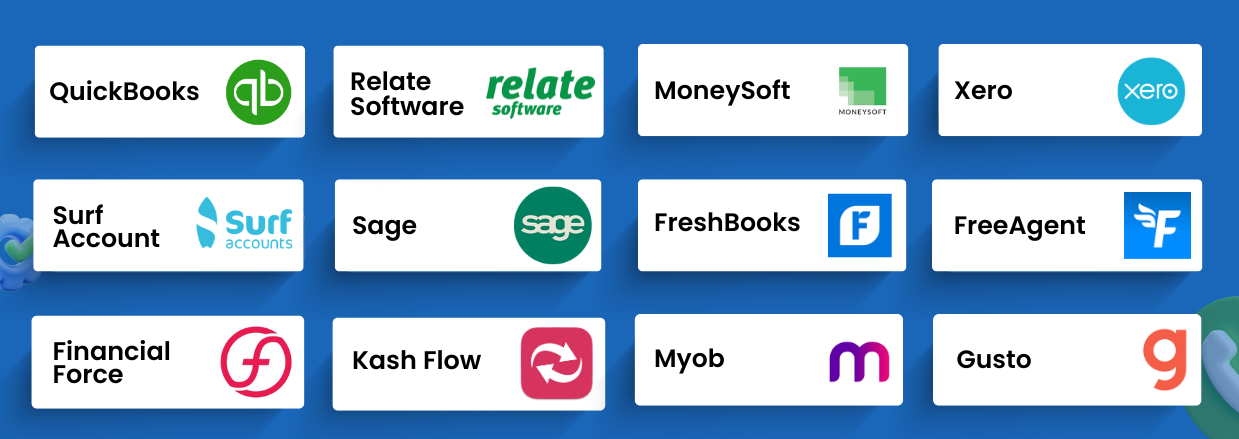
QuickBooks, Xero, Wave, FreshBooks, Sage, MYOB, Zoho Books, NetSuite, FreeAgent, KashFlow, Financial Force
- Spend and expense management
Ramp, Brex, Mercury, Bill.com, Expensify, Dext, Hubdoc, AvidXchange, Tipalti, Divvy
- Payroll and HR
Gusto, Rippling, ADP, Paychex, Deel, Justworks, OnPay
- E-commerce and payments
Stripe, Square, PayPal, Shopify, WooCommerce, Amazon Seller Central
- AI-assisted automation
Booke AI, Vic.ai, Botkeeper, Docyt, Trullion, Klippa
Best Accounting Software for Startups, by Stage
Knowing the tools is one thing. Knowing which one to actually pick is a different question, and most lists like the one above dodge it. Here's the honest version, tied to the stages we walked through earlier.
Pre-seed, DIY territory: Wave. It's free, it does everything a founder with under 50 transactions a month actually needs, and there's no reason to pay for QuickBooks when you're still bootstrapping off a personal card and one Stripe account.
Seed stage, first funding in the bank: QuickBooks Online or Xero. Both support accrual-basis reporting out of the box, both are what any bookkeeper you eventually hire will already know, and both are what investors expect to see once you're past the "just track it in a spreadsheet" phase. Pick QuickBooks if you want the bigger ecosystem of integrations and accountants who know it cold. Pick Xero if you're running multiple entities early, since it doesn't charge per user the way QuickBooks does.
Growth stage, multi-entity or high transaction volume: NetSuite, or QuickBooks Advanced if you want to stay in the QuickBooks family. Once you've got a parent C-corp with subsidiaries underneath it, or you're closing hundreds of transactions a month across entities, the smaller tools start showing their limits. This is usually also the point where the software stops being the bottleneck and the person running it becomes the one that matters more.
One thing worth saying plainly: the software was never the hard part. Every founder we talk to who's behind on their books already has QuickBooks or Xero open in a tab. What's missing is someone who actually uses it every day.
Industry-Specific Bookkeeping for Startups
Not every startup looks the same. A SaaS founder has different books than a dental practice. A real estate startup has different needs than a healthcare clinic. We staff bookkeepers by industry vertical so the person on your account has actually worked on businesses like yours.
Bank Reconciliation
If reconciliation is the work that keeps getting pushed to next week, this is what our team does first. Matching every transaction in your accounting software against bank and credit card statements, flagging duplicates or missing entries.
Healthcare Bookkeeping
Medical practices, telehealth startups, and DTC health brands have specific compliance and billing patterns that need a bookkeeper familiar with them. Our healthcare team understands insurance reimbursement timing and HSA-related expense classification.
Real Estate Accounting
Depreciation schedules, escrow tracking, commission splits, and multi-property entity structures. Our real estate bookkeeping team handles each one without needing to be retrained on the basics.
Accountant for Dentists
Dental practices sit between healthcare and small business in interesting ways. Production reporting, insurance aging, lab fees, and equipment depreciation all need specialized treatment. We staff dental-experienced bookkeepers for these accounts.
How to Hire a Bookkeeper for Your Startup in 60 Minutes from Wishup
Most hiring processes for bookkeepers take one to three weeks. Recruiters source candidates, screen resumes, schedule interviews, negotiate offers, and wait for the candidate to give notice. We built a different model because startups can't afford to wait that long.
Step 1 Tell us your setup (10 minutes)
Share what accounting tool you use, your monthly transaction volume, and the specific problems you want solved. If you don't know your transaction volume yet, that's fine. We will help you figure it out on the call.
Step 2 Interview pre-vetted profiles (30 minutes)
We match you with bookkeepers from the top 0.1% of applicants. Each one has at least three years of professional experience, an aptitude test score in the 99th percentile, and direct training in over 120 AI and accounting tools. You interview as many candidates as you want at no extra cost. Most founders meet two or three before deciding.
Step 3 Start the same day (20 minutes onboarding)
Once you choose a fit, your bookkeeper begins inside your tools the same day. No two-week onboarding cycle. No "we'll get back to you." Books that were six weeks behind start moving toward clean within the first 48 hours.
The math: A two-week delay on hiring a bookkeeper is two more weeks of unread QuickBooks notifications, missed invoicing, and decisions made without numbers. We compress that into one afternoon.
Match with a Bookkeeper →How much does it cost to hire a bookkeeper for Startups from Wishup
Startups aren't all in the same place. A pre-seed founder with 80 transactions a month needs different support than a Series A company running three entities. We offer three tiers so you only pay for the level you actually need.
$299/month
Managed Bookkeeping
Pooled team support, no dedicated bookkeeper. Best for founders with low transaction volume who want clean books delivered monthly without paying for full-time support. Manager-reviewed. Backup coverage included.
- Monthly close on a fixed schedule
- Bank and card reconciliation
- Standard P&L and balance sheet reports
- Backup coverage if a team member is out
$999/month
Dedicated Part-Time Bookkeeper
One trained bookkeeper assigned only to your account, working four hours each business day in your time zone. They learn your business, your tools, and your reporting needs. Most of our startup clients sit in this tier.
$1,799/month
Dedicated Full-Time Bookkeeper
One full-time bookkeeper, eight hours a day, every business day. Best for funded startups, multi-entity operators, or businesses with high complexity. Skip the recruiting, payroll, and HR overhead of hiring in-house.
Advantages of hiring a bookkeeper for startups from Wishup
- Multi-entity and complex transactions handled
- End-of-day reports + monthly CSM review
- Free lifetime access to our workforce management app
- First-task completion guarantee
- Same dedicated bookkeeper every day
- 5 minute response time during working hours from your bookkeeper
- Dedicated customer success manager
- Weekly QA review of all work
- 24-hour replacement guarantee
Frequently Asked Questions About Bookkeeping for Startups
How fast can I hire a bookkeeper for my startup?
Through our team, you can be matched, interview profiles, and start the same business day within 60 minutes. Most founders complete the entire process in a single afternoon. Traditional firms and freelance marketplaces typically run one to three weeks.
Do I need a bookkeeper or an accountant?
Most growing startups need both, but not at the same level. A bookkeeper handles daily and monthly work like reconciliations, invoicing, payroll coordination, financial reporting. An accountant or CPA handles tax filing, GAAP compliance, and strategic decisions. Clean bookkeeping makes your CPA's job faster and cheaper. We do bookkeeping. We coordinate directly with your CPA at tax time.
What software do your bookkeepers know?
Our team is trained in over 50 bookkeeping and accounting tools, including QuickBooks, Xero, Wave, FreshBooks, Sage, NetSuite, Zoho Books, and Bill.com. We also train continuously on new tools as they emerge, including AI-driven platforms like Booke AI and Vic.ai. If you use something niche, mention it during your match call.
Is my financial data secure?
Yes. Every bookkeeper on our team signs an NDA. We use controlled access permissions, monitored workflows, and time-tracking software so you can review activity. For startups handling sensitive financial information, this is non-negotiable, and we treat it that way.
What happens if my bookkeeper takes time off or leaves?
We provide instant replacement and backup coverage at no additional cost. Replacements happen within 24 hours. Books don't stop because someone is sick.
Can a startup get by with just bookkeeping software?
For the first few months, sometimes yes. Once transaction volume grows past 50 to 100 per month, software alone tends to fall behind. The same is true the moment you take outside capital, hire your first employee, or operate across multiple entities. Software does not categorize SAFE notes correctly. A human does.
What records does the IRS actually require startups to keep?
The IRS publishes the answer in Publication 583. The short version: keep documents supporting every line on your tax return for at least three years, employment tax records for four years, and certain documents (fraudulent return situations, depreciation records, real estate basis) potentially indefinitely. A bookkeeper organizes these as you go so you never have to reconstruct them later.
How is Wishup different from services like Bench, Pilot, or Bookkeeper360?
We are a managed service, not a software platform. Our bookkeepers work inside your existing tools — you keep ownership of your data. We don't charge hourly upcharges on top of monthly plans. We don't require you to migrate to a specific accounting software. And we provide a dedicated bookkeeper plus a customer success manager from day one, not a rotating support queue.
When should I switch from DIY to outsourced bookkeeping?
Five signals: month-end close consistently takes more than 10 business days, you are spending more than five hours a week on books, you have taken outside capital and need GAAP-compliant reporting, your CPA is fixing your books at tax time, or you have not closed your books in 30+ days. Any one of these is a signal. Two or more is overdue.
Stop Doing Your Own Books
The founders who scale fastest are not the ones doing every job themselves. They are the ones who hand off the right work to the right people early. Bookkeeping is one of those handoffs.
If your transactions are piling up, your spreadsheet is breaking, or you simply don't want to spend another Sunday categorizing expenses, we can match you with a trained virtual bookkeeper today. The call takes ten minutes. The match takes fifty more. By tomorrow morning, your books can be someone else's job.
Match with a Bookkeeper in 60 Minutes →