
Bookkeeping for a landscaping business means tracking job costs, seasonal cash flow, crew payroll, equipment depreciation, and vendor expenses across a business model that earns 70% of its revenue in 5 months and spends year-round.
Landscaping bookkeeping is the process of tracking a landscaping business's job costs, crew payroll, equipment depreciation, materials, seasonal cash flow, and sales tax, organized so an owner can see profit by service line and stay compliant year-round.
It is harder than standard small-business accounting because revenue is seasonal, payroll shifts between W-2 and 1099 crew, and sales-tax rules differ for maintenance versus installation work.
Book a free bookkeeping consult for your landscaping business.
Getting it wrong is not just an inconvenience. A U.S. Bank study found that 82% of small business failures trace back to poor cash flow management, the exact pain point that landscaping businesses are most exposed to.
This guide covers the 8 financial categories every landscaping owner must track, the accounting method that fits your revenue stage, the software worth using, and the specific bookkeeping tasks you should delegate to a bookkeeping VA versus managing yourself.

Why Is Bookkeeping for a Landscaping Business Harder Than Generic Accounting?
5 financial complexities make bookkeeping for a landscaping business harder than bookkeeping for a retail shop, consulting firm, or e-commerce store:
- seasonal revenue concentration,
- multi-crew payroll with W-2 and 1099 workers,
- job-level cost tracking across service lines,
- heavy equipment depreciation, and
- state-by-state sales tax rules that vary for maintenance versus installation work.
1. Seasonality creates a built-in cash flow trap
A landscaping business doing $700,000 in annual revenue may collect over $490,000 of it between April and September. Fixed costs, equipment loans, insurance premiums, and off-season labor continue through winter.
Without a monthly cash flow forecast updated through the season, owners hit February with near-empty accounts, right before spring ramp-up demands payroll, fuel, and materials simultaneously.
According to AAT research, 42% of businesses have lost money directly as a result of poor accounting practices, and seasonal industries without a cash reserve plan are disproportionately represented in that figure.
2. Job costing adds a second layer of complexity
Mowing maintenance contracts, one-time hardscaping installs, irrigation repair, and seasonal clean-ups have different labor ratios and profit margins. A landscaping owner who tracks all revenue in a single income account cannot tell whether their highest-revenue service is also their most profitable.
One landscape company that cleaned up its books and separated revenue by service line discovered that its mulching jobs looked strong on top-line revenue but were the lowest-margin work in the business once field labor was fully accounted for.
Their highest-margin work was weekly maintenance contracts they had been underpricing for two years.
3. Equipment depreciation creates both a tax opportunity and a tracking burden
A commercial zero-turn mower, a skid steer, three trucks, and two trailers represent $120,000 to $200,000 in depreciable assets for a mid-sized landscaping operation.
Under Section 179 of the IRS tax code, landscaping businesses can deduct the full purchase price of qualifying equipment in the year of purchase rather than spreading it over 5 to 7 years.
However, to get that deduction, you need accurate purchase records, maintenance logs, and a depreciation schedule. Without them, you may miss the deduction or be challenged in an audit.
4. Payroll complexity spikes with seasonal staffing.
A landscaping business may run 4 full-time employees in winter and 14 in summer. Seasonal workers may be W-2 employees or 1099 contractors. It depends on how they are engaged, and the IRS applies strict tests to determine which classification applies.
Misclassifying employees as independent contractors triggers back taxes, penalties, and interest.
Tracking hours by job, not just by pay period, is also necessary to allocate labor costs accurately to individual projects. Most landscaping businesses that rely on a single-rate payroll approach cannot calculate their true labor cost per job.
5. Sales tax rules vary by state, service type, and sometimes by municipality.
Landscaping maintenance services are taxable in many US states, while installation work is treated differently in others.
Snow removal may be exempt in one state and taxable in the next. The tax rate applies based on the job site location, not your business address.
A landscaping company operating across two or three counties or states needs a system that categorizes taxable versus non-taxable revenue automatically, or it will face underpayment penalties at year-end.
These 5 factors combine to make accounting for a landscaping business a genuine operational challenge. The owners who manage it well do so by tracking the right numbers in the right categories.
The landscaping virtual assistant guide sets out the full task list, the platforms a landscaping VA should already know, and three automation workflows that saved one landscaping operation 81 hours a month.
They do it with software designed for field service businesses, and delegating the daily and monthly execution to VAs trained in bookkeeping, so they can focus on the field.
Bookkeeping for Lawn Care Businesses
Lawn care bookkeeping differs from full-service landscaping in three
ways, and the difference is mostly about recurring revenue.
- Contract revenue is predictable, so track it that way: A weekly
or bi-weekly mowing route is subscription revenue, not project
revenue. Track it as recurring monthly income per customer rather
than per visit, and you can see customer lifetime value, churn, and
route density, which are the numbers that actually run a lawn care
business. - Route profitability matters more than job profitability: Drive
time between properties is the hidden cost. Two customers billing
the same amount can differ by 30% in margin purely on where they sit
on the route. Track labour and fuel by route, not just by job, and
the underpriced accounts become visible. - Chemical and fertiliser costs need their own accounts: Fertiliser,
pre-emergent, herbicide and pesticide are consumed across many
properties rather than one job, so they sit awkwardly in job costing.
Track them as a COGS line applied per treatment round, and reconcile
usage against product purchased each season. - On software: lawn care operations usually need route and
scheduling software feeding the books rather than accounting software
alone. Jobber, Service Autopilot and Yardbook handle route
scheduling and sync job data into QuickBooks or Xero.
Payroll runs the same seasonal pattern as landscaping, so the
W-2 versus 1099 classification points above apply identically.
What Every Landscaping Business Must Track in Its Books
The 7 financial categories that accounting for a landscaping business must cover are: job costs per service line, labor and payroll, equipment depreciation, vehicle and fuel expenses, materials and nursery stock, seasonal cash flow, and tax obligations. Tracking all 7 gives you a complete picture of where your money comes from and where it goes.
1. Job Costs Per Service Line
Job costing is the practice of recording every dollar of labor, materials, and overhead tied to a specific job, then comparing that actual cost to your original estimate. For a landscaping business, this means tracking costs separately for each service type, including:
- mowing and maintenance contracts,
- landscape installations,
- hardscaping,
- irrigation,
- snow removal, and
- design services.
Without job costing, landscaping owners manage their business on gross revenue. With it, they manage gross margin by service line, which is the number that actually determines whether growth is profitable or not.
Some tools that you can use are:
- QuickBooks Online's Projects or Classes feature handles this natively.
- Jobber and ServiceTitan pull time and material data from the field and push it into QuickBooks automatically.
2. Labor and Payroll
Labor is the largest cost line in a landscaping business, typically 30 to 40 percent of revenue for maintenance work and 25 to 35 percent for installation projects, and it must be tracked at the job level, not just at the pay period level.
Payroll for landscaping businesses involves:
- full-time salaried employees,
- part-time hourly crew,
- seasonal workers, and
- subcontractors.
Each has different tax treatments and documentation requirements.
3. Equipment Purchases, Depreciation, and Maintenance
Equipment depreciation is both a major tax lever and a planning tool for landscaping businesses, and it requires consistent record-keeping to use correctly. A typical mid-sized landscaping operation carries $150,000 and $500,000 in depreciating assets: commercial zero-turn mowers, trailers, skid steers, compact utility tractors, and work trucks.
Section 179 of the IRS tax code allows landscaping businesses to deduct the full purchase price of qualifying equipment in the year of purchase rather than depreciating it across 5 to 7 years.
The 2026 deduction limit is $2,560,000. Bonus depreciation works as a parallel option for assets that do not fully qualify under Section 179.
Both deductions require accurate purchase records with dates, amounts, and asset descriptions tied to a depreciation schedule in your books. Beyond purchase price, record every maintenance invoice and repair receipt for each piece of equipment.
4. Vehicle and Fuel Costs
Vehicle and fuel expenses are fully deductible, but the IRS requires either a standard mileage log or actual expense records for every business vehicle, and the documentation must be maintained throughout the year, not reconstructed at tax time.
The 2026 IRS standard mileage rate is 72.5 cents per mile for business use.
For landscaping operations running multiple trucks and trailers, the actual expense method typically produces a larger deduction than the standard mileage rate.
The actual expense method tracks the following:
- fuel receipts,
- insurance premiums,
- registration fees,
- maintenance costs, and
- depreciation for each vehicle.
Keep a separate log for each vehicle and flag any personal use at the time it occurs. Personal and business mileage mixed without documentation creates audit risk and loses deductions that are legitimately yours.
5. Materials and Nursery Stock
Materials across landscaping service lines include sod, stone, mulch, topsoil, plants, fertilizers, pesticides, herbicides, irrigation components, gravel, and disposal fees.
For installation projects, you need to:
- build a materials list at the estimating stage and
- record actual purchases against that list.
The variance between estimated and actual material cost is one of the most common sources of margin erosion in landscaping businesses. Moreover, it only becomes visible when materials are tracked at the job level rather than in aggregate.
For high-volume consumables purchased in bulk, such as mulch or fertilizer, track on-hand inventory so your month-end balance sheet reflects accurate asset values.
6. Seasonal Cash Flow Patterns
A 12-month cash flow forecast, updated weekly during peak season and monthly during the off-season, is the most important financial document a landscaping business can maintain.
The forecast maps expected cash in against fixed and variable cash out across every month of the year, not just the months when revenue is strong.
Plot your payroll dates, insurance premium renewal dates, equipment loan payments, and estimated tax due dates against your projected monthly deposits.
In months where outflows exceed projected inflows, the forecast tells you when to draw on a line of credit, when to delay discretionary purchases, and how much of your spring and summer cash to hold in reserve.
Landscaping businesses that build a winter cash reserve equal to 2 to 3 months of fixed operating costs during peak season rarely face the February crunch. Those without a forecast rarely see it coming until it is already a crisis.
7. Tax Obligations
Landscaping businesses carry 4 ongoing tax obligations that require bookkeeping support year-round, not just at filing time:
- federal and state income tax via quarterly estimated payments,
- employer payroll taxes,
- sales tax on taxable services, and
- contractor 1099 compliance.
Quarterly estimated payments are due in April, June, September, and January. Missing or underpaying them triggers an underpayment penalty calculated on the shortfall.
Sales tax rules for landscaping vary significantly by state. In some states, maintenance services such as mowing and fertilizing are taxable. In others, they are exempt while installation work is taxed. Rates apply based on the job site location, not your business address.
If you operate across multiple counties or states, your bookkeeping system must categorize taxable versus non-taxable revenue by location automatically, or you will face accumulated underpayments that compound interest penalties by the time they are discovered.
How to Create a Cash Flow System for Managing Seasonal Landscaping Revenue and Expenses?
The best accounting practice for managing seasonal landscaping revenue and expenses is a rolling 12-month cash flow system that moves peak-season cash into a reserve that funds the off-season. Build it in four steps.
Step 1: Map 12 months of cash in and cash out
List every fixed cost, equipment loans, insurance, storage, off-season labor, against projected monthly revenue for all 12 months. The gap months, usually November through March, are what the system exists to fund.
Step 2: Set a peak-season reserve target
Calculate two to three months of fixed operating costs and treat that as a reserve to fill during peak billing. Move a fixed percentage of every peak-season deposit into a separate account before it can be spent.
Step 3: Update the forecast on a season-based cadence
Update the forecast weekly during peak season, when cash moves fast, and monthly in the off-season. A forecast that is only built once a year cannot warn you about a shortfall in time to act on it.
Step 4: Tie draw decisions to the forecast
When a month projects negative, the system tells you whether to draw on a line of credit, delay a discretionary purchase, or release reserve cash, so the decision is planned rather than made in a panic in February.
How to Set Up a Bookkeeping System in 6 Steps?
Setting up a bookkeeping system for a landscaping business requires 6 steps:
- choose your accounting method,
- open a dedicated business bank account,
- build a system to track finances,
- connect your field service software to your accounting platform,
- create a routine to review financial reports, and
- learn and train your team in basic bookkeeping
Done in order, these 6 steps create a system that can scale from a 3-person crew to a 20-person operation without rebuilding from scratch.
Step 1: Choose your accounting method
Most landscaping businesses under $1 million in annual revenue use cash basis because it directly reflects actual cash available and is simpler to maintain.
Businesses above $1 million, those with large multi-phase installation contracts, or those pursuing outside financing often move to accrual because it gives a more accurate picture of financial position across long project timelines.
The IRS permits most small businesses to choose their method. Consult your CPA before switching, as the transition creates a one-time accounting adjustment that requires a defined process.
Two accounting methods exist, and picking the right one saves you headaches at tax time.
→ Cash basis records money when it actually moves. You get paid for a mowing job on Friday, it goes in the books on Friday. You buy mulch on Monday, it goes in on Monday. Simple, easy to follow, and it shows you exactly what is in your account right now.
→ Accrual accounting records income and expenses when they are earned or incurred, even if the cash has not moved yet. You complete a $12,000 hardscaping installation and invoice the client on March 15, but they pay on April 10. Under accrual, that revenue shows up in March. Under cash basis, it shows up in April.
Which one should you use?
Most landscaping businesses under $1 million in annual revenue do well on cash basis. It is easier to manage, easier to hand off to a bookkeeper, and gives you a realistic picture of cash available day to day.
If you are above $1 million, taking on large multi-phase projects, or starting to work with outside investors or lenders, talk to your CPA about switching to accrual.
Lenders and investors prefer accrual statements because they reflect the full financial picture, not just what has hit the bank.
Step 2: Open a dedicated business bank account
Every landscaping business must have a business-only bank account and a business credit card, with zero personal transactions running through either. Mixing personal and business transactions is the single most common bookkeeping error in small service businesses.
It makes reconciliation inaccurate, creates tax preparation problems, and eliminates the legal separation between you and the business that protects personal assets.
Open both accounts the week you start the business or, if they are currently mixed, open clean accounts now and begin the separation immediately.
Use the credit card for fuel, materials, and supplies so that categorization is automatic through your accounting software.
Step 3: Build a system to track finances
A chart of accounts structures every financial transaction into the right category from the first entry, and a landscaping-specific structure is different from the default chart of accounts that QuickBooks generates for a generic small business. The categories that matter most for landscaping bookkeeping are as follows:
- Income accounts: Under this come Maintenance Contracts, Landscape Installation, Hardscaping, Irrigation Services, Snow and Ice Management, and Design Services.
- Cost of Goods Sold: This section covers field Labor, Payroll Taxes on Field Labor, Materials and Nursery Stock, Equipment Fuel, Equipment Rental, Dump and Disposal Fees, Subcontractors.
- Fixed Assets: This section covers Trucks, Trailers, Commercial Mowers, Skid Steers, Irrigation Equipment, and Accumulated Depreciation.
- Operating Expenses: It includes Office and Admin Payroll, Software Subscriptions, Insurance, Marketing, Vehicle and Equipment Repairs, Storage and Yard Rent, and Professional Fees.
- Liabilities: This category includes equipment Loans, Lines of Credit, Customer Deposits Held, and Accrued Payroll.
Set this up before you enter a single transaction. Rebuilding a chart of accounts after 12 months of incorrectly categorized entries is one of the most expensive clean-up projects a bookkeeper faces.
Step 4: Connect your field service software to your accounting platform
Jobber, ServiceTitan, and Aspire are field service management platforms built for landscaping businesses that sync job data, time tracking, and invoicing directly into QuickBooks Online or Xero.
This connection eliminates the manual step of re-entering job information from a field log into your accounting software, which is both time-consuming and a common source of data entry errors.
Read our blog on “QuickBooks vs Xero” to learn which tool will serve your purpose well.
Step 5: Create a routine to review financial reports
Review the financial reports weekly or monthly to improve profitability. This will lead to cost control. Therefore, review your:
- Profit and loss
- Cash flow.
- Balance sheets
Step 6: Learn and train your team in basic bookkeeping
It is as basic as it goes, teaching yourself and your team, no matter how small, basic bookkeeping. You must understand business finances to ensure consistency and accuracy in financial management.
What Is the Best Accounting Software for a Landscaping Business?
The best accounting software for a landscaping business is QuickBooks Online Plus for multi-crew operations, Xero for teams needing unlimited users, and FreshBooks for solo landscapers.
1. QuickBooks Online
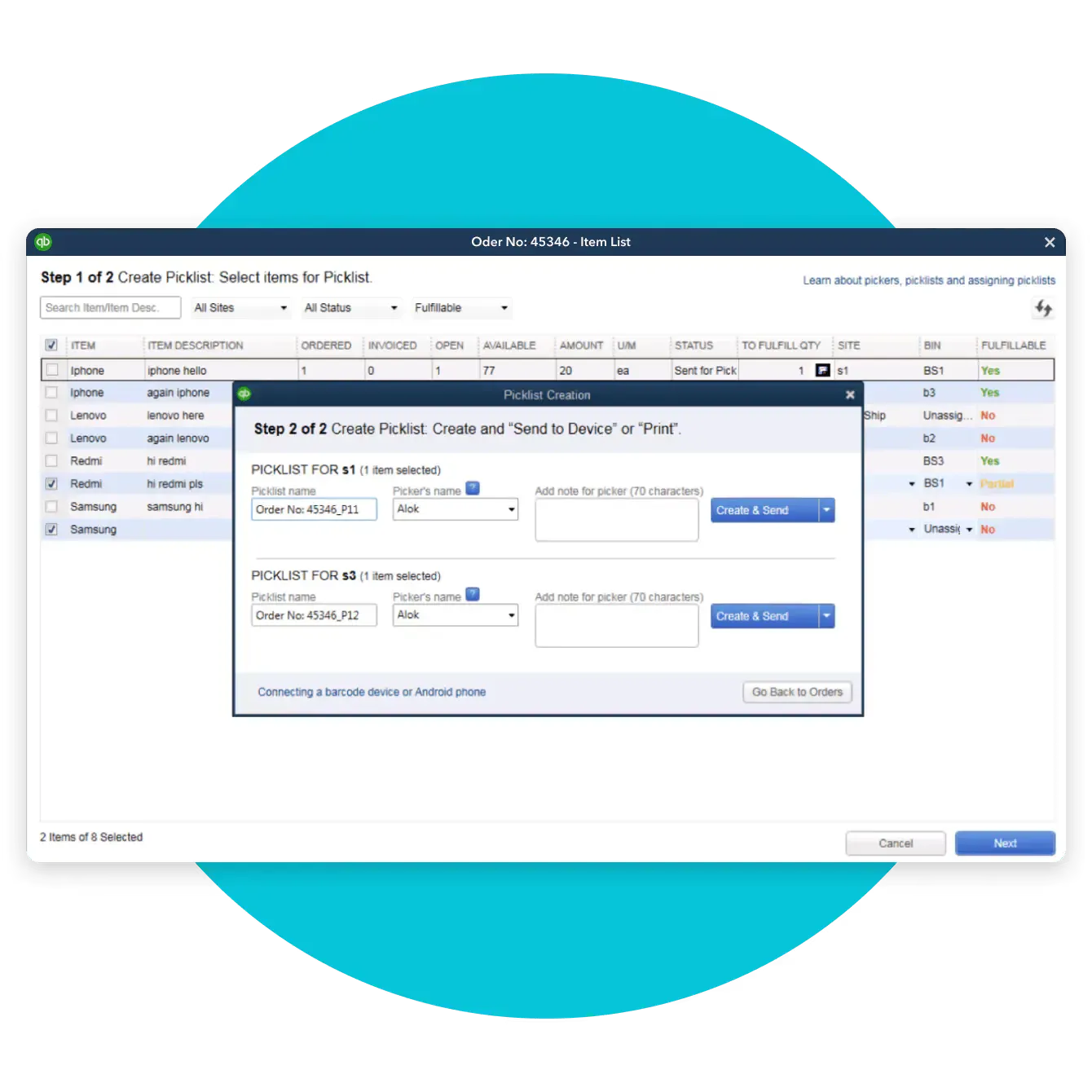
QuickBooks is the most widely used accounting software in the US, and for landscaping businesses, the Plus plan is where it earns its spot.
It does job costing, payroll, bank reconciliation, and financial reporting all in one place. Most CPAs and bookkeeping VAs already work inside it, so handing off access to a professional is seamless.
Features:
- Job costing via Projects and Classes. Track labor, materials, and overhead by service line or individual job. See which jobs make money and which ones drain it.
- Payroll integration. Run payroll for W-2 crew and generate 1099s for subcontractors without switching platforms. Payroll taxes are calculated and filed automatically.
- Bank feeds with auto-categorization. QuickBooks learns how you categorize fuel receipts, nursery purchases, and equipment costs, then suggests the category automatically on future transactions.
It is suitable for you if: You run multiple crews, multiple service lines, or have more than 5 employees. It is also the right call if you plan to hire a bookkeeping VA or work closely with a CPA, since both will almost certainly prefer QuickBooks.
Pricing: The pricing is simple:
- Simple Start: $3.30/mo/ 1 user
- Essentials: $6/mo/ 3 users
- Plus: $8.40/mo/ 5 users
- Advanced: $12.50/mo / 25 users
2. Xero

Xero is a clean, cloud-based alternative to QuickBooks that works especially well for landscaping businesses with multiple people who need to access the books, such as an office manager, a bookkeeping VA, and a CPA at the same time. Every Xero plan includes unlimited users, which is something QuickBooks charges extra for on higher tiers.
Features:
- Bank reconciliation. Xero pulls transactions directly from your bank and matches them to your records in bulk. Fast, clean, and easy to hand off to a bookkeeper to handle weekly.
- Project tracking. Log time and expenses against specific jobs and see project profitability in one dashboard without building reports manually.
- Unlimited users at no extra cost. Your office manager, your bookkeeping VA, and your CPA can all have access without adding per-seat fees.
It is suitable for you if: You already use a bookkeeper or VA and want them to work alongside your CPA without paying extra per user. Also a good fit if your team found QuickBooks confusing and wants a simpler interface.
Pricing: The pricing are:
- Early: $5/ per month
- Growing: $11/ per month
- Established: $18/ per month
3. FreshBooks
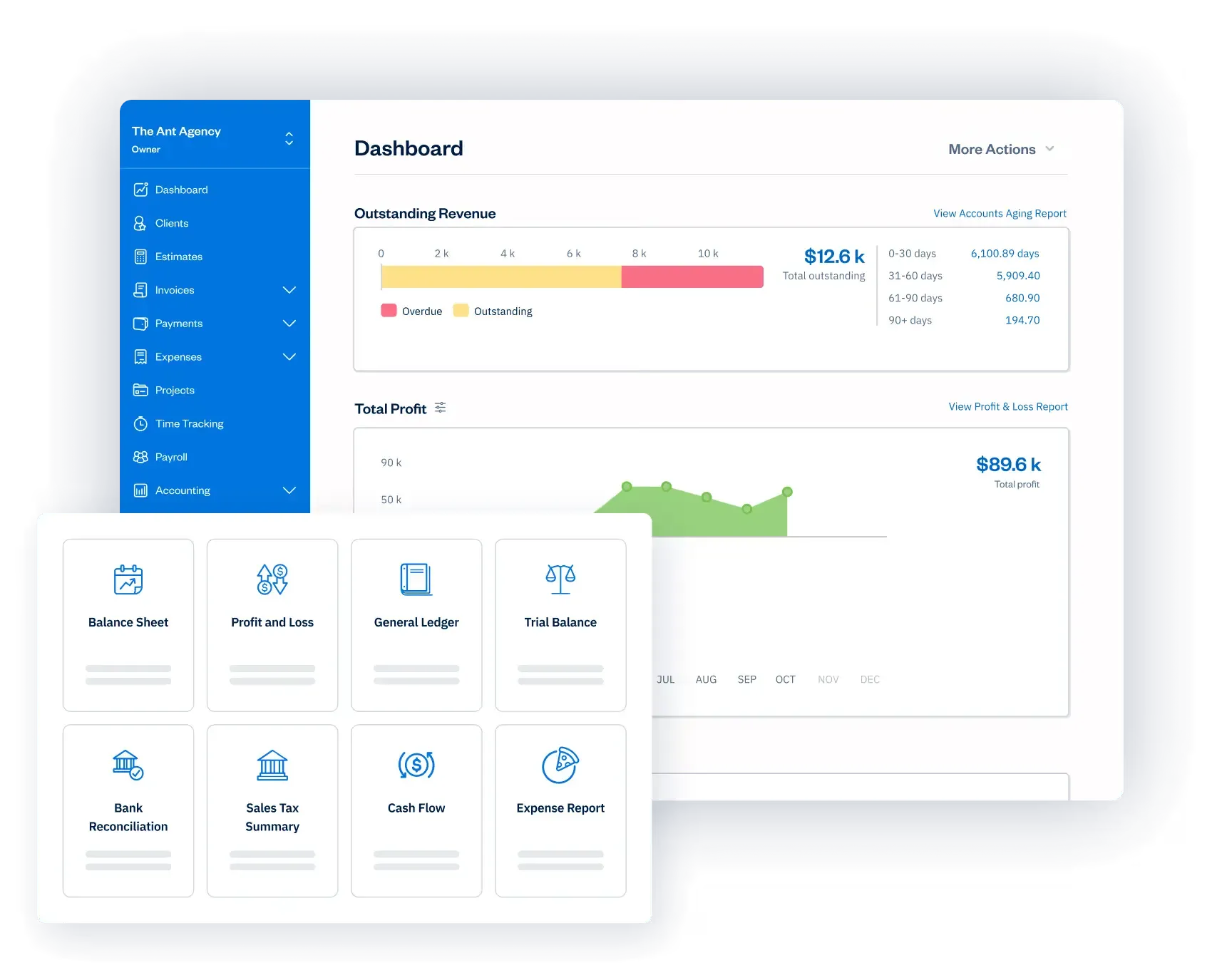
FreshBooks is built for simplicity. If you are a solo landscaper or running a very small operation with one crew and straightforward invoicing needs, FreshBooks gets you set up fast without the learning curve of QuickBooks or Xero. It handles invoicing, expense tracking, time tracking, and basic reporting, all through a clean interface that does not require an accounting background to use.
Features:
- Mobile invoicing. Create and send an invoice from your phone the moment a job is done. Clients can pay online, and you see when they have opened the invoice.
- Expense tracking with receipt capture. Snap a photo of a fuel receipt or supply purchase and FreshBooks logs it automatically. No paper receipts piling up at the end of the month.
- Payroll management for seasonal workers. Track hours, calculate wages, and handle payroll taxes for both regular crew and seasonal staff without needing a separate platform.
It is suitable for you if: You are a solo operator or very small landscaping business (under 10 clients) and do not yet need job costing by service line. It is a solid starting point that you can grow out of and migrate from when you are ready to scale.
Pricing: the prices include:
- Plus: $12.90 / month
- Premium: $21.00/ month
→ If you run multiple crews and multiple service lines, start with QuickBooks Online Plus. The job costing and payroll features pay for themselves quickly, and it is the platform most bookkeeping professionals already know.
→ If you have a bookkeeper or VA working alongside a CPA and want everyone in the books at the same time, Xero is the better fit. Unlimited users with no extra cost make collaboration straightforward.
→ If you are just starting and want something you can use without training, start with FreshBooks Plus. You can always migrate to QuickBooks or Xero once your transaction volume grows.
What Are the Advantages of Using an Online Bookkeeping Service for a Landscaping Firm?
An online bookkeeping service gives a landscaping firm daily-maintained books at a fraction of an in-house salary, with no seasonal payroll commitment, no recruitment cycle, and continuity through the months when the owner has no time to manage anyone. There are six practical advantages.
1. You do not carry the cost through winter
An in-house bookkeeper is a fixed salary in February when almost nothing is coming in. An online service scales to what you need and costs the same whether you are running four crews or fourteen.
2. The books stay current in peak season
July is exactly when reconciliation slips and invoices go out late, because that is when everyone is in the field. An online bookkeeper works to a schedule that does not bend around your job load.
3. Someone already knows your software
A trained online bookkeeper arrives fluent in QuickBooks and Xero and understands how Jobber or Aspire syncs into them. You are not paying for a learning curve during your billing peak.
4. Invoices go out faster and get paid sooner
Consistent accounts receivable follow-up on a defined sequence typically pulls average collection time down by 10 to 15 days, which matters more in a seasonal business than in almost any other model.
5. Year-end costs you less
A CPA handed an organised, reconciled file spends time on filing and strategy rather than sorting receipts at $200 to $400 an hour. That difference alone usually covers several months of the service.
6. There is cover when someone is away
A managed service includes backup. A freelancer does not, and a solo bookkeeper going quiet during your busiest billing month is a real operational risk.
If you handle significant cash payments daily and cannot move to card or digital records, or if you genuinely need someone physically present to sort paper, an online service will not fix that on its own. Fix the record-keeping first, then delegate it.
Which Is the Best Bookkeeping Service for a Landscaping Business?
Most landscaping owners who buy QuickBooks or Xero still end up behind on reconciliations, late on invoices, and uncertain about their monthly numbers, because the software only works when someone is consistently maintaining it. That is where a dedicated bookkeeping virtual assistant changes everything.
Wishup matches landscaping business owners with pre-trained, pre-vetted bookkeeping VAs who are ready to start in 60 minutes. Your VA works inside your existing software, whether that is QuickBooks, Xero, or FreshBooks, handles your recurring bookkeeping tasks on a daily and monthly schedule, and gives you accurate numbers without you spending hours producing them.
What Makes Wishup Different From Hiring A Freelance Bookkeeper?
Wishup VAs undergo a rigorous hiring process, with only the top 0.1% of applicants selected.
Every VA completes an 8-week training program covering QuickBooks, Xero, accounts receivable, reconciliation, payroll support, and financial reporting before they are matched with a client.
You also get a dedicated account manager and a backup VA, so your books never stop if your primary VA is unavailable.

What Wishup Clients Say About Bookkeeping Support
Real experiences from businesses that streamlined their financial operations with Wishup.
“Wishup's work improved the client's financial record accuracy and efficiency, allowing the internal team to focus on strategic initiatives. The team meets deadlines, is responsive, and communicates proactively.”
— Andy Dargon,
COO, Neuxpower | Clutch Review
“Wishup has delivered organized and accurate financial reports, which helped the client pitch confidently to an investor. Wishup also found billing errors that had gone unnoticed.”
— John Dryden Nanna,
Founder, Dryden Labs | Clutch Review
“Wishup's work reduced overdue invoices by 30% and improved financial report accuracy. The team integrated into our systems with minimal training and quickly adapted to our workflow.”
— Sheldon Zitzmann,
Marketing Director, Tiger Tough | Clutch Review
What a Wishup bookkeeping VA handles for a landscaping business:
- Daily transaction recording and categorization in QuickBooks or Xero
- Weekly bank and credit card reconciliation
- Invoice creation and accounts receivable follow-up
- Payroll data entry and verification before each pay run
- Vendor bill tracking and accounts payable management
- Monthly profit and loss, balance sheet, and cash flow reports
- Receipt organization and expense filing by category
- Year-end document prep for your CPA
- Create and send invoices
- Track customer payments and follow up on overdue invoices
- Record vendor bills; match the transaction to the credit card section.
- Flag any missing or duplicate invoices and fix the reconciliation issues.
How to Hire a Bookkeeper for Landscapers?
To hire a bookkeeper for a landscaping business, look for someone with field-service and job-costing experience, QuickBooks or Xero proficiency, and an understanding of seasonal cash flow and equipment depreciation.
A generalist bookkeeper who has never handled multi-crew payroll or Section 179 equipment deductions will miss the exact areas where landscaping businesses lose money. Screen for four things:
1. Field-service and job-costing experience
The bookkeeper should be able to track costs by service line, mowing, installation, hardscaping, irrigation, so you can see margin per job rather than gross revenue only.
2. Software fluency in your stack
They should already work inside QuickBooks or Xero and understand how a field platform like Jobber or Aspire syncs into it, so you are not paying for training time.
3. Seasonal cash flow and payroll knowledge
Look for experience with seasonal W-2 and 1099 payroll and cash flow forecasting, the two areas where landscaping bookkeeping differs most from generic small-business accounting.
4. Backup coverage and reliability
A solo freelancer who disappears mid-season leaves your books unmanaged during your busiest billing months. A managed service provides backup so the work never stops.
You get three options to hire, and what each actually costs
| Option | Typical monthly cost | What you get | What you still do |
|---|---|---|---|
| In-house bookkeeper | $3,500 to $5,000 plus benefits | Someone on site, full control | Recruit, train, cover their holiday, carry the payroll cost through winter |
| Freelance bookkeeper | $400 to $1,200 | Lower cost, flexible hours | Vet them yourself, manage the work, absorb the gap if they disappear mid-season |
| Outsourced accounting for landscaping contractors | $300 to $1,799 | Trained bookkeeper, backup cover, account manager | Approve, review, decide |
OR, you can rely on Wishup.
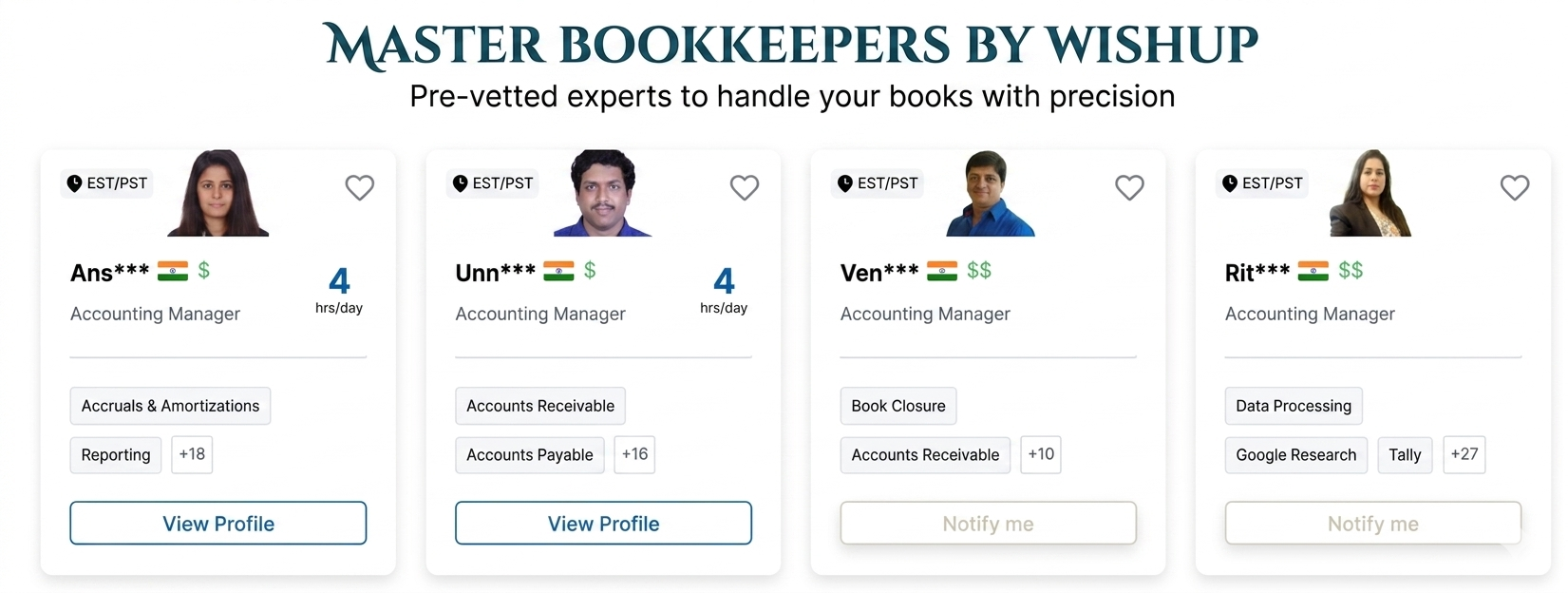
Wishup matches landscaping owners with pre-trained bookkeeping VAs in 60 minutes. Every one completes an 8-week programme covering QuickBooks, Xero, reconciliation, accounts receivable, payroll support and financial reporting before placement, and comes from the top 0.1% of applicants. You also get a dedicated account manager and backup cover, so the books do not stop when one person is away.
Here is how you can onboard them in 60 minutes:
- Submit Requirements: Book a Wishup Consultation to share your task list and business needs with a customer success manager.
- Review & Match: Wishup instantly matches your needs with top-tier, pre-vetted candidates; you can interview your top choices for free.
- Onboard & Delegate: Sign the NDA, set up tool access with your dedicated account manager, and begin delegating right away
15 Bookkeeping Tasks You Should Track Yourself (and How Often)
A bookkeeping VA handles the daily and monthly execution. But a few things still need your eyes as the business owner, because they require context that only you have.
Here is the full breakdown of what to do yourself and when.
1. Daily
Time taken: 10 to 15 minutes
- Log any cash purchases or receipts not on a business card
- Record change orders or additional charges from jobs completed that day
- Note any crew time adjustments before they fall out of memory
These 3 things require field context. Your VA can handle everything else that flows through your bank feed and accounting software.
2. Weekly
Time taken: 20 to 30 minutes
- Review the accounts receivable aging report that your VA produces
- Approve or flag any vendor payments above your set threshold
- Check the job cost tracker for any active projects running over budget
- Confirm payroll inputs are accurate before your VA submits for processing
Your VA reconciles the bank and credit card accounts weekly. Your job is to review the output and flag anything that does not look right.
3. Monthly
Time taken: 30 to 45 minutes
- Review the profit and loss report by service line that your VA prepares
- Compare actual job costs to estimates for the month's completed projects
- Review the cash flow forecast that your VA produces
- Approve the month-end close before it is filed
This monthly review is the most important thing you do in the business beyond field work. It tells you which service lines are making money, which clients owe you the most, and whether your cash position for the next 60 days is safe or stretched.
4. Annually
Handing off to CPA
- Review and sign off on the year-end close that your VA has prepared
- Confirm all W-2s and 1099s are accurate before they are issued
- Hand-organized, categorized books for your CPA for tax filing
- Plan a depreciation strategy for any major equipment purchases planned for the coming year
The biggest advantage of having a bookkeeping VA maintain your books daily throughout the year is what happens at year-end. Instead of spending 3 to 4 weeks pulling together receipts and chasing down numbers for your CPA, you hand them a clean, organized file on day one. That alone typically saves $500 to $1,500 in CPA fees.

What to Hand to a Bookkeeping Virtual Assistant?
The tasks below are the ones that drain your time most, require no field-level decision-making, and can be fully owned by a bookkeeping VA from day one.
1. Daily Transaction Recording and Categorization
Every fuel receipt, materials purchase, subcontractor payment, and deposit needs to be entered and categorized correctly in your accounting software, every single day.
A bookkeeping VA logs into your QuickBooks or Xero daily, pulls transactions from your bank feed, and categorizes everything against your landscaping chart of accounts.
2. Bank and Credit Card Reconciliation
Reconciling your accounts means matching every transaction in your books against your actual bank and credit card statements.
This is a weekly task for active landscaping businesses during peak season. It is also one of the most commonly skipped tasks when the owner is managing it themselves. A VA owns it on a defined schedule and flags anything that does not match.
3. Invoice Creation and Accounts Receivable Follow-Up
A bookkeeping VA creates invoices based on your job completion data, sends them on schedule, tracks which ones are unpaid, and follows up on overdue balances per a defined sequence you approve once and never think about again. This single task, done consistently, can reduce your average collection time by 10 to 15 days.
4. Accounts Payable and Vendor Bill Tracking
Nursery suppliers, equipment rental companies, fuel accounts, subcontractors, and insurance renewals all come with payment due dates. Missing one creates late fees.
Your VA logs every incoming bill, tracks due dates, and flags upcoming payments for your approval. Your VA makes sure you never miss a due date because it slipped through.
5. Payroll Data Entry and Pre-Run Verification
Before every payroll run, someone needs to verify that hours are correct, that any seasonal worker additions or removals are reflected, and that the payroll totals match what you expect.
A bookkeeping VA handles data entry, cross-checks hours from your time tracking system against payroll figures, and flags discrepancies before the run is processed. You approve and submit.
6. Monthly Financial Statement Preparation
Every month, you should be looking at three reports: a profit and loss statement broken down by service line, a balance sheet, and a cash flow summary.
A VA produces all three on a defined date each month, formatted the way you need them, with notes on anything that changed significantly from the prior month.
7. Receipt Management and Expense Filing
A VA sets up a simple system, usually a shared folder or a receipt capture tool like Hubdoc or Dext, where your team photographs receipts immediately after purchase.
The VA logs, categorizes, and files them the same day. At year-end, every receipt is organized, labeled, and ready for your CPA with no chasing required.
8. Year-End Document Preparation for Your CPA
This is the task that costs landscaping owners the most money when they do it themselves. An unorganized year-end file handed to a CPA means hours of cleanup billed at $200 to $400 per hour. A clean, organized file means your CPA spends time on strategy and filing, not sorting.
A bookkeeping VA who has maintained your books daily throughout the year produces a clean year-end package: reconciled accounts, categorized expenses, depreciation records, payroll summaries, and a transaction report by category.
→ Approving vendor payments above your threshold. Reviewing monthly financial reports.
→ Making pricing, hiring, and equipment decisions based on the data your VA produces.
→ Estimating job costs.
5 Tips for Bookkeeping Services in a Landscaping Business
The following are the five tips every landscaper keeps in mind:
- Always keep track of all expenses and expenditures.
- Keep personal and professional expenses separate.
- Keep everything documented.
- Automate tasks that can be automated.
- Keep yourself prepared for tax season.
Hire a bookkeeping virtual assistant instead of a full-time employee to reduce cost and recover hours per week from reconciliation, reporting, and transaction recording.
Before Wrapping Up, Does Location Change How a Landscaping Business Keeps Its Books?
Yes. Sales tax treatment, seasonal cash flow shape, and payroll classification rules all vary by state, which means the same set of books can be compliant in one state and wrong in another. Three things change with geography.
- Sales tax on services: Some states tax landscape maintenance, some tax installation, some tax neither, and some tax one and not the other. The rate applies at the job site, not your office, so a business working across county lines needs revenue categorised by location. Getting this wrong accumulates quietly and surfaces as an underpayment assessment with interest.
- The shape of the season: A landscaping business in a snow market earns in a compressed window and can bill snow removal through winter. A year-round market like Southern California has a flatter revenue curve and no snow line, which changes what the off-season reserve needs to cover, and often means the cash trap shows up as slow receivables rather than a dead quarter.
- Payroll and classification: State rules on worker classification, overtime and paid leave differ, and the penalty for misclassifying a seasonal crew is assessed under state as well as federal rules.
So, should I hire a bookkeeper for my landscaper in Los Angeles?
If you are running more than one crew in the LA market, yes, and the reason is specific to the market rather than general advice. California has some of the strictest worker classification rules in the country, and a landscaping business running seasonal crew through a mix of W-2 and 1099 arrangements carries real exposure. Landscaper bookkeeping in Los Angeles also has to handle a near year-round service calendar, which means reconciliation and receivables never get a quiet month to catch up in.
A bookkeeper who understands California classification rules and job-level cost tracking is worth more in this market than in most. What matters is not that they sit in Los Angeles, but that they know the rules that apply there.
How do landscapers in Los Angeles handle bookkeeping?
Most run QuickBooks Online with a field platform like Jobber or Aspire feeding job data in, then delegate the daily maintenance. The pattern is the same across the larger year-round markets: the software is not the hard part, keeping it current through a twelve-month service calendar is.
Other markets we see this in:
The same questions come from landscaping owners in Cincinnati, where the snow line makes the seasonal split sharper, in Central Florida, where the calendar is year-round but hurricane-season disruption affects receivables, and in Cary and the wider Raleigh area, where fast residential growth means a lot of businesses scale past their bookkeeping in a single season.
An online bookkeeping service works in all of these because the bookkeeper works inside your software rather than your office. What you should check is that whoever you hire understands your state's sales tax treatment for maintenance versus installation work.

Wrapping Up
The landscaping owners who grow consistently are not doing their own books between site visits. They have a system, the right software, and someone trained to maintain it daily, so the numbers are always there when they need to make a decision.
If your books are behind, your invoices are going out late, or you genuinely do not know which service line is most profitable right now, that is the problem to fix first. Everything else in the business gets easier when the financial foundation is solid.
Wishup bookkeeping VAs are trained in QuickBooks, Xero, and landscaping-specific accounting workflows. They start in 60 minutes, and your first week is risk-free.

FAQ
What does bookkeeping for a landscaping business involve?
Bookkeeping for a landscaping business covers 8 core areas: job costing per service line, crew payroll, equipment depreciation, vehicle and fuel tracking, materials costs, accounts receivable, seasonal cash flow, and quarterly tax obligations.
The tasks most commonly outsourced to a bookkeeping VA are daily transaction recording, bank reconciliation, invoice follow-up, payroll data entry, and monthly financial reporting.
What if your books are already months behind?
If your landscaping books are behind, the fix is a cleanup engagement first and a maintenance routine second. Doing them in the other order does not work, because you cannot maintain books that are not accurate yet.
A bookkeeping cleanup for a landscaping business usually means: reconciling every bank and credit card account back to the last accurate month, recategorising transactions against a proper landscaping chart of accounts, separating any personal transactions that crept in, rebuilding the equipment depreciation schedule, checking sales tax was categorised correctly by job location, and confirming 1099 records for every subcontractor paid over the threshold.
For most landscaping businesses one to two seasons behind, that is a two to four week project, not a same-day fix. Start it in the off-season if you can. If it is July and you are already behind, start it anyway, because it gets worse and the penalties compound.
Once the cleanup is done, the maintenance routine is what stops it happening again. That is the part worth delegating permanently.
Which services can assist with setting up accounting software for my landscaping firm?
Bookkeeping services that specialise in field-service businesses handle accounting software setup as part of onboarding.
The setup itself covers four things:
- building a landscaping-specific chart of accounts rather than the generic one QuickBooks generates,
- connecting your bank and credit card feeds with categorisation rules,
- linking your field platform such as Jobber or Aspire so job data flows in without re-entry, and
- configuring job costing by service line so you can see margin on mowing separately from hardscaping.
Wishup bookkeeping VAs handle setup inside QuickBooks, Xero and FreshBooks as part of onboarding, at no separate charge.
What are the benefits of outsourcing accounting tasks for a small landscaping business?
For a small landscaping business, outsourcing accounting means the recurring work gets done on a schedule instead of whenever the owner has an evening free.
The direct benefits:
- reconciliation stays current through peak season,
- invoices go out on job completion rather than in a weekend batch,
- receivables get followed up consistently, and
- month-end reports arrive without anyone building them.
The cost comparison is straightforward too. A small landscaping business does not have enough bookkeeping work to justify an in-house hire but has far too much to leave to the owner, which is the gap outsourcing fills. Wishup's managed bookkeeping starts at $300 a month.
What are the best online bookkeeping services for a small landscaping business?
The right online bookkeeping service for a small landscaping business is one that understands job costing by service line, handles mixed W-2 and 1099 seasonal payroll, and works inside the software you already use.
Judge providers on four points: whether the bookkeeper is trained on QuickBooks and Xero before day one, whether job costing by service line is supported or just general categorisation, what happens when your bookkeeper is unavailable during peak billing months, and whether year-end CPA preparation is included or billed separately.
Wishup provides managed bookkeeping from $300 a month and dedicated bookkeepers from $999 part-time, with backup cover and a dedicated account manager included.
Is QuickBooks good for a landscaping business?
Yes, QuickBooks Online is the most practical accounting software for most landscaping businesses, specifically the Plus plan, which includes the job costing and service line tracking features that landscaping operations need.
How do you keep track of books for a landscaping business?
The most reliable way to keep accurate books for a landscaping business is to combine accounting software with a consistent weekly routine, or delegate that routine entirely to a bookkeeping VA.
How do you do bookkeeping for a landscaping business?
Landscaping bookkeeping means tracking costs per service line (mowing, installation, hardscaping, snow removal), running payroll for mixed W-2 and 1099 crews, recording equipment depreciation under Section 179, logging vehicle and fuel costs, and maintaining a seasonal cash-flow forecast. Most owners use QuickBooks Online with a field-service tool like Jobber, often with a bookkeeping VA handling daily execution.
Which accounting method should you choose for bookkeeping for a landscaping business?
Most landscaping businesses under $1 million in annual revenue should use the cash basis method, because it reflects the cash actually available day to day and is simpler to maintain through a seasonal cycle.
Businesses above $1 million, those running large multi-phase installation contracts, or those seeking outside financing should use accrual accounting, which lenders and investors prefer because it shows the full financial picture across long project timelines. Confirm the switch with your CPA, since changing methods creates a one-time accounting adjustment.
What is the best accounting software for a landscaping business?
QuickBooks Online Plus is the best fit for landscaping businesses running multiple crews and service lines, because its job costing and payroll features handle field-service complexity and most bookkeeping professionals already work inside it.
Xero suits teams that want unlimited users for an owner, VA, and CPA to collaborate, and FreshBooks works for solo operators who need simple mobile invoicing.
Pairing any of these with a field service platform like Jobber or Aspire syncs job data directly into the books.
How do you manage cash flow in a seasonal landscaping business?
Manage seasonal cash flow by building a 12-month forecast during peak season and setting aside a winter reserve equal to two to three months of fixed operating costs.
Because a landscaping business can earn most of its revenue in five months while spending year-round, the reserve and forecast together prevent the February cash crunch that causes most seasonal business failures.
Should you outsource bookkeeping for your landscaping business?
Yes, most landscaping owners should outsource recurring bookkeeping once they run more than one crew, because reconciliations, invoicing, and monthly reporting fall behind when the owner is in the field.
A dedicated bookkeeping VA maintains the software daily, keeps numbers current, and costs far less than an in-house hire, while freeing the owner to focus on billable work.
Is landscaping a taxable service?
It depends on the state and the type of work. Many states tax maintenance services like mowing and fertilizing, while treating installation work differently, and some exempt snow removal. Sales tax applies based on the job-site location, not the business address, so multi-county operators need a system that categorizes taxable revenue by location.
How is bookkeeping for a lawn care business different from landscaping?
Lawn care revenue is recurring rather than project-based, so the books
should track monthly contract value per customer instead of revenue
per visit. The second difference is route profitability: drive time
between properties varies enough that two customers billing the same
amount can differ by 30% in margin. Chemical and fertiliser costs also
need their own COGS account, because they are consumed across many
properties rather than one job.
What does bookkeeping for a tree service company involve?
Tree service bookkeeping covers the same job costing and seasonal cash
flow as landscaping, plus two heavier cost lines: insurance, where
liability and workers' compensation rates are among the highest in the
green industry, and equipment depreciation on bucket trucks, chippers
and stump grinders. Storm and emergency work should be tracked as a
separate revenue line so it doesn't distort baseline maintenance margins.

Jitin Kakkar
A Chartered Accountant with a strong passion for diverse areas of Finance and Accounting, recognized for a solid theoretical foundation in Ind AS, IFRS, and US GAAP, and proven practical expertise in financial reporting, analysis, and forecasting. Highly motivated and continually seeking to expand capabilities and deliver impactful financial insights.
More posts by Jitin → · Connect on LinkedIn