
Manufacturing companies carry 3 active inventory accounts: raw materials, work-in-progress, and finished goods, which most standard bookkeeping setups are not built to handle. Miss one, and your cost of goods sold is wrong, your tax filing is off, and your profit margins are unreliable.
This is the complete bookkeeping and accounting guide for manufacturing companies. It covers cost types, production costing methods, software tools, common challenges, and how Wishup helps you hire a virtual bookkeeper to keep your manufacturing books clean and audit-ready.
What you will learn:
- The difference between manufacturing bookkeeping and standard business accounting
- The 4 cost types every manufacturer must track
- 5 production costing methods and when to use each
- The best accounting software for manufacturing SMBs
- How Wishup virtual bookkeepers handle manufacturing-specific tasks
Who this guide is for:
- Small and mid-sized manufacturing business owners managing production costs
- Operations and finance leads are building bookkeeping systems
- Decision-makers evaluating bookkeeping services for manufacturing companies

What is Manufacturing Accounting and Bookkeeping, and Why is it Important?
Manufacturing accounting is the process of tracking, recording, and reporting every financial activity tied to production, from raw material purchases to finished goods valuation.
It covers 3 primary cost categories:
- direct materials,
- direct labour, and
- manufacturing overhead.
These 3 figures combine to calculate Total Manufacturing Cost (TMC), Cost of Goods Manufactured (COGM), and Cost of Goods Sold (COGS).
Manufacturing bookkeeping is the day-to-day execution of this. A bookkeeper records transactions, maintains the general ledger, reconciles bank and credit card accounts, and ensures every production cost is captured and categorized correctly.
Standard business bookkeeping tracks income and expenses. Manufacturing bookkeeping tracks 3 types of inventory at the same time:
- raw materials,
- work-in-progress (WIP), and
- finished goods.
Each carries a different cost basis and requires separate accounting treatment.
Why accurate manufacturing bookkeeping matters
3 financial problems occur consistently when manufacturing bookkeeping is inaccurate:
- Mispriced products. Overhead and labour costs that are not captured correctly cause the cost of goods sold to be understated. This makes margins appear higher than they are, which leads to pricing decisions that reduce profitability over time.
- Tax filing errors. Inventory valuations directly affect taxable income. Errors in WIP or finished goods reporting create compliance risk, especially during year-end close or audits.
- Cash flow blind spots. Manufacturers carry significant capital in inventory. Without clean books, you cannot see how much cash is tied up in raw materials versus finished goods at any point in time.
A virtual bookkeeper trained in manufacturing-specific workflows resolves all 3 of these problems. They handle transaction recording, reconciliation, and inventory cost tracking inside your existing tools, QuickBooks, Xero, or similar platforms, without requiring weeks of onboarding.
Benefits of Implementing Manufacturing Accounting & Bookkeeping Systems
Each aspect of streamlining the accounting and bookkeeping system leads to the overall growth of the manufacturing ops.
- Such a system automates the manufacturing accounting and bookkeeping process.
- Everything, starting from tracking production costs to monitoring the inventory levels, gets tracked. This, in turn, aids the manufacturing accountants in their daily reports.
- The streamlined aspect of the process improved the accuracy of financial reporting.
- All of this, altogether, supports the overall growth of the manufacturing ops through the use of manufacturing ERP.
Which one is suitable for you?
Read our “Bookkeeper vs Accountant (2026): Which Do You Need? (With Costs)” to get a thorough understanding of what would suit your purpose more.
Types of Costs in Manufacturing That You Must Track
Different types of manufacturing costs cover many categories. Such a vast expansion offers an understanding of production expenses. These costs include:
1. Direct Material:
It includes raw materials directly incorporated into the finished product. Take steel for automobiles, or fabrics for clothes, as an example. Accurately tracking the expenditure of direct materials assures efficient inventory management. Moreover, it gives a peek into strategic price decisions as well.
2. Direct Labour:
This category includes wages paid directly to employees who are actively involved in the production stage. Take welders, machine operators, as an example, because they are the real cog in the machine who keep things oiled. Direct labour costs are necessary to calculate the overall manufacturing expenses. Such a calculation helps analyze workforce productivity as well.
3. Manufacturing Overhead:
This category includes indirect overhead costs for production. Take the cost of utilities, equipment depreciation, QA and management, and factory maintenance as examples. It is critical to allocate overhead properly, as it determines COGM. Moreover, it helps achieve accurate financial reporting.
4. Fixed and Variable Costs:
Fixed on this category covers factory rent and management salaries. Variable costs include the cost of raw materials and piece rate wages. You need to know the differentiating costs to forecast the budget and finance in manufacturing.
Apart from these, the other costs include:
- Administrative and Selling Costs
- Opportunity Costs
- Environmental Compliance Costs
Top Software for Bookkeeping and Accounting in the Manufacturing Industry
Manufacturers need software that handles production costing, inventory valuation, and job or process tracking without manual workarounds.
Here are the 5 most widely used options for manufacturing SMBs.
1. QuickBooks Online
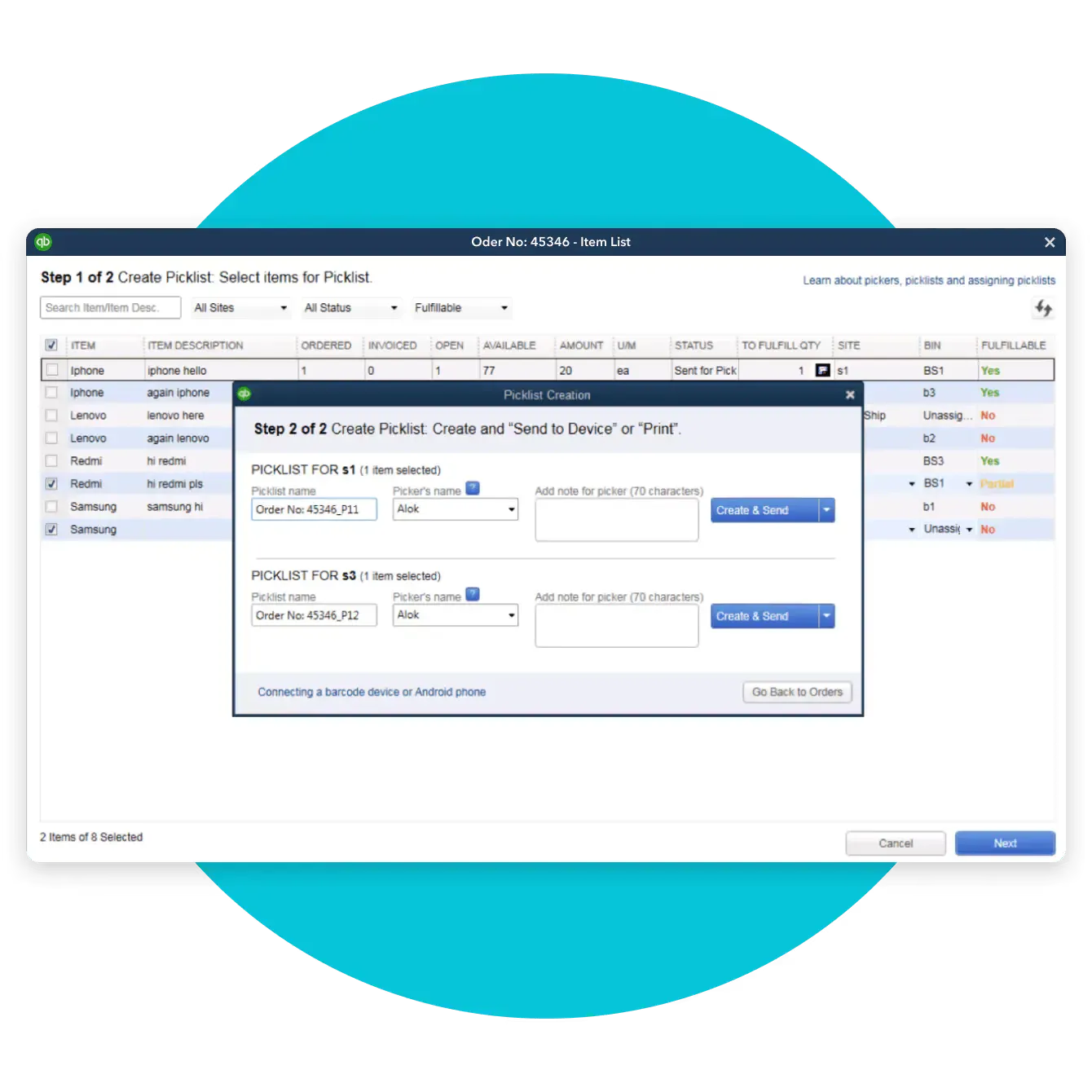
QuickBooks Online is the most widely used cloud accounting platform for small and mid-sized manufacturers in the US.
Features:
- It handles transaction recording, bank reconciliation, accounts payable and receivable, payroll, and financial reporting.
- The Advanced plan supports inventory tracking and class-based cost segmentation, which allows manufacturers to separate production costs from overhead.
- It integrates with manufacturing-specific tools like Katana and Fishbowl for bill of materials and production order management.
Pricing:
- Simple Start: $19/mo: 1 User
- Essentials: $37.50/mo: 3 User
- Plus: $57.50/mo: 5 User
- Advanced: $137.50/mo: 25 User
Best for: Small manufacturers with straightforward production runs and up to $10 million in annual revenue.
2. Xero
Xero is a cloud-based accounting platform that works well for manufacturers operating across multiple currencies or locations.
Features:
- It offers real-time bank feeds, automated reconciliation, purchase order management, and clean financial reporting.
- Xero integrates with Unleashed and DEAR Inventory for manufacturers who need dedicated inventory and production tracking.
- Its reporting is cleaner and more customizable than QuickBooks at the same price tier.
Pricing:
- Early: $5 / Month
- Growing: $11 / Month
- Established: $18 / Month
Best for: Mid-sized manufacturers with international suppliers or multi-entity structures.
Read our “Xero vs QuickBooks 2026 Comparison: Which Accounting Software Is Right for Your Business?”
3. Sage 100 ERP Software
Sage 100 is built specifically for manufacturing and distribution businesses.
Features:
- It handles work order management, bill of materials, production scheduling, and cost accounting inside a single system.
- Sage X3 is the enterprise-level version for manufacturers with complex multi-site operations and advanced reporting needs.
- Both platforms are stronger than QuickBooks or Xero for manufacturers tracking job costs, variance analysis, or contract manufacturing.
Pricing: Connect with the respective sales team.
Best for: Established manufacturers with dedicated finance teams and more than $5 million in annual revenue.
4. NetSuite ERP
NetSuite is a cloud-based ERP that covers accounting, inventory, production management, and CRM in one platform.
Features:
- For manufacturers, it tracks work orders, standard costing, variance reports, and demand planning.
- It is the most comprehensive option on this list, but also the most expensive and the most complex to implement.
Pricing: Their pricing depends on your requirements. Connect with the sales team to get the final quote.
Best for: Fast-growing manufacturers who have outgrown standalone accounting software and need a unified system across departments.
5. FreshBooks
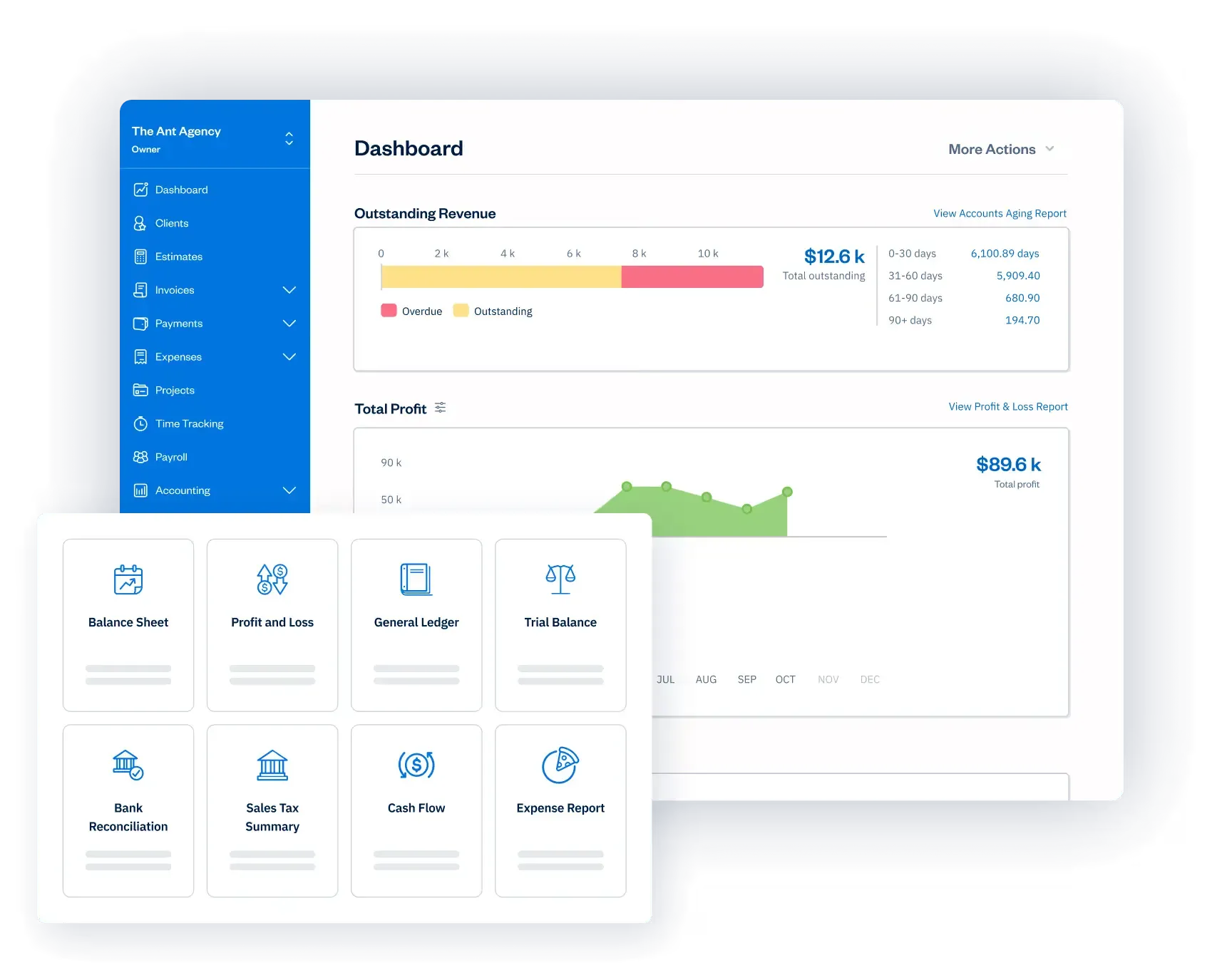
FreshBooks is a simpler cloud accounting tool suited for small manufacturing businesses with low transaction volume and straightforward invoicing needs.
- It handles expenses, invoicing, bank reconciliation, and basic reporting.
- It does not natively support inventory valuation or production costing, so manufacturers using FreshBooks typically need a separate inventory tool.
Pricing:
- Lite: $6.90 /mo
- Plus: $12.90 /mo
- Premium: $21.00 / mo
- Select: talk to a consultant.
Best for: Small manufacturers or sole operators who primarily need clean invoicing, expense tracking, and P&L reporting.
Read Best Bookkeeping Software for Small Businesses (2026).
A note on tool selection: The software your bookkeeper uses daily matters as much as which platform you choose. A Wishup virtual bookkeeper comes trained in QuickBooks, Xero, FreshBooks, and 50+ other accounting and finance tools, so there is no onboarding period around the software itself.
“I'm most impressed by how quickly their assistant has gotten up to speed with our tools and workflows.”
Wishup reduced the time spent on month-end reconciliation from one week to just 3 days, delivered accurate budget reports, and reduced late payment issues while consistently meeting deadlines.
— Christina Medina
VP at The Wood Agency (Clutch)
Common Challenges in Manufacturing Accounting and Bookkeeping
Here are the 6 most common challenges manufacturing SMBs face.
1. Tracking costs across 3 simultaneous inventory stages
A manufacturing business always carries raw materials, WIP, and finished goods at the same time.
Each carries a different cost basis, and each moves to the next stage as production progresses. Bookkeepers who are not trained in manufacturing workflows often record all inventory under a single account, which makes the cost of goods sold unreliable and the balance sheet inventory values inaccurate.
2. Overhead allocation errors
Manufacturing overhead, including factory rent, equipment depreciation, utilities, and indirect labour, must be allocated to individual products or production runs. Without a defined allocation method, overhead either gets lumped into general expenses or missed entirely. Both outcomes distort product-level profitability and lead to mispriced goods.
3. WIP valuation at month-end close
Work-in-progress inventory is difficult to value precisely because it represents partially completed goods. At month-end, a bookkeeper must estimate the percentage of completion for each WIP item and assign an appropriate cost. Inaccurate WIP valuation flows directly into COGM and COGS, creating cascading errors across the income statement.
4. Cost variance tracking
Standard costing manufacturers set expected costs for materials and labour in advance. When actual costs differ from those standards, the difference is a variance.
Tracking and explaining variances requires ongoing reconciliation between production records and accounting entries. Most small manufacturers skip this process because it is time-intensive, which means they lose visibility into where production is running over budget.
5. Disconnected production and accounting systems
Many manufacturing SMBs run their production planning in one system, an MRP, ERP, or even a spreadsheet, and their accounting in another.
When these systems do not sync, bookkeepers must manually re-enter production data into the accounting platform. Manual entry introduces errors, delays, and gaps in cost recording that are difficult to catch until year-end.
6. Inconsistent data entry across transactions
Manufacturing businesses generate high transaction volume from the following:
- purchase orders,
- vendor invoices,
- production orders,
- inventory adjustments,
- sales orders, and
- payroll entries.
Inconsistent categorization, where the same type of expense is recorded each time differently, makes financial reports unreliable and creates significant cleanup work before tax filing.
Solve it with Wishup Bookkeepers
Wishup virtual bookkeepers handle every manufacturing-specific bookkeeping task, from daily transaction recording to month-end close, without the cost of a full-time hire or the risk of an untrained generalist managing production accounts.
Here is exactly what a Wishup bookkeeper does for manufacturing companies.
What a Wishup bookkeeper handles for manufacturers
1. Transaction recording and categorization
Every purchase order, vendor invoice, payroll entry, and inventory adjustment is recorded and categorized correctly from day one. Raw materials, WIP, and finished goods are tracked as separate accounts, not bundled under a single inventory line.
2. Bank and credit card reconciliation
Wishup bookkeepers reconcile all accounts on a set weekly or monthly schedule, flagging discrepancies before they compound. Manufacturing businesses with high transaction volume, multiple supplier payments, equipment leases, and freight costs get clean reconciliation without backlog.
3. Accounts payable and receivable management
Supplier invoices are logged, tracked, and scheduled for payment. Customer invoices are raised, monitored, and followed up on. Cash flow visibility is maintained throughout the production cycle.
4. Overhead allocation support
Your bookkeeper applies your chosen overhead allocation method, such as machine hours, labour hours, or direct cost percentage, consistently across every production period, so product-level cost data stays accurate.
5. Month-end close and financial reporting
Wishup bookkeepers prepare profit and loss statements, balance sheets, and cash flow reports at month-end. WIP is valued, COGM is calculated, and COGS flows correctly to the income statement, ready for your accountant or CFO to review.
6. Software setup and maintenance
Whether you use QuickBooks, Xero, or your Wishup bookkeeper works inside your existing system. If you are setting up manufacturing accounting for the first time, they help configure your chart of accounts to match production cost structures.

Why choose Wishup over a freelance bookkeeper or part-time virtual bookkeeper?
3 structural differences separate Wishup from a freelancer or general bookkeeping service.
- Pre-trained in 120+ tools: Wishup bookkeepers complete a structured training program covering QuickBooks, Xero, FreshBooks, Google Sheets, and 65+ other tools before they are deployed. There is no learning curve on your time.
- Backup coverage built in: If your assigned bookkeeper is unavailable, a backup steps in. Your books do not stop because someone is sick or on leave.
- Dedicated account manager included: Every Wishup client gets a dedicated account manager who monitors quality, resolves issues, and ensures your bookkeeper is meeting your standards, without you having to manage them directly.
Wishup bookkeepers start at $1,299 per month. Hiring a full-time bookkeeper at a manufacturing company costs $45,000 to $60,000 per year in salary alone, before benefits and equipment. The cost savings with Wishup is 77%.
Book a free consultation with Wishup and get matched with a trained bookkeeper in 60 minutes.
“Their ability to quickly integrate into our existing systems and processes was remarkable.”
Wishup reduced Tiger Tough's overdue invoices by 30% and improved financial report accuracy. The bookkeeper integrated into the client's workflow with minimal training, adapted quickly, and resolved issues promptly.
— Sheldon Zitzmann
Marketing Director at Tiger Tough (Clutch)
Tips and Best Practices for Bookkeeping for Manufacturing Companies
8 bookkeeping practices help manufacturing SMBs maintain accurate books, reduce tax risk, and make better production decisions.
1. Set up a chart of accounts built for manufacturing.
A standard chart of accounts separates income and expenses. A manufacturing chart of accounts adds 3 inventory accounts (raw materials, WIP, finished goods), a cost of goods manufactured account, and sub-accounts for direct labour, direct materials, and overhead. Set this up correctly at the start, and every report that follows will be more accurate.
2. Reconcile accounts weekly, not monthly.
High transaction volume in manufacturing means errors compound quickly. A weekly reconciliation cycle catches misposted entries, duplicate payments, and unrecorded inventory adjustments before they create month-end backlogs.
3. Pick one costing method and apply it consistently.
Whether you use job costing, process costing, or standard costing, consistency matters more than which method you choose. Switching methods mid-year distorts inventory values and makes year-over-year comparisons meaningless.
4. Track direct and indirect costs separately from day one.
Direct materials and direct labour belong in production cost accounts. Indirect costs like factory rent, equipment depreciation, and maintenance belong in overhead accounts. Mixing them makes product-level profitability impossible to measure.
5. Value WIP at every month-end close.
Work-in-progress inventory changes throughout the production cycle. A WIP valuation at month-end, even an estimated one, keeps your balance sheet accurate and prevents COGM from being understated.
6. Integrate your production system with your accounting platform.
If your MRP or inventory software does not sync with QuickBooks or Xero, production data must be entered manually. Manual re-entry creates gaps and errors. Set up a direct integration or API connection to eliminate the duplication.
7. Review your overhead allocation rate quarterly.
Overhead allocation rates are set based on estimated production volume. If actual volume is significantly higher or lower than estimated, your allocated overhead will be off. A quarterly review keeps product costs aligned with reality.
8. Delegate bookkeeping before tax season, not during it.
Manufacturing tax filings involve inventory valuations, depreciation schedules, and COGS calculations that take time to prepare correctly. A bookkeeper who is already embedded in your accounts three to six months before filing can catch errors early, rather than rushing a cleanup in the final weeks.
Wrapping Up
The manufacturing companies that maintain clean, audit-ready books share 3 practices: they use accounting software built or configured for production environments, they apply one costing method consistently across every period, and they delegate daily bookkeeping tasks to a trained professional rather than managing it alongside operations.
A Wishup virtual bookkeeper gives you all 3 without the cost of a full-time hire. Pre-trained in QuickBooks, Xero, and 65+ other tools. Ready in 60 minutes. Backed by a dedicated account manager and a guaranteed backup system.
The manufacturing owner's job is to build and sell products, not to reconcile bank accounts and manually re-enter production data. Delegation is not a cost. It is the decision that protects your margins, your cash flow, and your tax position.
FAQs
How do you do accounting for a manufacturing business?
Manufacturing accounting starts with setting up a chart of accounts that separates raw materials, WIP, and finished goods inventory. From there, every production cost, be it direct materials, direct labour, or manufacturing overhead, is recorded and allocated to the correct account.
At month-end, WIP is valued, Cost of Goods Manufactured is calculated, and COGS flows to the income statement. The process requires a costing method applied consistently across every period.
Most manufacturing SMBs use QuickBooks or Xero configured for manufacturing, combined with a trained bookkeeper who handles daily transaction recording and reconciliation.
What type of accounting is used in manufacturing?
Manufacturing businesses use cost accounting as their primary framework. Within cost accounting, 3 methods are most common:
- job costing (for custom or project-based production),
- process costing (for continuous, high-volume production), and
- standard costing (for businesses that set expected costs in advance and track variances).
Many manufacturers also use absorption costing for external financial reporting, which includes all manufacturing overhead in product costs. The method a manufacturer uses depends on their production model, volume, and reporting requirements.
Which accounting software is best for a manufacturing company?
The best accounting software for a manufacturing company depends on business size and production complexity. QuickBooks Online is the most widely used option for small manufacturers and integrates with inventory tools like Katana and Fishbowl. Apart from that, Xero suits manufacturers with multi-currency or multi-entity needs.
What is the difference between COGM and COGS in manufacturing?
Cost of Goods Manufactured (COGM) is the total cost of all goods completed during a production period, including direct materials used, direct labour, and manufacturing overhead applied.
- Cost of Goods Sold (COGS) is the cost of goods that were actually sold during the same period.
- COGM feeds into COGS: finished goods from COGM move to inventory, and COGS is calculated as opening finished goods inventory plus COGM minus closing finished goods inventory.
Both figures appear on the income statement and directly affect gross profit.
Can a virtual bookkeeper handle manufacturing accounts?
A virtual bookkeeper trained in manufacturing workflows handles transaction recording, 3-inventory account management, bank reconciliation, accounts payable and receivable, overhead allocation, and month-end close.
Wishup virtual bookkeepers are pre-trained in QuickBooks, Xero, and other accounting platforms used by manufacturers. They work inside your existing system, require no lengthy onboarding, and are backed by a dedicated account manager who monitors quality throughout the engagement.
