
Tasks like inventory reconciliation, purchase order follow-ups, and shipment documentation are important; however, a warehousing VA can handle them without your intervention.
A virtual assistant for the warehousing and distribution team can absorb hours of repetitive, time-consuming tasks, freeing your team to focus on what matters most.
Hire a pre-vetted virtual assistant for warehousing and distribution from Wishup and start delegating essential tasks within 60 minutes.
By the end of this blog, you will have covered:
- Who a warehousing VA is and their responsibilities
- How the role differs from a general VA
- How a warehousing VA drives operational efficiency, backed by data.
- How to know when it's the right time to hire a VA for warehousing and a distribution center for your team
- The tasks a warehousing VA can absorb for you
- The tools they have mastered to work within your operation
- And lastly, what the hire could cost you in 2026 via Wishup.
Who Is A Virtual Assistant for Warehousing and Distribution Centers and What Are Their Responsibilities?
A virtual assistant for a warehousing or distribution center is a remote, trained professional. They manage inventory, documentation, and coordination, maintaining communication and doing data and market research behind fulfillment operations.
The scope typically spans seven areas:
- Inventory tracking and reporting
- Purchase order and vendor administration
- Shipment and documentation management
- Reporting and coordination support
- Data and market research
- Documentation and compliance
- Vendor and customer communications
Difference Between a General VA and a Virtual Assistant for Warehousing and Distribution Centers
There is a difference between a general VA and a warehousing VA. A general VA manages inbox and calendar work with no operational context in the industry.
However, A virtual assistant for warehousing and distribution centers manages inventory, systems, stock movement, and more. Let us discuss in depth what the differences are.
| Dimension | General VA | Warehousing VA |
|---|---|---|
| Industry knowledge | None specific | Inventory cycles, reorder points, fulfillment workflows |
| Tools | Google Workspace, basic CRM | NetSuite, Fishbowl, Zoho Inventory, ShipStation, QuickBooks |
| Documentation handling | Basic filing | Packing slips, delivery confirmations, compliance tagging |
| Vendor coordination | Basic invoice entry | PO tracking, supplier follow-up, delivery window confirmation |
| Onboarding time | 2 to 4 weeks | 60 minutes with Wishup |
With in-depth knowledge of the industry and experience in turning data into operational efficiency, let us discuss how that happens.
How Does a VA for Warehousing and Distribution Centers Drive Efficiency?
A warehousing VA drives efficiency across five measurable areas: faster data access, better labor allocation, lower operational costs, stronger management visibility, and automated workflows.
1. Get faster access to operational data
Generally, data on order status, stock counts, and shipment details stay scattered across spreadsheets and inboxes.
A warehousing and distribution VA maintains a single, current source of inventory and orders so that the team gets an answer in minutes instead of chasing it across systems.
2. Allocate labor resources well
A study has revealed that 14.2% claimed workforce availability as one of the core challenges in warehousing and distribution centers.
With the hiring market recognising the shortage of skilled labor in the industry, one can easily rely on VAs, who are easier to retain.
In this industry, a VA documents updates and handles paperwork to keep the operational sequence moving rather than getting stuck on admin backlog.
3. Have lower operational cost
The same study has also revealed that 17% have claimed rising labour costs as another top challenge in this industry. On top of that, onboarding, the lack of tools and time to train them, can turn out to be a costly error that could add to your budget.
Warehouse leaders are asked to meet the output goals without compromising on generating quality output, accuracy, and speed. This is where a Wishup VA can shine.
A VA can standardize the process and set up a workflow that generates output in fewer overtime hours and fewer costly fulfillment mistakes.
4. Get stronger management visibility
Owners and ops managers need a fast, reliable answer when they ask about inventory levels, inbound shipments, or order status. A VA who maintains clean, current records gives managers that answer immediately, instead of a "let me check and get back to you."
5. They automate to create workflows
96% of warehouse leaders have opted for automation in their business, believing that this will not only save time, but showcase efficiency and increase productivity across channels.
This is where a Wishup VA can shine. Wishup virtual assistants for warehouse and distribution centers use AI as well as other tools to establish an automated journey for the workflow. Take a look yourself.
Interactive walkthrough of a LinkedIn outreach automation that syncs Google Sheets updates into HubSpot across three trigger points.
Transportation and logistics · built by Lemuel David · engine: Zapier
Hours saved / mo
53
Cost saved / mo
$3,180
Runs / mo
225
People freed
4
Confidence
8/10
VA marks the lead as requested
Trigger: column K in the Google Sheet changes to "Requested"
Decision point
Found, so it moves straight on. Not found, so it creates the contact with name, title, company and LinkedIn URL.
The prospect accepts
Trigger: column K changes to "Connected"
The prospect replies
Trigger: column N changes to "Y"
Result: every accepted request and every reply lands in the CRM with an owner and a deadline attached. Nothing sits in a sheet waiting to be noticed.
Savings valued at $60/hr, costed against a sales and customer success specialist.
But do you even need a VA for your warehousing and distribution center? You can weigh in your options in the following manner.
When a Warehousing Virtual Assistant Is the Right Fit for a Distribution Team
You might need to hire a warehousing VA if:
- You notice that the stock levels are tracked manually
- The updates fall behind during busy weeks
- Your purchase orders sit incomplete or unsent because no one owns the process of following-up
- No one is logging the delivery confirmations until a customer or vendor asks
- The shipment receipts and packing slips are scattered across different channels such as inboxes and folders
- The inventory reports arrive late, inconsistent, or sometimes, never at all
- A small or mid-sized team is managing multi-location stock without any dedicated support
If two or more of these ring true for you, then you need a warehousing VA for your operations to sail through the hurdles. Let’s see when you onboard the warehouse and distribution virtual assistant for your business, what tasks you can allocate.
Tasks a Virtual Assistant for Warehousing and Distribution Centers Handles
A warehousing VA covers multiple tasks across five operational categories. These categories include inventory tracking, purchase order and vendor administration, shipment documentation, reporting, and customer or vendor communication.
1. In “Inventory Tracking and Stock Management”, a VA for warehousing and distribution centre can:
- Track inventory by SKU using spreadsheets or the warehouse management system
- Send alerts when items fall below reorder thresholds
- Reconcile stock counts and flag discrepancies before they affect fulfillment
- Maintain accurate multi-location inventory records
2. In “Purchase Order and Vendor Administration”, the warehouse and distribution VA can:
- Process purchase orders with complete vendor, quantity, and delivery details
- Follow up with suppliers to confirm shipping windows and resolve delays early
- Reconcile vendor invoices against agreed rates and flag discrepancies
3. In “Shipment and Documentation Management”, the VA for warehouse and distribution center can:
- Log incoming shipments by tracking number, delivery date, and packing list
- Prepare invoices, bills of lading, and shipping documentation
- Organize and archive documents like invoices, return authorizations, and receipts
- Ensure documentation meets compliance and audit standards
4. In “Reporting and Data Coordination”, the VA for warehouse can:
- Generate weekly inventory reports highlighting velocity, trends, and restock needs
- Organize ERP or WMS data into performance dashboards
- Compile market and vendor rate comparisons for cost decisions
5. In “Customer and Vendor Communication,” the warehousing VA can:
- Handle delivery inquiries and provide real-time status updates
- Coordinate pickup and delivery scheduling with carriers and drivers
- Resolve order or shipment issues proactively before they escalate
Tools a Warehousing Virtual Assistant Uses
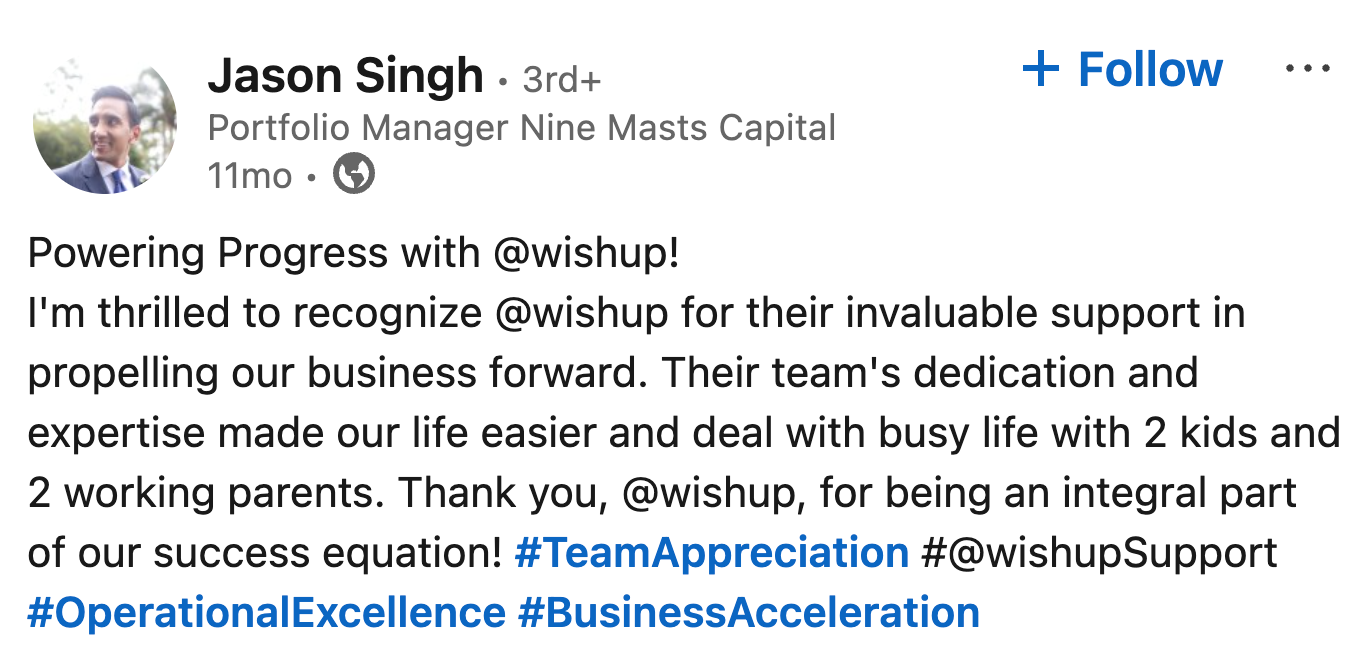
A warehousing VA works across five tool categories. These include inventory management, purchase order and vendor systems, shipment and documentation platforms, communication tools, and reporting software.
| Task Category | Key Platforms | What the VA Uses It For |
|---|---|---|
| Inventory management | NetSuite, Fishbowl, Zoho Inventory | SKU tracking, reorder alerts, stock reconciliation |
| Purchase order and vendor systems | QuickBooks, Zoho, HubSpot | PO processing, vendor invoice reconciliation, follow-up |
| Shipment and documentation | ShipStation, Google Drive, Excel | Tracking logs, packing slips, compliance documentation |
| Communication and coordination | Slack, Calendly, Google Workspace | Vendor and carrier coordination, delivery scheduling |
| Reporting and automation | Asana, Trello, Zapier | Inventory reporting, workflow automation, task tracking |
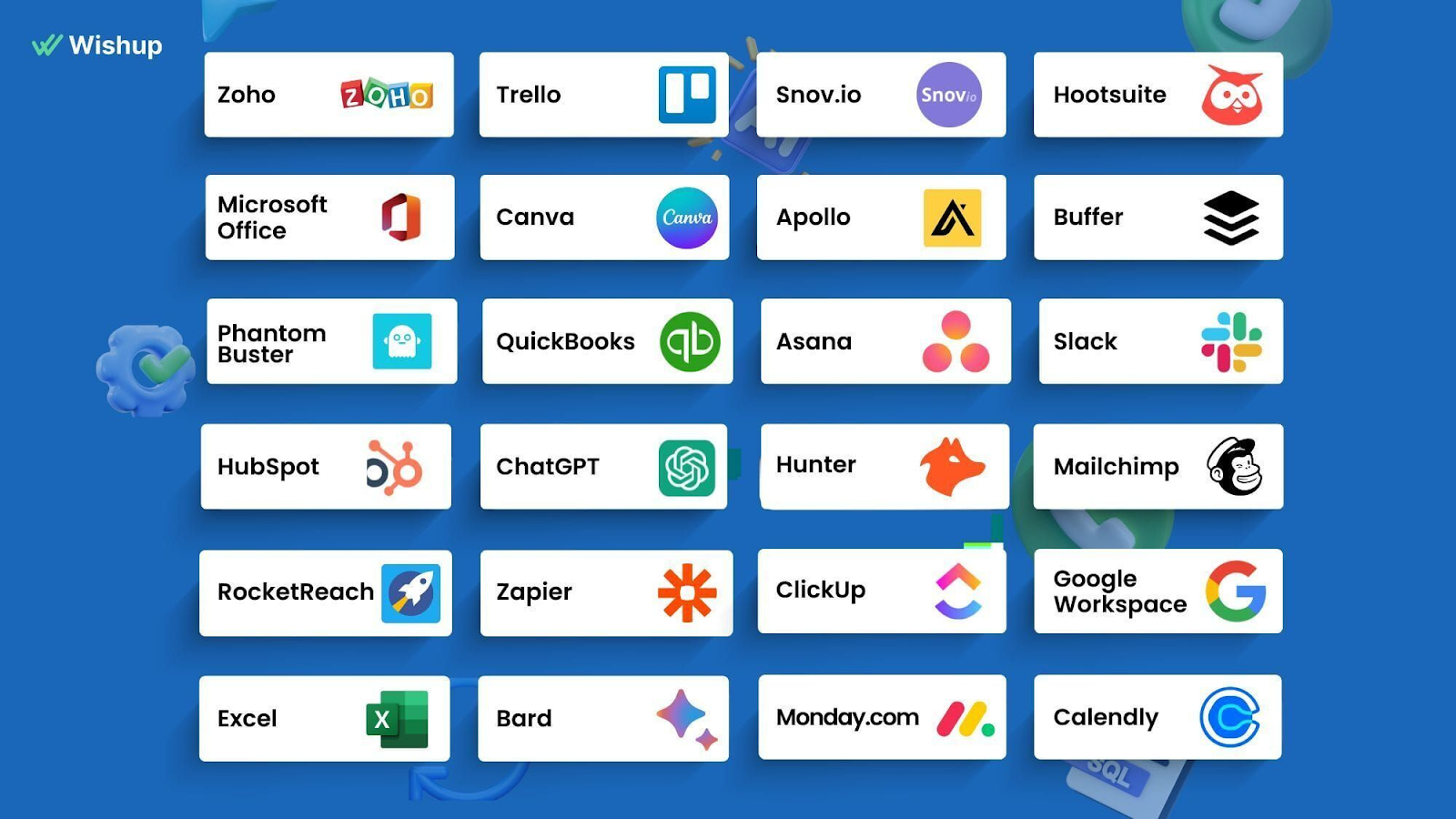
Why wait for a VA to learn the tools your business uses? Wishup VAs are trained across 120+ tools, including the inventory, shipment, and reporting software used across warehousing and distribution operations.
The training, assessment, and monitoring are done by the manager provided by Wishup itself so that no task yields an undesired result.
How Much Does A Warehousing and Distribution Virtual Assistant Cost in 2026?
A virtual assistant for warehousing and distribution centres costs $1,299 to $2,999 per month through a managed service like Wishup, or through a freelance marketplace. Managed pricing includes vetting, training, and replacement coverage; freelance rates do not.
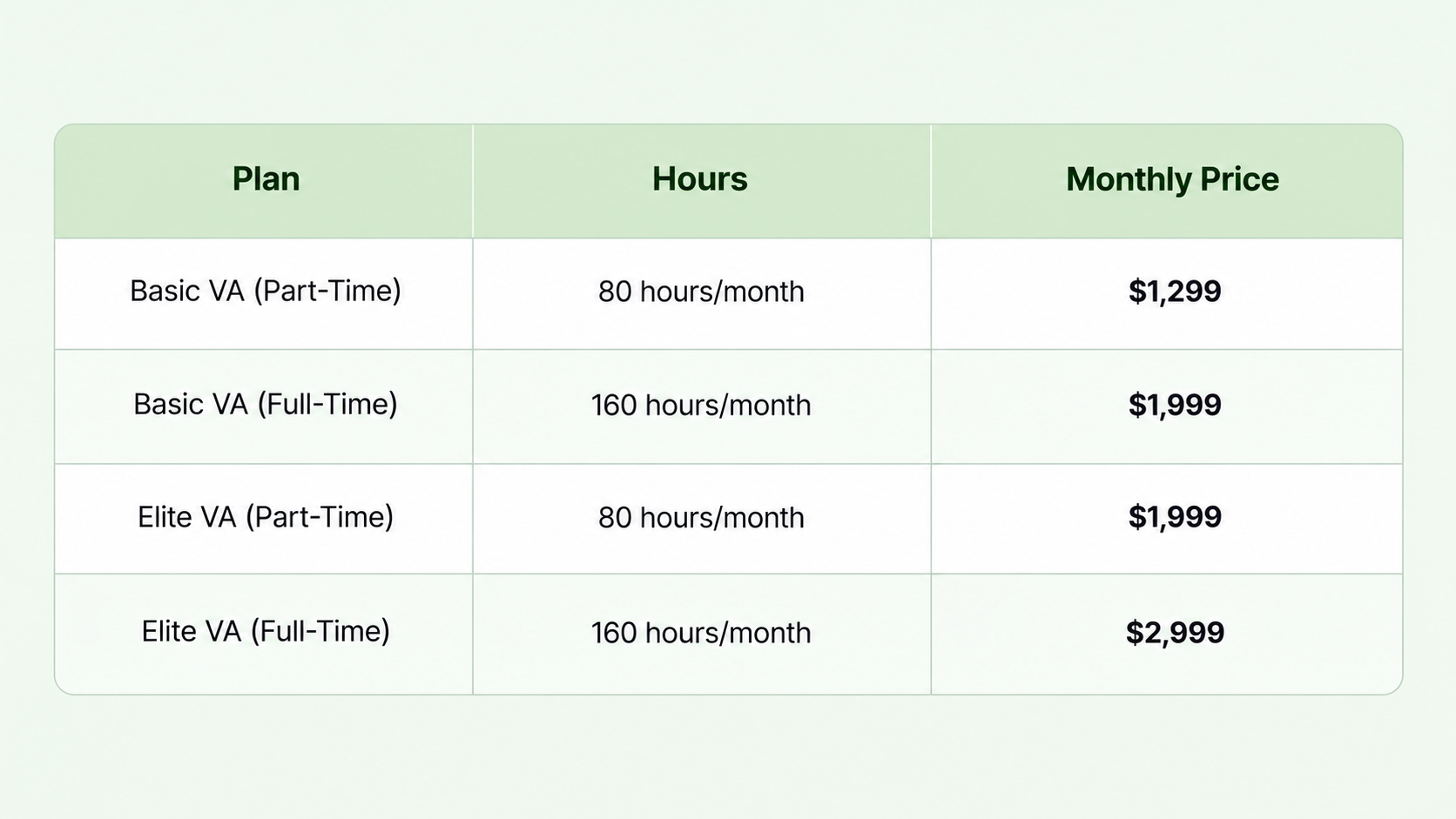
A full-time in-house logistics coordinator who handles inventory tracking, PO administration, and reporting could cost you $60,000 to $70,000+ yearly, once salary, benefits, and equipment are counted in.
However, a full-time Wishup warehousing VA costs $23,988 per year and could save you up to 60% on comparable backend support. Moreover, you onboard a VA in 60 minutes instead of a multi-week hiring cycle.
Hire a Virtual Assistant for Warehousing and Distribution Centers from Wishup
Wishup provides pre-vetted, experienced virtual assistants trained specifically for warehousing, distribution, and fulfillment operations. Every VA clears a 6-step selection process and pre-trains on 120+ tools before placement, and arrives ready to work inside inventory, PO, and shipment systems from day one.
What's included with every engagement:
- 60-minute onboarding with no multi-week hiring cycle
- Get dedicated account manager who monitors task quality and handles escalations for the VA who works for you.
- Get instant replacement guarantee. You will get a trained backup who steps in the same day if the assigned VA is unavailable.
- Free business tools worth $500
- Get an NDA included that covers invoices, vendor contracts, and shipment data to keep your data protected.

Hire a virtual assistant for warehousing and distribution centers from Wishup and get matched with a trained VA in under 60 minutes.
Why Choose Wishup for Warehousing and Distribution Support
Wishup stands apart from freelance providers and other VA companies on many accounts: Onboarding speed, the quality of talent, tool fluency, and management.
| Factor | Wishup | Freelance Platforms | Other VA Companies |
|---|---|---|---|
| Onboarding speed | 60 minutes | Up to 3 weeks | 1 to 2 weeks |
| Talent quality | Top 0.1%, pre-vetted and pre-trained | Unclear, no training | Pre-vetted only |
| Tool fluency | 120+ tools | Limited | Limited |
| Replacement guarantee | Yes | No | No |
| Dedicated account manager | Yes | No | No |
Freelance platforms require the business to screen, train, and manage continuity risk on its own. Comparatively, other VA companies vet talent, but that’s where it stops.
They do not provide tool training and dedicated account support. Whereas Wishup handles vetting, training, replacement, and performance monitoring as part of the engagement, so the operational load stays off the warehouse team's desk.

Wrapping Up
A warehousing VA closes the gap that gets generated by an overcrowded backend layer. Whether it is about counting stalled purchase orders or shipments, a VA can help with doing that across channels. Hire a Wishup VA for warehousing and distribution centers at $1299.
FAQs on Warehousing VA
What does a virtual assistant for warehousing and distribution centers do?
A warehousing VA handles inventory tracking, purchase order and vendor administration, shipment documentation, reporting, and customer or vendor communication.
How much does a warehousing VA cost?
Managed services range from $1,299 to $2,999 per month depending on hours and tier. Freelance marketplaces charge $10 to $25 per hour but leave vetting, training, and continuity risk with the business.
How is a warehousing VA different from a general VA?
A general VA manages inbox and calendar work with no operational context. A warehousing VA works inside inventory systems, tracks SKU-level stock movement, and knows the difference between a delayed shipment and a lost one.
Can a VA handle multi-location inventory tracking?
Yes. A trained VA reconciles stock counts across locations, flags discrepancies, and maintains accurate records without requiring physical access to any site.
How quickly can a Wishup warehousing VA be onboarded?
60 minutes from consultation to first shift, with free business tools worth $500 included as part of the engagement.
