
An electrical contractor loses an average of 25 hours per week to administrative work that requires no license, no field expertise, and no technical training to complete.
Scheduling calls, chasing unpaid invoices, following up on quotes, filing permit applications, and updating CRM records are tasks that keep the owner behind a desk instead of on a job site, and that gap has a direct cost to revenue.
A virtual assistant for an electrical contractor handles all of this remotely. Dispatch coordination, customer follow-ups, quote preparation, job scheduling, and inbox management move off your plate on day one. No recruitment process. No benefits or overhead. No desk space required.

Hire a pre-vetted electrical contractor virtual assistant through Wishup, start in 60 minutes!
Wishup is a virtual assistant company in the United States. Wishup's virtual assistant for electricians is pre-vetted from the top 0.1 percent of applicants, trained on 120 plus tools, and onboarded in 60 minutes, with pricing from $1299 a month.
This guide covers
- the full scope of what a virtual assistant does for electrical contractors,
- which tools they use, what three virtual assistant plans cost in 2026, and
- how to identify which tasks to delegate first.
Who is a Virtual Assistant for Electrical Contractors?
A virtual assistant for electricians is a remote administrative professional who handles the back-office work of an electrical contractor: job scheduling, dispatch, customer calls, estimate and invoice follow-up, bid management, and CRM updates.
While the electrician is on-site wiring a panel, the virtual assistant answers the customer call, sends the estimate, chases the unpaid invoice, and keeps the CRM current.
This is not a freelancer who takes instructions and disappears without ownership or accountability. The corresponding virtual assistant company manages a virtual assistant. Training, onboarding, monitoring, performance reviews, salary processing; everything is taken care of by the virtual assistant service provider.
The scope of a virtual assistant for electrical contractors covers 4 primary operational areas:
1. Job operations: scheduling, dispatch, permit tracking, and vendor coordination
2. Financial administration: invoicing, quote follow-up, payment tracking, and basic bookkeeping support
3. Customer communication: inbound inquiry response, appointment confirmations, review management, and follow-up sequences
4. Business development support: CRM management, LinkedIn outreach, lead nurturing, and email marketing
Can a Virtual Assistant Work as a Receptionist for Electricians?
Yes, a virtual assistant for electricians works as a virtual receptionist, answering inbound customer calls, booking service calls, screening emergencies, and following up on quotes while the electrician is on a jobsite.
An electrical contractor who misses calls loses jobs, and an electrician cannot answer the phone from inside a crawlspace.
As a virtual receptionist, the virtual assistant answers and screens every inbound call, separates an emergency no-power call from a routine quote request, books the service call straight into the schedule, and sends the follow-up on outstanding estimates.
Unlike an answering service that only takes a message, the virtual assistant works inside the electrical contractor's CRM and scheduling system, so a call becomes a booked job, not a callback list.

What Type of Virtual Assistant Fits an Electrical Contracting Business?
Three types of remote assistants come up when electrical contractors search for support: engineering virtual assistants, general virtual assistants, and admin virtual assistants. Here is how they differ.
| Dimension | Engineering VA | General VA | Admin VA for Electrical Contractors |
|---|---|---|---|
| Primary use case | Licensed engineering firms, OEM design teams, and design consultancies | Cross-industry personal and admin assistance | Trade contracting operations and business admin |
| Tool training | AutoCAD, Altium Designer, Revit, ETAP | Google Workspace, Asana, basic CRM | ServiceTitan, Jobber, Housecall Pro, QuickBooks, LinkedIn, CRM platforms |
| Industry context | Electrical engineering design | None specific | Field service workflows, dispatch, quoting, invoicing |
| Day-one readiness | Yes, for technical design firms | Requires extensive onboarding | Yes, for residential and commercial electrical contractors |
| Best fit | EV, robotics, marine, and industrial design teams | Executives needing personal and light admin support | SMB electrical contractors with 5 to 50 crew members |
An admin virtual assistant trained in field service operations understands how a contracting business runs day to day. They know what dispatch coordination involves. They can distinguish a quoted job from a change order. They work inside ServiceTitan, Jobber, or Housecall Pro without a long ramp-up.
Wishup's virtual assistants are pre-trained in 120+ tools, including field service management platforms, CRM systems, and productivity tools common in the trades. They arrive with operational context, not just willingness to learn.
35+ Tasks an Electrical Contractor Virtual Assistant Handles Each Week
A virtual assistant for an electrical contractor handles work across 5 operational categories: job scheduling and dispatch, quoting and billing, customer communication, business development, and back-office administration.
These are not generic admin tasks. Each one is specific to how electrical contracting businesses run. Every task listed below reflects real workflows Wishup's virtual assistant have managed for trade contractor clients.
Job Scheduling and Dispatch Coordination
Scheduling is where most electrical contractors lose the most time before bringing on a virtual assistant. Jobs fall off the calendar. Emergency calls go unassigned. Technicians show up at the wrong site.
A virtual assistant takes full ownership of the scheduling layer.
- Receive and log new job requests from email, phone messages, and customer portals
- Assign technicians to service calls based on availability, trade, and location
- Send technician dispatch confirmations and job briefing notes
- Update job statuses throughout the day as field updates come in
- Handle emergency or same-day job requests by notifying the client and rerouting the nearest available crew
- Follow up with technicians for incomplete or missing job notes
- Create revisit jobs for service calls that could not be completed in one visit
- Maintain a daily dispatch log and share an end-of-day summary
Before a virtual assistant takes over scheduling, 1 in 5 jobs is likely to fall off the calendar entirely. Missed follow-ups and no documentation are the two most consistent pain points that electrical contractor clients report before engaging a Wishup VA.
Quoting, Estimating, and Invoice Management
Quote delays cost jobs. When customers delay paying their invoices, the business doesn’t receive money on time.
A virtual assistant closes such gaps by owning the full estimate-to-payment workflow.
- Prepare draft quotes and estimates from field notes, voice memos, or job photos provided by the contractor
- Format quotes in tools like Joist, Jobber, or Housecall Pro and send to the client for a final review
- Follow up with prospects 24 to 48 hours after a quote is sent with a pre-approved message
- Update the CRM with quote status, follow-up dates, and client responses
- Create invoices from completed work orders and submit them for approval
- Track accounts receivable and flag invoices overdue by more than 7 days
- Send follow-up payment reminders at defined intervals using pre-approved templates
- Log all payments received and reconcile against job records in QuickBooks or similar
One Wishup's virtual assistant's CRM and follow-up work for an electrical client produced over 1,000 new LinkedIn connections and 70,000+ post impressions within the first engagement period. The same VA built the client's lead follow-up sequence from scratch, replacing a system that had no documentation and consistent missed follow-ups.
Customer Communication and Appointment Management
Customers expect fast responses. Most electrical contractors cannot deliver that while running job sites. A virtual assistant covers that gap without adding to payroll.
- Respond to inbound customer inquiries within the defined SLA window
- Send appointment confirmations and reminders 24 hours and 2 hours before each scheduled job
- Handle rescheduling requests and update all relevant job records
- Follow up with customers after job completion to confirm satisfaction and collect reviews
- Monitor and respond to Google Business Profile reviews on a daily basis
- Flag recurring complaints or patterns to the contractor for review
- Manage the client inbox in Microsoft Outlook or Gmail and maintain inbox zero
Business Development and Lead Follow-Up
A virtual assistant extends the contractor's business development capacity without the contractor lifting a finger.
- Draft and schedule LinkedIn posts including project highlights, before-and-after photos, and local market content
- Send connection requests to target contacts including property managers, GCs, and facility managers
- Respond to LinkedIn messages and route qualified leads to the contractor
- Build and manage a lead follow-up sequence in the CRM for prospects who have not converted
- Research local award programs and recognition lists in the contractor's market and prepare applications
- Compile a monthly competitor activity report covering their service areas, Google reviews, and online presence
- Set up and manage email drip campaigns for past customers and warm leads
Back-Office Administration and Documentation
Administrative debt compounds every week it goes unaddressed. A virtual assistant absorbs it before it affects operations.
- Manage permit applications, including filling out forms, uploading documents to city portals, and following up weekly on approval status
- Maintain and update vendor contact records in the CRM
- Coordinate with subcontractors on timelines, documentation, and compliance requirements
- Track and renew business licenses, insurance documents, and compliance deadlines
- Organize job files, photos, and close-out documentation in structured cloud folders
- Prepare weekly operational summaries covering jobs completed, quotes sent, invoices outstanding, and follow-ups pending
- Handle ad hoc research including supplier pricing, competitor rates, and local market data
How Does A Virtual Assistant Handle Bid and Estimate Management for Electrical Contractors?
A virtual assistant for electricians manages the bid pipeline for commercial electrical contractors: tracking bid invitations, organising plans and specs, preparing estimate documents, submitting bids before deadlines, and following up with general contractors.
Commercial electrical work is won or lost on bid volume and deadline discipline, and a missed bid deadline is a missed job.
The virtual assistant tracks incoming bid invitations from plan rooms and general contractors, keeps the plans, specs, and addenda organised for each project, assembles the estimate and proposal documents, and submits the bid on time.
After submission, the virtual assistant follows up with the general contractor and logs the outcome, so the electrical contractor knows the win rate and where each bid stands.
Tools and Software a Virtual Assistant for Electrical Contractors Must Know
A virtual assistant for an electrical contractor must be proficient in field service management software, CRM platforms, billing tools, communication platforms, and productivity suites used in trade contracting operations.
Here is a breakdown of the tools by function, drawn from real Wishup's virtual assistant deployments with trade contractor clients.
Field Service Management
These platforms are the operational backbone of most electrical contracting businesses. The virtual assistant uses them to manage jobs, dispatch technicians, track work orders, and process invoices.
| Tool | What the VA Uses It For |
|---|---|
| ServiceTitan | Job creation, dispatch board management, invoice generation, work order tracking |
| Jobber | Scheduling, quoting, client communication, invoice management |
| Housecall Pro | Job scheduling, automated reminders, payment tracking, customer notifications |
| BuildOps | Commercial dispatch coordination, portal invoicing, service agreement management |
| FieldEdge | Technician scheduling, job history tracking, billing workflows |
A virtual assistant unfamiliar with how field service platforms handle job statuses, billing cycles, and dispatch boards will slow operations rather than support them.
Billing and Accounting
Invoicing accuracy and payment follow-up are two of the highest-value tasks a virtual assistant handles for electrical contractors. These tools make that work consistent and auditable.
| Tool | What the VA Uses It For |
|---|---|
| QuickBooks Online | Expense categorization, invoice creation, accounts receivable tracking, reconciliation |
| FreshBooks | Client invoicing, payment reminders, project expense tracking |
| Joist | Quote preparation, estimate formatting, and job-specific billing |
| Wave | Basic bookkeeping and invoice management for smaller operations |
CRM and Lead Management
Customer relationships and lead follow-up fall apart without a structured CRM. A virtual assistant owns CRM hygiene and outreach sequencing inside these platforms.
| Tool | What the VA Uses It For |
|---|---|
| HubSpot | Contact management, follow-up sequences, deal pipeline tracking |
| Notion | Task management, documentation, lead tracking for smaller operations |
| GoHighLevel | Automated outreach, lead nurturing, SMS and email follow-up campaigns |
| Apollo.io | Lead research, contact verification, email sequence management |
Communication and Collaboration
The virtual assistant operates inside your communication stack from day one. Wishup VAs have supported electrical contractor clients primarily through Microsoft Teams and daily messages, with no adjustment period required.
| Tool | What the VA Uses It For |
|---|---|
| Microsoft Teams | Daily check-ins, job updates, task handoffs with the contractor |
| Slack | Async team communication, dispatch notifications, vendor coordination |
| Google Workspace | Docs, Sheets, Calendar, Gmail for all administrative tasks |
| Zoom | Client calls, vendor meetings, internal coordination |
Business Development and Marketing
A virtual assistant running business development for an electrical contractor needs working knowledge of outreach and content tools. The Wishup VA who supported an electrical client generated over 1,000 LinkedIn connections and 70,000+ post impressions inside a single engagement period.
| Tool | What the VA Uses It For |
|---|---|
| Post scheduling, connection requests, message responses, lead tracking | |
| Buffer | Social media scheduling across LinkedIn, Facebook, and Instagram |
| Canva | Job site graphics, service announcement posts, review response cards |
| Mailchimp | Email campaigns for past customers, seasonal promotions, referral outreach |
| Claude / AI tools | Research support, draft writing, content ideation, and process documentation |
Wishup's virtual assistants are trained in 120+ tools across business operations, marketing, and AI platforms before they are matched with a client. No additional training cost falls on the contractor.
- Roofing Virtual Assistants,
- HVAC Virtual Assistants,
- Landscaping Virtual Assistants,
- Virtual Assistants for Solar Installers,
- Virtual Assistants for Fire Protection,
- Virtual Assistants for Tree Services.
How Wishup Helps Electrical Contractors Delegate Without Slowing Down?
Wishup matches pre-vetted, pre-trained virtual assistants with electrical contracting businesses in 60 minutes. Every virtual assistant is selected from the top 0.1% of applicants, trained across 120+ tools, and matched based on prior experience in operational and field service environments.
For an electrical contractor, that means no recruitment cycle, no training overhead, and no desk space. The virtual assistant plugs into your existing tools and communication stack from day one.
Here is what makes Wishup operationally different from hiring a freelancer or using a general virtual assistant platform.
1. A Selection Rate of 0.1% From 51,119 Applicants
Wishup received 179,119 applications in 6 months and hired 179 virtual assistant. That is a final selection rate of 0.1%, roughly 1 hire from every 286 applicants.
Every virtual assistant who passes clears 6 sequential stages:
- Online aptitude and English tests
- A scenario-based assignment built from real client situations
- A structured interview conducted by experienced Wishup's virtual assistant.
- A reference check with previous employers
- Offer negotiation and logistics verification
- A 30-day training program before deployment
No freshers are hired. The minimum experience requirement is 2 years of corporate work. The strongest performers have 5 to 10 years of experience in operational and administrative roles.
2. Training That Covers Every Tool an Electrical Contractor Uses
Every Wishup's virtual assistant completes an 8-week structured training program before client placement. The program is non-negotiable. All modules are mandatory.
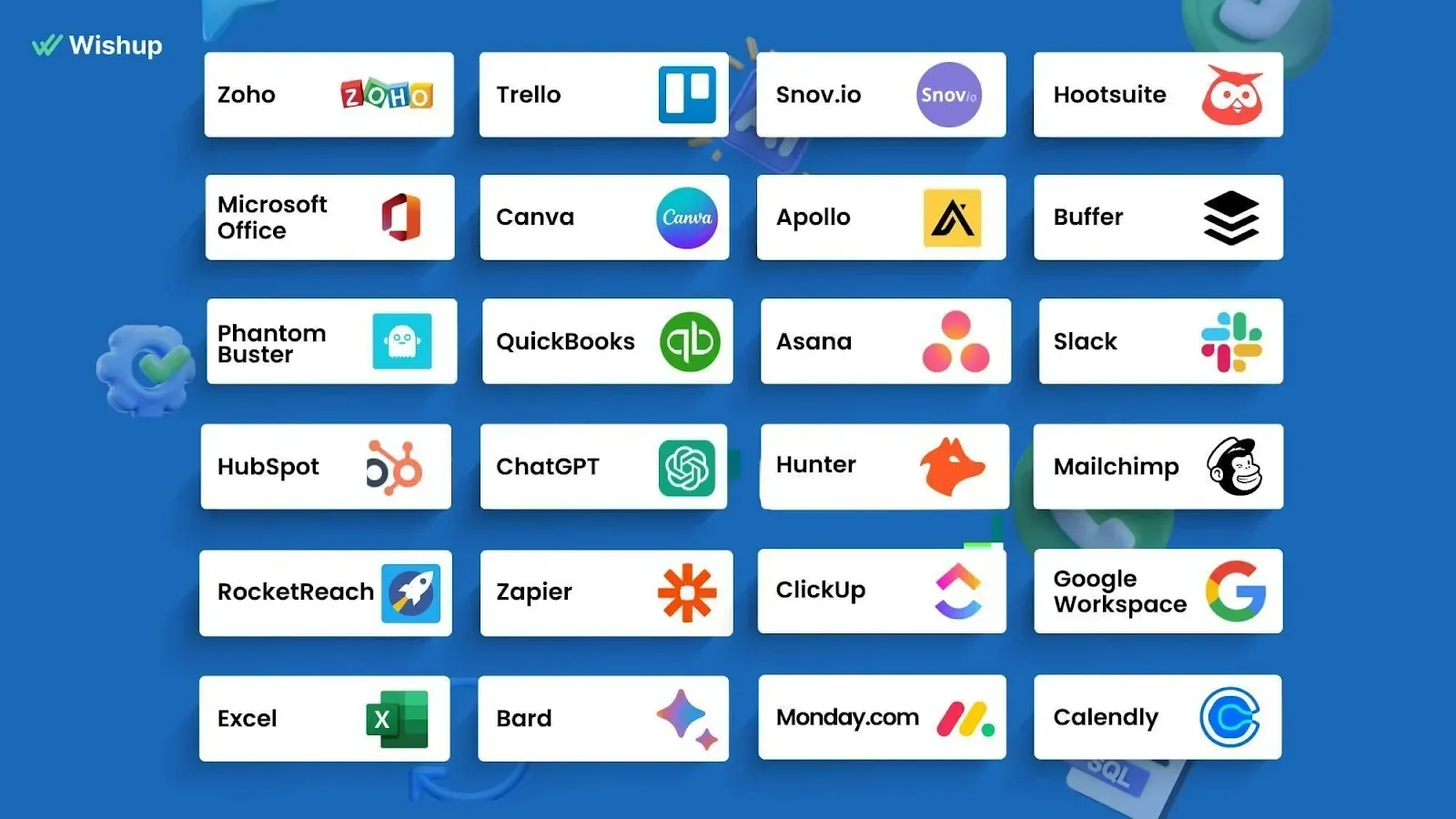
Training covers:
- AI tools and prompt engineering
- Inbox and calendar management
- Data management in Excel and Google Sheets
- Business email writing and email marketing
- CRM and sales CRM platforms
- Project management tools including Asana, Monday.com, and Trello
- Automation using Zapier and similar tools
- Social media management and content scheduling
- Photo and video editing
- Bookkeeping fundamentals in QuickBooks
Passing the benchmark for every module is a score of 90 or above. If a trainee does not clear the benchmark on the first attempt, they get one rework opportunity. Consistent low scores across modules result in removal from the program.
3. Onboarding in 60 Minutes, Not Weeks
Most virtual assistant platforms require 1 to 4 weeks of screening, interviews, and trial work before a virtual assistant is productive. Wishup matches and onboards in 60 minutes.
The virtual assistant arrives knowing the tools, understanding the task categories, and ready to start on recurring workflows immediately.
4. A Backup VA and Replacement Guarantee
When a freelance VA becomes unavailable, work stops. There is no contingency.
Wishup's model includes a backup VA and a same-day replacement guarantee. If your VA is unavailable for any reason, a trained replacement steps in without requiring the contractor to re-screen or re-onboard anyone.
For electrical contractors where scheduling, dispatch, and customer communication cannot pause, that continuity is not optional.
5. A Dedicated Account Manager on Every Engagement
Every Wishup client is assigned a dedicated account manager. The account manager monitors VA performance, handles escalations, adjusts scope when the business needs change, and is reachable without a support ticket queue.
Most VA platforms provide a VA and leave the management overhead with the client. Wishup absorbs that layer entirely.

How Much Does a Virtual Assistant for Electrical Contractors Cost?
A virtual assistant for an electrical contractor starts at $1,299 per month for a part-time engagement and goes up to $5,400 per month for a full-time US-based VA. All plans include a dedicated account manager, an NDA, a backup VA guarantee, and 60-minute onboarding.
For context on how these rates compare across the VA market, the complete VA pricing breakdown for 2026 covers 15 providers side by side.
Here is how Wishup's 3 plans compare for electrical contracting businesses.
Wishup VA Plans for Electrical Contractors
| Plan | Part-Time (4 hrs/day) | Full-Time (8 hrs/day) | Best For |
|---|---|---|---|
| Prime VA | $1,299/month | $1,999/month | Scheduling, inbox, CRM updates, quoting follow-up, social media |
| Elite VA | $1,999/month | $2,999/month | Advanced automation, multi-platform marketing, lead systems, complex workflows |
| US-Based VA | $3,000/month | $5,400/month | Contractors who need US timezone coverage, direct phone access, and domestic support |
All prices are in US dollars and billed monthly.
Wishup VA vs Full-Time Admin Hire: True Cost Comparison
A full-time office administrator for an electrical contracting business in the US costs between $35,000 and $50,000 per year in base salary. Add benefits, payroll taxes, equipment, and desk space, and the real annual cost sits between $48,000 and $65,000 for a single role.
| Cost Factor | Full-Time Admin Hire | Wishup Prime VA (Full-Time) |
|---|---|---|
| Monthly cost | $4,000 to $5,417 | $1,999 |
| Annual cost | $48,000 to $65,000 | $23,988 |
| Benefits and payroll taxes | $13,000 to $15,000 additional | $0 |
| Equipment and office space | $2,000 to $5,000 additional | $0 |
| Onboarding time | 4 to 12 weeks | 60 minutes |
| Replacement if they leave | Restart hiring cycle | Same-day request |
| Account manager included | No | Yes |
| Total annual savings with Wishup | — | $29,000 to $43,000 |
How a Wishup VA Operates Inside an Electrical Contracting Business?
A Wishup VA for an electrical contractor follows a defined daily operating loop. It covers job intake, scheduling, communication, follow-up, and reporting. Nothing falls through and nothing waits for the contractor to notice it.
Here is how a typical operational day runs with a full-time Wishup VA supporting an electrical contracting business.
The VA starts before the contractor's day begins. Overnight requests are logged and the dispatch board is ready by the time the first van rolls out.
The contractor sees one clean briefing. Nothing to chase, nothing to figure out. The dispatch board is set before the first coffee.
The VA monitors field activity and keeps customers informed while the contractor is on site.
No job goes unmonitored. No customer waits more than a few hours for a response. The contractor is unreachable on site and operations run normally.
Completed jobs move straight into billing. The CRM stays current and outreach runs without the contractor's involvement.
Invoices go out the same day the job closes. No invoice sits idle. Business development continues even on the busiest field days.
The contractor ends the day with full visibility. No manual review required. The next morning is already set up.
The contractor walks in the next morning with context, not questions. The dispatch board is already set. Nothing carried over without a flag.
The VA works inside the contractor's existing communication stack. No new tools, no new habits required.
The contractor does not manage the VA's output daily. The VA Manager handles that layer. Escalations reach the contractor only when a decision is genuinely needed.
Still Managing Scheduling and Follow-Ups Yourself?
Every job that falls off the calendar and every unpaid invoice that sits past 7 days is a direct cost to your business. A Wishup VA covers both from day one, no training required, no long onboarding cycle.
Electrical contractors using Wishup reclaim 15 or more hours per week from admin work. Plans start at $1,299 per month.

Frequently Asked Questions on Electrical Virtual Assistants
What is the difference between a general VA and a VA for electrical contractors?
A general VA handles cross-industry admin tasks like inbox management and calendar scheduling but lacks trade-specific context.
A VA trained for electrical contracting understands field service workflows, can operate inside platforms like ServiceTitan, Jobber, and Housecall Pro, and manages dispatch, quoting, and invoicing without a long ramp-up period. The difference shows up in the first week of work.
How much does a virtual assistant for an electrical contractor cost?
Wishup offers 3 plans for electrical contractors. The Prime VA plan costs $1,299 per month for part-time and $1,999 per month for full-time. The Elite VA plan costs $1,999 per month for part-time and $2,999 per month for full-time.
The US-Based VA plan costs $3,000 per month for part-time and $5,400 per month for full-time. All plans include a dedicated account manager, backup VA guarantee, and 60-minute onboarding. Full-time means 8 hours per day and part-time means 4 hours per day.
What tools does a virtual assistant for an electrical contractor need to know?
A VA for an electrical contractor must be proficient in field service management platforms including ServiceTitan, Jobber, Housecall Pro, and BuildOps. They also need working knowledge of QuickBooks or FreshBooks for billing, HubSpot or GoHighLevel for CRM and lead follow-up, LinkedIn and Buffer for business development, and Microsoft Teams or Slack for daily communication. Wishup VAs arrive pre-trained in 120+ tools including all of these platforms.
Can a virtual assistant handle permit tracking for electrical contractors?
Yes. A VA can manage the full permit workflow including filling out applications, uploading documents to city portals, following up with the local building department on a defined schedule, attaching approved permits to job files, and notifying the lead technician once approval is confirmed. This task alone typically consumes 5 to 10 hours per week for electrical contractors managing multiple active jobs across different municipalities.
How quickly can a Wishup VA start supporting an electrical contracting business?
A Wishup VA is matched and onboarded in 60 minutes. There is no recruitment cycle, no trial period, and no weeks-long ramp-up. The VA arrives pre-trained in the tools your business uses and begins on recurring workflows including scheduling, inbox management, and follow-up on day one.
What tasks should an electrical contractor delegate first to a VA?
The 3 highest-ROI tasks to delegate first are job scheduling and dispatch coordination, invoice follow-up for overdue payments, and quote follow-up for prospects who have not responded within 48 hours. These 3 tasks account for the majority of time electrical contractors lose to admin work each week and deliver measurable results within the first 30 days of VA support.
Is a virtual assistant a good fit for a small electrical contracting business?
Yes. A part-time Wishup VA at $1,299 per month delivers the scheduling, communication, and invoicing support that a 2 to 5 crew electrical business needs to operate without the contractor handling admin personally. The cost is a fraction of a full-time office hire, and the VA scales to full-time hours as the business grows.
What does a virtual assistant for an electrical contractor do?
A VA for an electrical contractor handles job scheduling, dispatch coordination, quote follow-up, permit status tracking, invoicing, CRM updates, customer communication, and LinkedIn or email outreach, all tasks that pull licensed electricians and owners away from billable field work.
Can a virtual assistant manage bids for a commercial electrical contractor?
Yes. A virtual assistant tracks bid invitations, organises plans and specs, prepares and submits estimates before deadlines, and follows up with general contractors, so a commercial electrical contractor never misses a bid deadline.

Author - Neelesh Rangwani · Co-founder at Wishup
With 10+ years in the virtual assistant space, Neelesh has helped 1000+ US and global founders build efficient remote teams by matching them with top 0.1% virtual assistant talent. He writes about virtual assistants, hiring frameworks, remote productivity, and scaling ops.
More posts by Neelesh → · Connect on LinkedIn