
What happens if the permit application for solar installation waits in queue for your practice, or if an interconnection request sits unanswered at the utility? You lose leads that could generate revenue for you. This is where a virtual assistant for solar installer comes in.
Hire a virtual assistant for solar installers via Wishup, starting at $1,299 per month, onboarded in as little as 60 minutes.

By the end of this blog, you will have learned:
- Who a virtual assistant for solar installers is,
- Whether they are the same as a roofing or electrical contractor VA
- Tasks you can delegate to them
- What tools they will be using
- How much they will cost you via a managed service such as WishUp
- And lastly, the onboarding process
So, let’s begin.
Who Is a Virtual Assistant for Solar Installers?
A virtual assistant for solar installers is a remote professional. They manage the office-side operations of a solar company, which includes permit and interconnection coordination, lead and appointment management, project and CRM tracking, and back-office admin.
The scope of their tasks breaks into four areas, which are as follows:
- Permit and interconnection coordination
- Lead and appointment management
- Project and CRM tracking
- Back-office admin
A general VA can handle the CRM updates and the inbox. However, a solar company virtual assistant also knows the lingo and the tools that sit within their workflow.
Is a Solar VA the Same as a Roofing or Electrical Contractor VA?
The straight answer is “no”. Although all three work inside the trades, each carries a different admin bottleneck.
A virtual assistant for a roofing company is built around storm-driven lead generation: hail-data outreach, permit portal submissions in tools like Accela, and CRM pipeline management in JobNimbus. Roofing permits are usually single-jurisdiction and move fast once submitted.
A virtual assistant for an electrical contractor centers on dispatch, quoting, and service-call coordination inside platforms like ServiceTitan and Jobber. Permitting barely factors into the role at all.
A solar VA has a step neither of the two has: after the permit clears, the project still needs a utility interconnection approval and incentive paperwork before it can generate revenue.
For businesses running multiple trade lines, the trade business virtual assistant hub covers how Wishup matches VA experience to the specific trade, rather than assigning a generalist across all of them.
What Tasks Can You Delegate to a Solar Company Virtual Assistant?
A solar company virtual assistant handles tasks across five categories: permit coordination, interconnection and incentive paperwork, lead and appointment management, project and CRM tracking, and back-office admin.
1. Permit Coordination
In this section, the VA can:
- Prepare and submit permit applications with the documentation each jurisdiction requires
- Track status and follow up where jurisdictions differ in turnaround time and communication style, some respond to portals, others only to phone calls
- Handle revision requests and resubmissions
- Maintain a per-project permit tracker so no application goes silent without someone noticing
- Schedule inspections and logging outcomes once a permit is approved and installation is underway
2. Interconnection and Incentive Paperwork
They maintain:
- Utility interconnection applications and ongoing status follow-up with the utility company
- Permission to Operate (PTO) tracking through to final approval
- Incentive and rebate paperwork, filed according to each state's specific program requirements
3. Lead Management and Appointment Setting
They can also look after:
- Inbound lead response and qualification as soon as an inquiry comes in
- Booking consultations against installer availability
- Follow-up sequences maintained across the full length of the sales cycle
- Reactivating stalled leads that went quiet mid-decision
4. Project and CRM Tracking
The solar company virtual assistants can:
- Keep deal stages current as a project moves through permitting, installation, and interconnection
- Maintain the CRM hygiene, including duplicate cleanup and accurate pipeline reporting
- Flag projects stuck at a stage longer than they should be
5. Back-Office Admin
The solar virtual assistant does the back-office admin tasks in parallel. They can:
- Generate invoice and accounts receivable follow-up
- Track subcontractor certificate of insurance (COI)
- File document and records organization
Knowing what they can do is as important as learning what they cannot do, so that you can draw up the best possible scope for them.

What a Solar Virtual Assistant Cannot Do
A solar virtual assistant cannot:
- produce stamped permit plan sets, engineering drawings, load calculations, or structural and electrical design work.They can merely coordinate between teams.
- Answer any escalated questions that need to be answered by an engineer.
- Answer escalation related to interconnection requests
- Produce an actual plan, stamped drawings, load calculations and system specifics.
What Software Does a Solar Virtual Assistant Use?
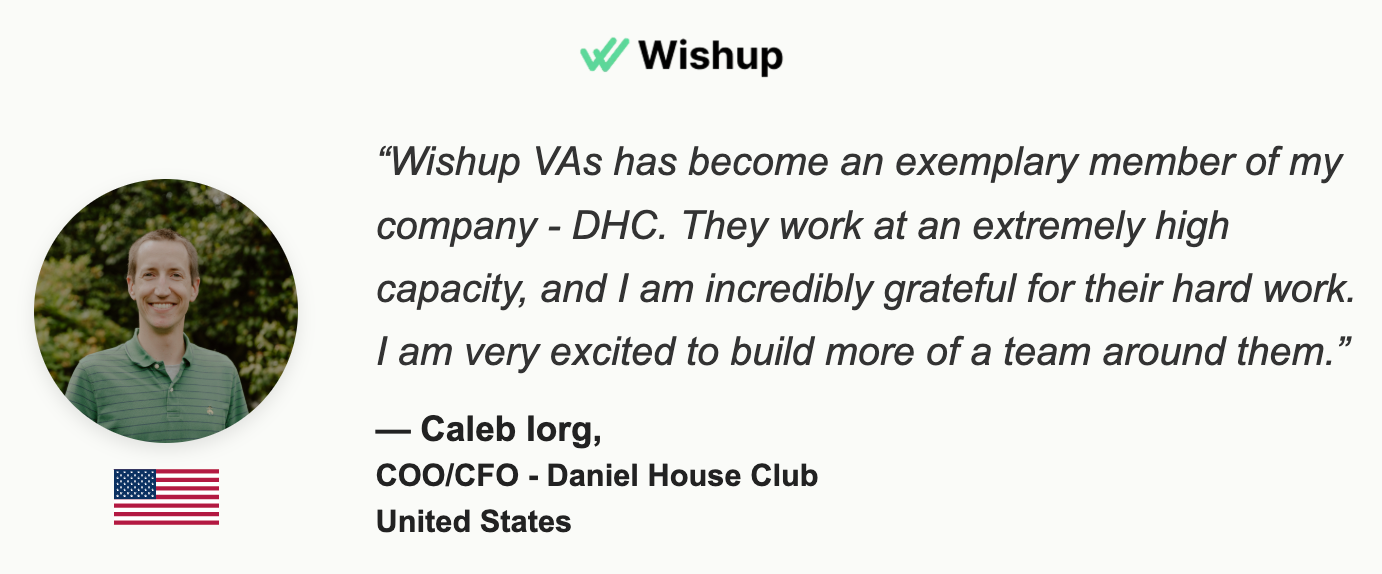
A solar virtual assistant works across three categories of software. They are solar-specific design and proposal tools, CRM platforms, and general productivity tools, with the flexibility to learn whatever system a practice already runs.
- Solar-specific tools includes Aurora Solar, OpenSolar, SolarNexus, Sunbase, and Scoop, used for proposal generation and project tracking
- CRM platforms includes Salesforce, HubSpot, GoHighLevel, and Zoho, used for lead management and pipeline reporting
- General productivity tools includes Google Workspace, Excel, and QuickBooks, RingCentral, used for documentation, reporting, communication and back-office admin
Many installers run proprietary systems or work inside regional AHJ portals that don't match any standard platform. Rather than requiring a fixed stack, a Wishup VA learns the client's actual system during onboarding, the same approach applied across 120+ tools Wishup VAs are trained on generally.
What Are the Benefits of a Virtual Assistant for Your Solar Company?
A virtual assistant for solar installers benefits a company in three measurable ways. They are regarding faster permit-to-PTO cycle time, quicker lead response, and lower admin cost per install.
1. Faster Permit-to-PTO Cycle Time
Permitting and utility approval account for 80% of total project time, with the physical installation itself taking just one to two days. A dedicated virtual assistant tracks every application and follows up before a delay compounds.
2. Faster Lead Response
Solar sales cycles generally run weeks. So, a slow first response makes them longer. A VA can fasten the timeline as they respond to inbound leads and book consultations immediately. They keep a multi-week sales cycle from losing momentum in its first 24 hours.
3. Lower Admin Cost Per Install
A trained VA starts at a fraction of the cost of a full-time in-house permit coordinator or project coordinator, with no benefits, payroll tax, or office overhead added, freeing budget to go toward crews and equipment instead of back-office headcount.
What Mistakes Do Solar Companies Make When Hiring a Solar Virtual Assistant?
Solar companies most often go wrong in four ways when bringing on a virtual assistant.
- Hiring for appointment setting only, and leaving permits with the owner. Although the lead response improves, the bottleneck that actually delays revenue, permitting and interconnection, stays unmanaged.
- A VA can't work independently across jurisdictions if the practice hasn't written down which AHJs respond to portals versus phone calls, or what each one typically requires.
- No defined escalation path for utility or inspection issues. When a utility raises a technical question or an inspection fails, the VA needs to know exactly who to route it to, not guess.
- Expecting a VA to produce plan sets. This is the single most common mismatch. Permit coordination and permit drafting are different skills, and a VA hired to do the former can't be asked to do the latter.
Every one of these traces back to an undefined scope going in, not to the quality of the person hired.
How Much Does a Solar Virtual Assistant Cost?
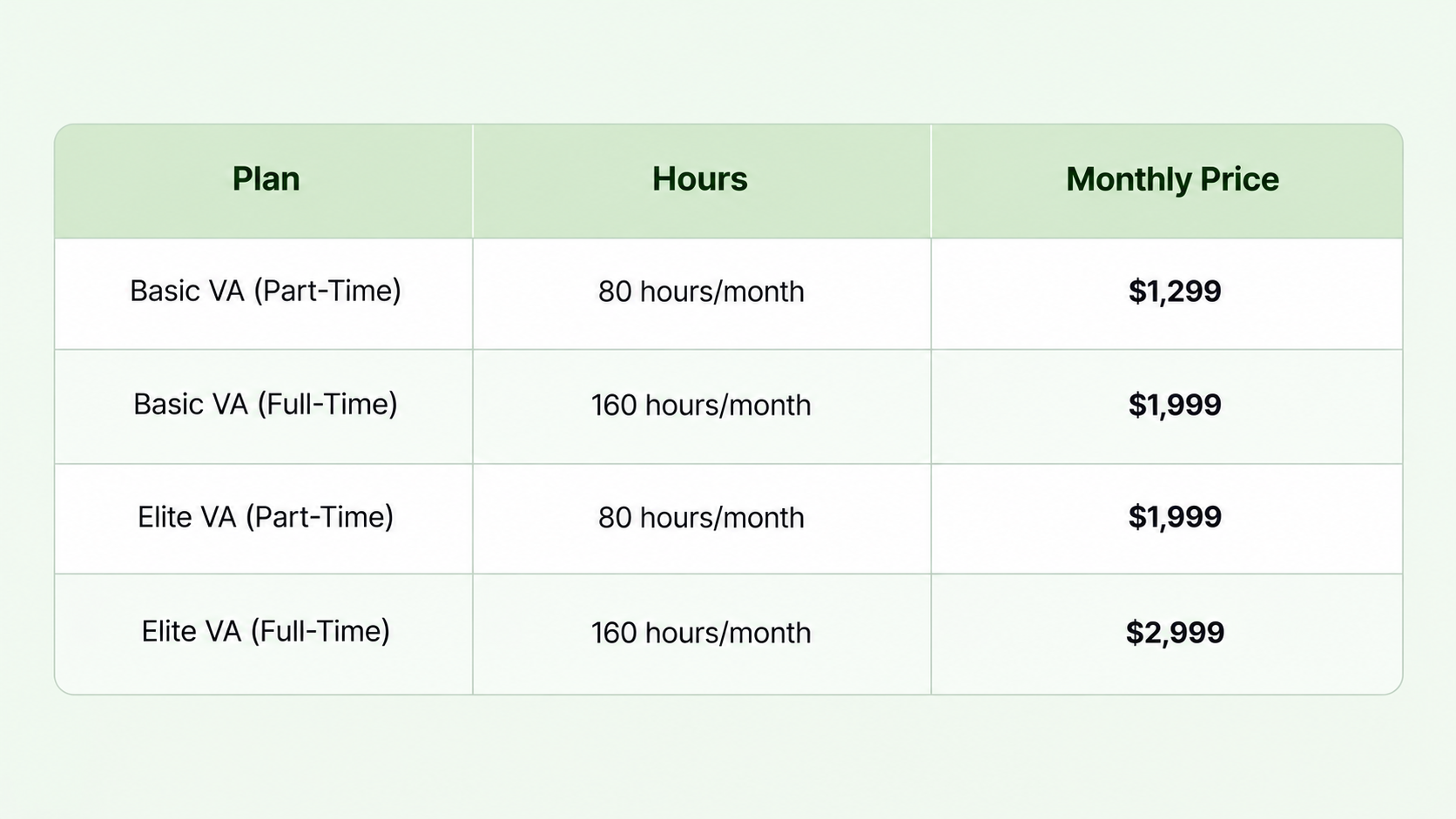
A Wishup virtual assistant for solar installers starts at $1,299 per month, compared to $42,000 to $58,000 per year for an in-house solar permit coordinator or project coordinator once salary, benefits, payroll taxes, and office overhead are factored in.
Still not sold? Let us give you the reasons why Wishup fits your needs and gives you more.
Why Hire a Solar Virtual Assistant from Wishup?
With Wishup, you get:
- Experienced pre-vetted professionals. Every Wishup VA has a minimum of 3 years of professional experience, and they are selected from the top 0.1% of applicants through a 6-step hiring process.
- Fast turnaround. VAs respond within 5 minutes during working hours, and a dedicated client success manager responds within 60 minutes.
- A service of a company with the highest 36-month average retention rate. Wishup VAs stay with clients significantly longer than the industry norm for outsourced admin support.
- To conduct direct interviews. Practices interview VAs directly at no cost, with a 90%+ interview success rate among shortlisted candidates.
- Access to a free VA management app. Clients track productivity and task completion through Wishup's built-in workforce management platform at no added cost.
- Zero risk. No cancellation fees, no interview fees, and no 30-day notice requirement to end an engagement.
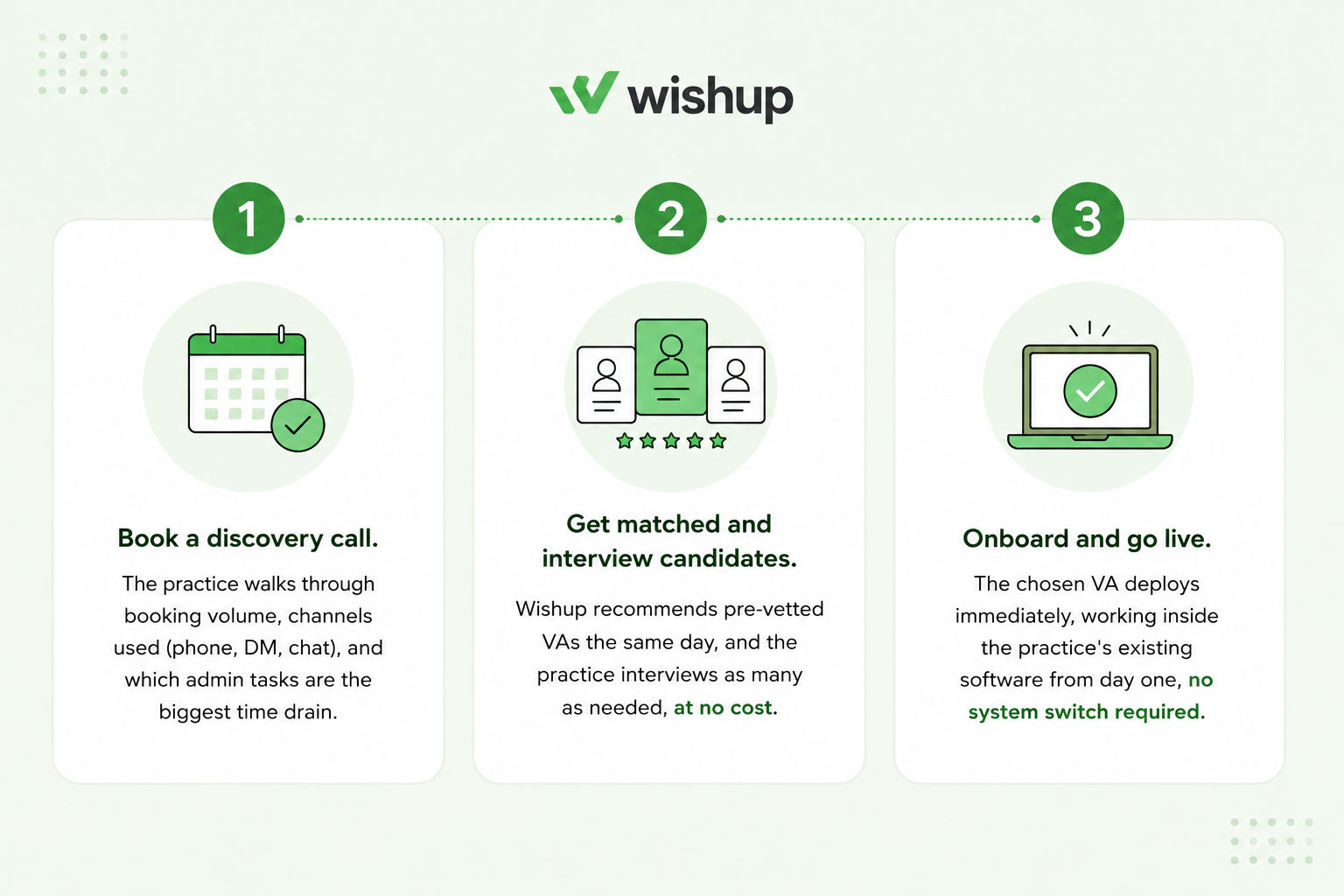
- An easy three-step onboarding process.
Last Words
A signed contract isn't revenue until it clears a permit and an interconnection approval, and every week that paperwork sits unmanaged is a week of cash flow delayed. A solar-specific virtual assistant closes that gap without the cost or ramp-up time of an in-house hire, and without asking a VA to do work that belongs with a licensed designer.
Frequently Asked Questions on Virtual Assistants for Solar Installers
What does a virtual assistant for solar installers do?
A virtual assistant for solar installers handles permit submission and tracking, utility interconnection and incentive paperwork, lead response and appointment setting, CRM and project tracking, and back-office admin. Roof work and system design stay outside the role entirely.
Is a solar VA the same as a solar appointment setter?
Not exactly. Appointment setting, responding to leads and booking consultations, is one task inside a broader role. A solar VA also handles permit coordination, interconnection tracking, and CRM management, work that goes beyond appointment setting alone.
What software does a solar VA need to know?
A solar VA works across solar-specific platforms like Aurora Solar and OpenSolar, CRMs like Salesforce and HubSpot, and general tools like Google Workspace and QuickBooks. Wishup VAs also learn proprietary AHJ portals and company-specific systems during onboarding.
How much does a solar virtual assistant cost?
A Wishup virtual assistant for solar installers starts at $1,299 per month for 80 hours, or $1,999 per month for a full-time, 160-hour engagement, compared to $75,060 a year for an in-house permit or project coordinator once benefits and overhead are included.
How quickly can one be onboarded?
A Wishup solar VA is matched and onboarded in as little as 60 minutes after a discovery call, with the VA working inside the company's existing tools and AHJ processes from day one.
