

Did you know that a single practice portal can generate 40 to 50 refill requests a day? That's before you count what arrives by fax, phone, or text.
Most practices don't realize how large that number actually is, because no one is tracking all four channels in one place. This is where a virtual assistant for prescription refill queue management comes in.

Hire a virtual assistant for prescription refill management via Wishup, starting at $1,299 per month.
Everything in this guide comes directly from Wishup VAs currently running this queue on a live US multi-location primary care and specialty clinic group. By the end of this blog, you will have learned:
- What is prescription refill management
- What a VA does in this
- Where the request comes from
- A checklist a VA has for setting up the refill management process
- Step-by-step process of refill management
- What the VA does around it
- What they don't do,
- And lastly how much they will cost you in 2026 through a managed service such as Wishup.
What Is Prescription Refill Queue Management?
Prescription refill queue management is the process of tracking every pending refill request across every channel it arrives on, verifying each one is legitimate and eligible, and getting it in front of the right provider inside the practice's turnaround window.
The queue isn't a single list in one system, it's whatever accumulates across the portal, fax machine, phone line, and text inbox at any given moment.
Managing it well means nothing sits unnoticed long enough to become a patient calling back angry, or a provider signing off on a request that was already filled a week earlier.
What Does a Virtual Assistant Do for Prescription Refills?
A virtual assistant for prescription refill management does four things. They include receiving requests across every channel they arrive on, verifying each one against the practice's eligibility rules, routing the request to the correct provider, and lastly, closing the loop once the prescription is sent. All these is done through the system where the provider makes the clinical decision and prescribes.
Trusted by Healthcare Leaders
See how doctors use Wishup Medical Virtual Assistants to save time and improve operations.
Where Do Prescription Refill Requests Come From?
Prescription refill requests generally for our clients come from four channels. These channels are the practice's online portal, fax, phone calls, and text messages. These can arrive from either the pharmacy directly or the patient themselves.
For our client, most of the volume comes through the portal, where pharmacies submit requests tied to a specific patient, medication, dosage, and days' supply. But pharmacies don't only request refills a patient actually asked for.
Many pharmacy systems automatically generate a request when a patient looks due based on their refill cadence, whether or not the patient has actually asked for one. That means a meaningful share of what lands in the queue is speculative, not a real, active request, and has to be verified as legitimate before it goes anywhere.
Fax is another active channel that carries the methods of pharmacy-initiated requests, along with prior authorization notices forwarded from insurers.
However, requests from phone and text come directly from patients checking on a refill's status or asking for a new one.
On a single account with 40 to 50 portal requests a day alone, the real total across all four channels runs meaningfully higher.
What Does a VA Check Before Sending a Refill to a Provider?
Before any refill request reaches a provider for refilling, our VA checks two things against the practice's own policy.
- Whether the patient has been seen within the required window, and
- Whether the medication is controlled or non-controlled.
For non-controlled medications, the rule on this account is that the patient must have been seen, either virtually or in person, within the past three months to be eligible for a refill.
However, for controlled substances, the window tightens to within the past month. This means the patient needs a recent appointment, virtual or in-person. This is specifically because of the additional oversight these medications require.
These thresholds are practice policy, not clinical or regulatory standards. Therefore, they might vary by practice and by state, and the Wishup VA will follow that unconditionally. A VA has to know the specific rules of the practice they're supporting, not apply a generic standard across every account.
If a request doesn't meet the applicable window, it doesn't move forward to the provider as a standard refill; it typically requires the patient to book an appointment first.
How Does a Virtual Assistant Process a Refill Request?
A virtual assistant processes a refill request through a fixed sequence that is sequenced below with better visualisation. The full sequence typically completes within 24 hours of the original request.
How a VA handles a refill request
Log the request
Pharmacy, patient, medication, dosage and days' supply.
Check the last visit
Open the chart and note when the patient was last seen.
Read the provider's notes
Review what was recorded at that most recent visit.
Check the next follow-up
It can be anywhere from 2 weeks to 6 months out, depending on the treatment plan.
Check the last prescription
What was sent last time, and for how long.
Catch duplicates
A 30-day request right after a 90-day send gets stopped, not forwarded.
Confirm with the patient
Only when it's unclear whether they already have the medication.
Send to the provider
An internal EHR memo to the provider or their medical assistant.
Attach the summary
Patient, medication, last visit, last quantity, status and pharmacy in one note.
Notify the patient
Most EHRs won't tell them the prescription has gone out.
What Types of Refill Requests Need Extra Handling?
Three types of refill requests need handling that goes beyond the standard eligibility check. They are dosage increase requests, quantity change requests, and prior authorization requests forwarded by the pharmacy. Let’s discuss them thoroughly to understand why:
- Dosage increase requests generally require the provider's direct review before any action, since a change from what was previously prescribed isn't something a VA can process as a routine refill.
- Quantity change requests come up when a provider originally sent a 30-day supply, but the patient's insurance only covers a 90-day supply, since smaller quantities sometimes aren't covered under the plan's terms. These get flagged and routed back to the provider to confirm before the pharmacy can fill the adjusted amount.
- Prior authorization requests forwarded by pharmacies require insurer approval before certain medications can be dispensed. A VA identifies that a request needs prior authorization and routes it accordingly, but submitting the authorization itself, working a denial, or managing an appeal is a separate, more specialized workflow. That process is covered in full in how to hire a prior authorization virtual assistant.
What Can a Prescription Refill Virtual Assistant Not Do?
A prescription refill virtual assistant cannot:
- Make clinical judgments on whether a refill is appropriate,
- Decide on dosage or quantity changes, and
- Approve or deny a request.
What the VA does is check eligibility, verify the request is legitimate, and get it in front of the right provider. The provider prescribes.
What Else Does a Refill Virtual Assistant Handle?
Apart from the prescription refill, the VA often supports adjacent administrative work that touches the same patients and the same systems, without duplicating what other roles already own.
- Appointment transfer and calendar sync: The VA can move appointments between an online booking platform and the practice's in-house portal, and sync provider availability daily so a slot doesn't show open on one system while it's already booked on the other.
- Inbound call handling: The VA can handle the calls of the patient and provider throughout the day. To understand thoroughly, see work that's covered in full in the virtual medical receptionist guide.
- Lab result follow-up: Results typically arrive one to two weeks after a blood draw. Once a provider reviews them, the VA is responsible for sending the report to the patient and booking any needed follow-up appointment.
- Fax handling for the practice: The virtual assistant can also cover documents from labs, other clinics, and pharmacy correspondence.
- Monthly recall campaigns: One of the major aspects is to reduce the no-show rate for the clinics, and to reduce that, the VAs reach out by text and email to patients due for an annual visit, physical, or standard screening.
- No-show confirmation calls: The VAs set up the no-show confirmation calls the day before a scheduled appointment to reduce the number of missed visits.
Each of these sits close to refill management without being the same task, which is why a well-run VA program on a multi-location account often distributes them across a small, dedicated team rather than one person.
Check Out How Wishup VA for a Healthcare Client Solves Issues Efficiently.
What Tools Are Used for Refill Queue Management?
A prescription refill VA works primarily inside the practice's practice management and EHR platform that is supported by a HIPAA-compliant patient messaging system, a VoIP phone system, and general productivity software.
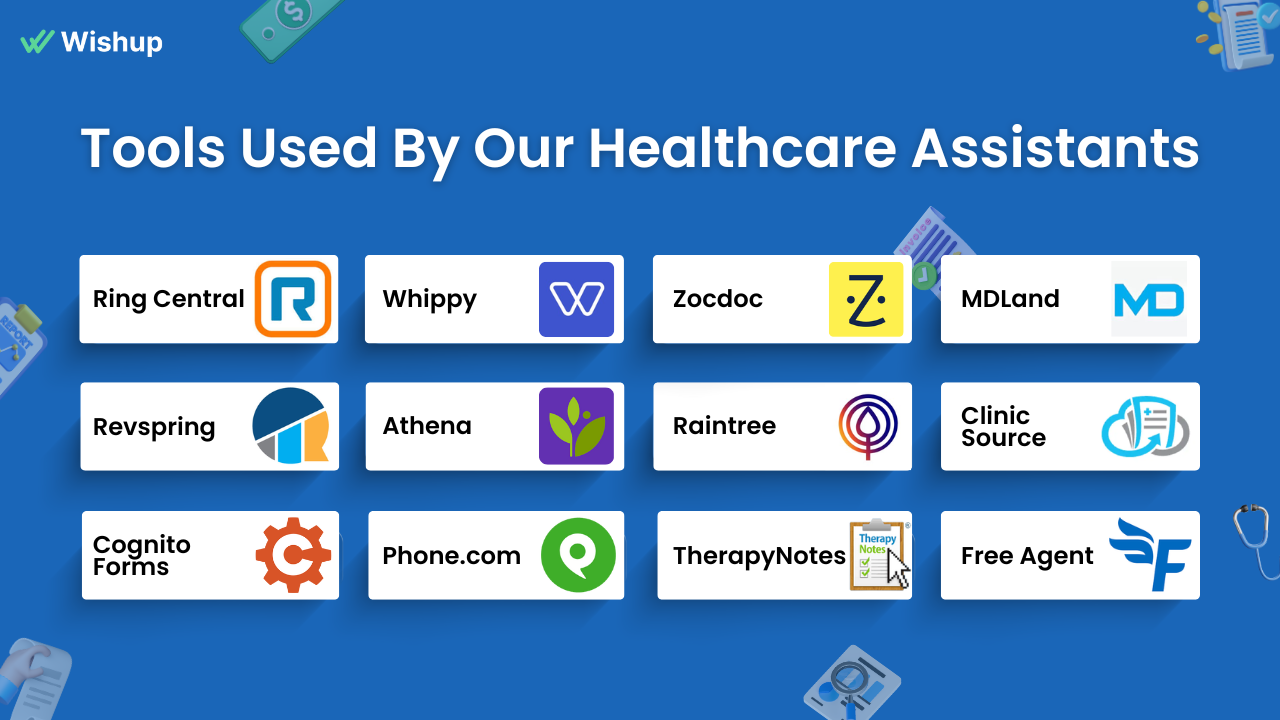
- Practice management and EHR platforms: The use systems like Tebra, AdvancedMD, and DrChrono handle patient charts, refill history, and provider follow-up routing. For a full breakdown of healthcare EHR options, see the guide to EHR software used by healthcare virtual assistants.
- Online booking platforms sync appointment data between patient-facing scheduling tools and the practice's internal portal.
- HIPAA-compliant patient messaging handles refill notifications and appointment reminders. This is a genuine compliance requirement, not a preference: consumer messaging apps that aren't built for healthcare data, however convenient, don't meet HIPAA's requirements for handling patient information, which is why practices standardize on a dedicated, compliant messaging platform instead.
- VoIP phone systems manage inbound and outbound patient calls tied to refill status checks.
- Google Workspace and Excel support day-to-day documentation, tracking, and internal reporting.
The specific platform combination varies by practice, and a well-trained VA works inside whatever system a practice already has rather than requiring a switch.
How Much Does a Prescription Refill VA Cost?
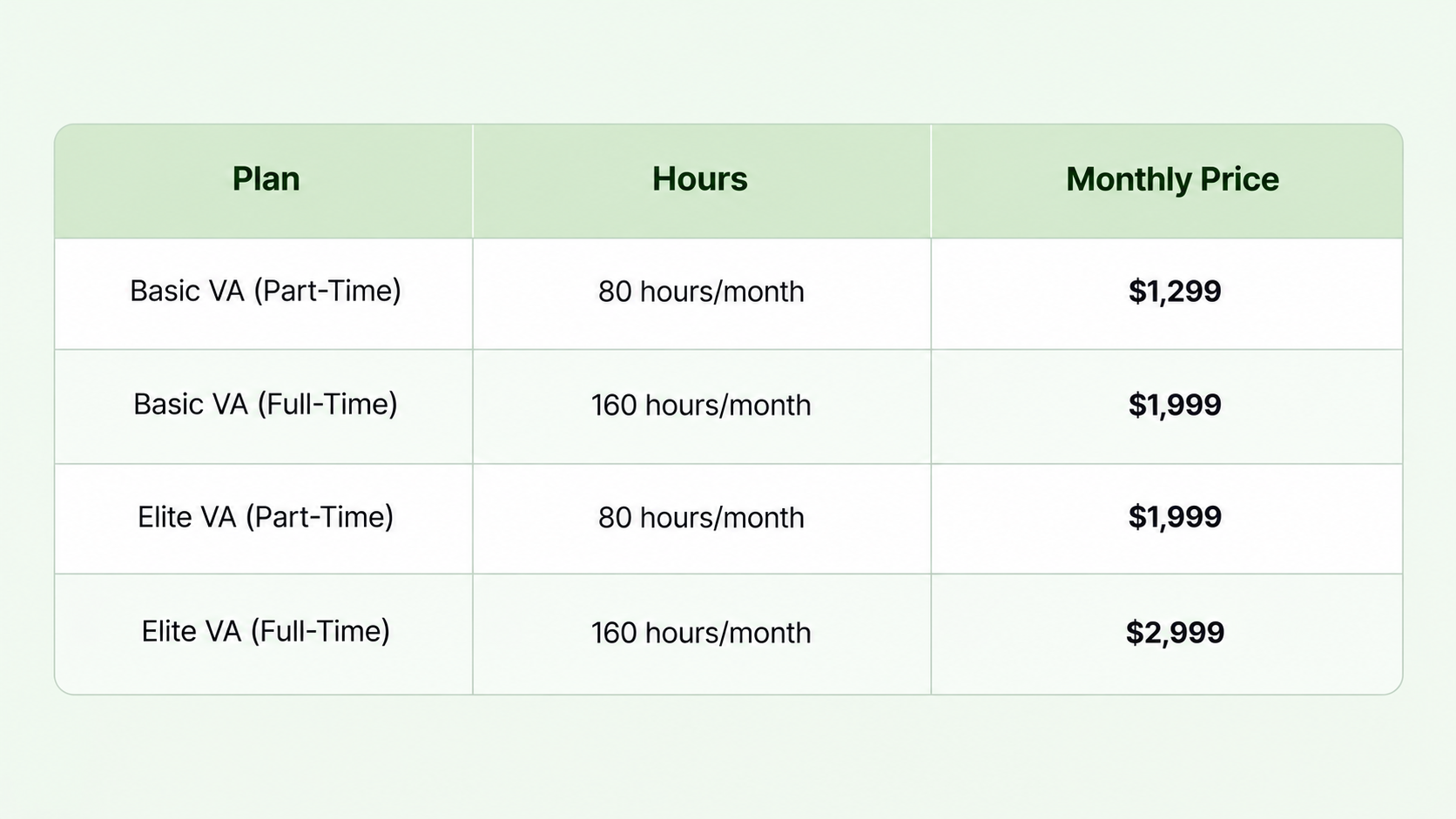
A Wishup virtual assistant for prescription refill management starts at $1,299 per month, compared to what an in-house medical office assistant or patient services coordinator costs once salary, benefits, payroll taxes, and office overhead are factored in.
Hire a Prescription Refill Virtual Assistant from Wishup
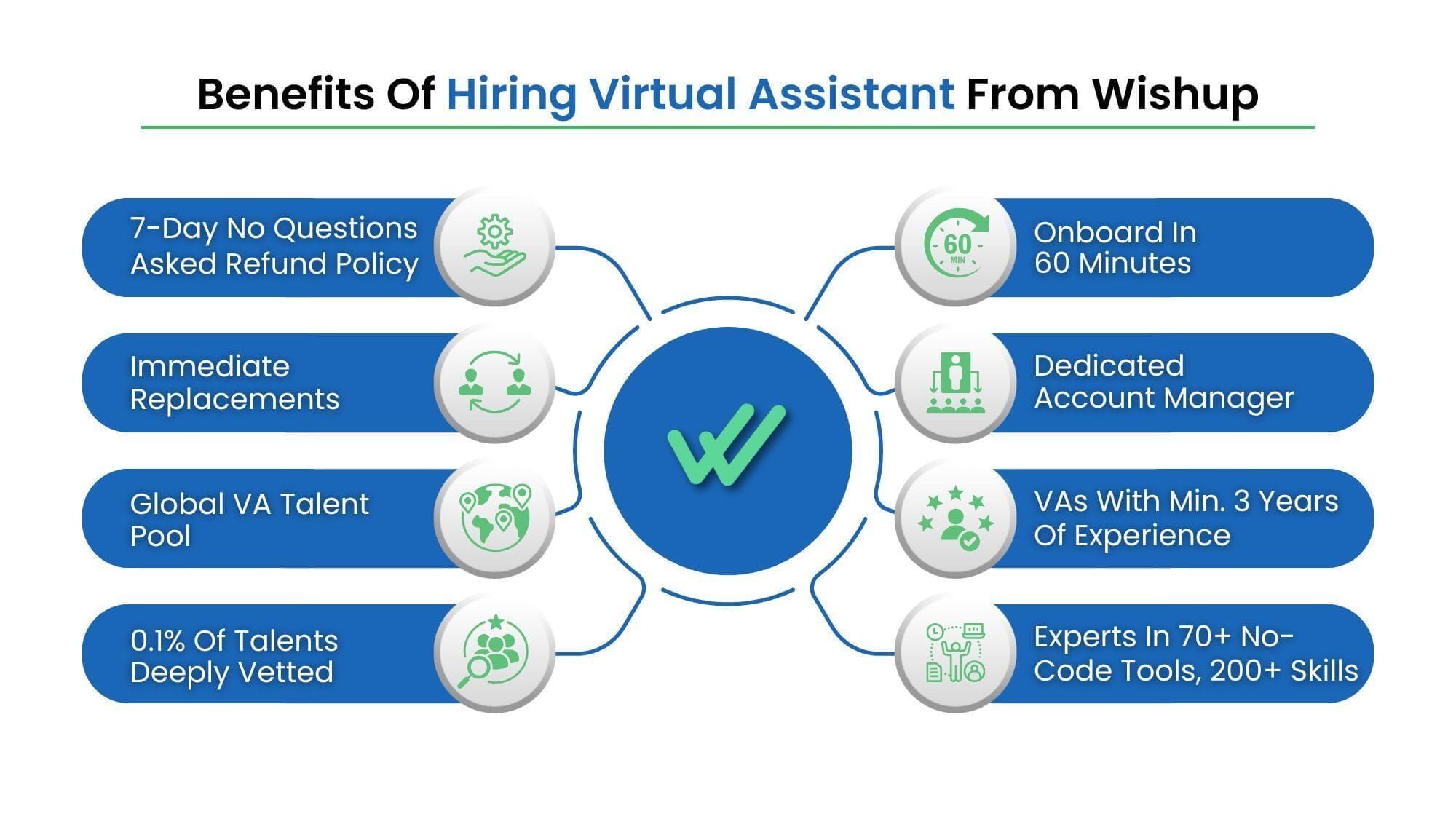
Wishup is where practices go to hire a virtual assistant who already understands what the process is.
Continuity is the argument that matters most in a clinical workflow, and it's something Wishup can actually evidence rather than just claim. On the account referenced throughout this guide, the two VAs running refill queue management have both been on the same practice since March 2024, part of a four-person Wishup team supporting the same multi-location group continuously since then.
That kind of tenure means a provider's escalation preferences, a practice's specific eligibility thresholds, and a patient's history don't have to be relearned by someone new every few months.
Last Words
Refill queue management is one of those tasks that looks simple from the outside and isn't.
Forty to fifty requests a day, four intake channels, eligibility rules that vary by medication type, and a specialty bottleneck that has no built-in fallback, all of it has to run on a 24-hour clock without a single duplicate slipping through or a real request getting lost in the noise.
A trained VA who already understands this workflow closes that gap without the ramp-up time of an in-house hire.
Delegate Prescription Refill Management
Get a HIPAA-trained refill management VA to handle intake, eligibility checks, provider routing, and patient follow-ups, starting at $1,299/month. Get $100 off your first month.
Book a Free Consultation →Frequently Asked Questions on Prescription Refill Queue Management
Can a virtual assistant approve a prescription refill?
No. A virtual assistant verifies eligibility, checks for duplicates, and routes a legitimate request to the correct provider. The provider makes the clinical decision and approves or denies the refill; a VA never makes that call.
Can a VA handle prior authorization requests?
A VA identifies when a refill request requires prior authorization and routes it accordingly. Submitting the authorization, working a denial, or managing an appeal is a separate, more specialized workflow, covered in how to hire a prior authorization virtual assistant.
How long should a refill request take to process?
The target turnaround is 24 hours from when a request is received to when the provider takes action on it. Delays of two to three days are common when a provider has a fully booked schedule, particularly in single-provider specialties with no fallback coverage.
How much does a prescription refill VA cost?
A Wishup virtual assistant for prescription refill management starts at $1,299 per month for 80 hours, or $1,999 per month for a full-time, 160-hour engagement, compared to $75,060 a year for an in-house medical office assistant once benefits and overhead are included.
