
Summary - TL;DR
- HVAC virtual assistants are trained remote professionals who support field service operations including dispatch coordination, invoicing, technician scheduling, portal submissions, and BuildOps workflows.
- More than 50 operational tasks across dispatch, billing, payroll support, HR coordination, fleet management, and customer portals can be delegated from day one.
- HVAC VAs commonly work inside platforms like BuildOps, ServiceTitan, Corrigo, ServiceChannel, Verisae, Samsara, ADP, and BambooHR.
- Hiring an in-house trade administrator can cost between $63K–$85K annually, while a Wishup HVAC virtual assistant starts at $1,299/month with workflow training, VA management, and replacement support included.
Wishup has already deployed 8 HVAC virtual assistants inside a live commercial HVAC company managing dispatch, billing, HR administration, and fleet coordination for 30 technicians daily
Dispatch coordination, invoice creation, portal submissions, BuildOps management, CRM updates, technician scheduling, and collections consume the operational hours that belong in the field or in client relationships.
For small HVAC contractors, that administrative overhead grows with every technician added to the roster and every commercial account added to the portfolio. Hire a virtual assistant from Wishup and start delegating those hours in under 60 minutes.
Wishup has deployed 8 virtual assistants inside a live commercial HVAC operation running BuildOps across dispatch, billing, finance, and back-office functions. This guide draws directly from that deployment and 10 years of HVAC VA data to show contractors the exact tasks to delegate, what it costs, and which tools an HVAC virtual assistant uses.

This guide covers:
- What an HVAC virtual assistant is and how it differs from a general virtual assistant
- The specific pain points that virtual assistants for HVAC contractors solve
- Benefits of hiring an HVAC Virtual assistant for small contractors
- How HVAC dispatch support works remotely
- 50+ tasks to delegate to a virtual HVAC admin assistant across dispatch, billing, scheduling, and operations
- Cost comparison between an HVAC virtual assistant and a full-time in-house hire
- Software used by HVAC virtual assistants in the field
- How Wishup deploys and manages HVAC virtual assistants
Who Is an HVAC Virtual Assistant?
An HVAC virtual assistant is a remotely deployed administrative professional trained in field service management operations who handles dispatch, billing, scheduling, and back-office workflows for heating, ventilation, and air conditioning contractors.
Unlike a general virtual assistant trained in inbox management and calendar coordination, an HVAC VA understands the operational structure of a trade contracting business. Service calls are routed through field service management platforms like BuildOps, ServiceTitan, or ServiceFusion.
Invoices are submitted through commercial customer portals like Corrigo, ServiceChannel, and Verisae. Dispatch coordination runs across multiple technicians serving commercial accounts with strict SLA windows and NTE thresholds.
The 4 core functions of an HVAC virtual assistant are
- dispatch coordination and job management,
- billing and portal invoice submission,
- technician scheduling and fleet tracking, and
- back-office operations, including payroll support, HR administration, and reporting.
HVAC Virtual Assistant vs. General Virtual Assistant
What Does A HVAC Virtual Assistant Do?
An HVAC virtual assistant can do many things. An exhaustive 50+ task list is shared below. However, an ideal HVAC VA would do:
- Emergency Dispatching: The HVAC VA screens urgent no-cooling or no-heating calls, triages emergencies, and routes techs based on location and skill to minimize windshield time.
- Calendar Management: To streamline their tasks, they book service appointments, handle maintenance agreement renewals, and send automated SMS/email reminder confirmations.
- Lead Follow-Up: No lead should go unanswered. HVAC virtual assistants answer inquiries, provide estimates, and send review requests after a job is completed.
- Admin Support: Apart from these, the broad range of their task under administrative tasks includes handling invoicing, payment processing, and data entry so field technicians can stay focused on billable hours.
What Are the Benefits of an HVAC Virtual Assistant for Small Contractors?
The 5 benefits below reflect outcomes from HVAC operations running VA support across dispatch, billing, and back-office functions.
1. Time recovery across dispatch, billing, and scheduling
Administrative tasks across dispatch coordination, invoice creation, portal submissions, and technician scheduling consume between 46% and 60% of a small HVAC contractor's operational week.
An HVAC virtual assistant handles those tasks entirely, including dispatch board updates, BuildOps job creation, Corrigo submissions, and collections, without requiring supervision once trained on the workflows.
2. Cost savings of 60 to 77% compared to a full-time in-house hire
A full-time commercial trade admin hire costs $35,000 to $50,000 per year in base salary, plus benefits, payroll taxes, equipment, and office space, totaling $63,000 to $85,000 annually for a single role.
A trained HVAC virtual assistant from Wishup starts at $1,299 per month with onboarding, a VA manager, and a replacement guarantee included. No benefits. No office space. No equipment costs.
3. Billing accuracy and faster cash flow
Delayed invoices and portal rejections are direct cash flow events for HVAC contractors. An HVAC virtual assistant with commercial billing experience
- creates invoices correctly on the first pass,
- submits to Corrigo, ServiceChannel, and Verisae with all required documentation attached, and
- tracks rejections within 24 hours.
Accurate first-pass billing removes the review loops that delay payment by days or weeks.
4. Scalability without permanent headcount
HVAC demand peaks in summer and winter and drops in the shoulder seasons. Hiring a full-time dispatcher or billing specialist for peak capacity creates permanent overhead that drains resources in slow periods.
An HVAC virtual assistant scales with operational demand, covering peak dispatch volume during busy seasons without adding to the fixed payroll the rest of the year.
5. FSM platform expertise without a training burden
Wishup VAs have worked inside field service management platforms, including ServiceTitan, ServiceFusion, and Jobber, before deployment.
That FSM workflow fluency transfers directly to BuildOps because the operational logic across dispatch coordination, PO-driven billing, and portal management remains consistent across platforms.
HVAC contractors do not train Wishup HVAC VAs from scratch on commercial trade operations. The training happens before deployment.
- Roofing VA,
- Electrical contractor,
- Pest control virtual assistants.
What Are The 4 Pain Points a Virtual Assistant for HVAC Contractors Resolves?
The 4 pain points below reflect what HVAC contractors describe before deploying VA support, drawn directly from operational challenges inside commercial HVAC and field service businesses.
Pain Point 1: Billing loops that hold cash hostage
The most common billing breakdown in commercial HVAC operations follows a predictable sequence. An invoice gets created, routes to a customer account manager for review, gets sent back to the billing team with minor corrections, returns to the account manager, gets flagged again, and cycles through that loop until someone forces a resolution.
One commercial HVAC operator running BuildOps described this exact problem: invoices moving back and forth between billers and account managers, with no defined turnaround time and no single point of billing accuracy ownership. The result was delayed payments across multiple commercial accounts and mounting pressure on cash flow.
An HVAC virtual assistant owns the invoice from creation to portal submission. Line items get reviewed before conversion. Documentation is attached before submission. Rejections get actioned within 24 hours. The billing loop closes because one accountable person is managing every step inside BuildOps.
Pain Point 2: Dispatch coordination breaking down across 10 or more technicians
Coordinating 10 to 30 service vehicles across commercial accounts, emergency calls, subcontractor assignments, and portal notifications is a full-time job. When that coordination runs through a dispatcher who also handles customer calls, invoice follow-ups, and technician communications, the job breaks.
An HVAC specialist dedicated to dispatch monitors the BuildOps dispatch board continuously during operating hours. It also assigns technicians based on trade and proximity, posts jobs to Corrigo, ServiceChannel, and Verisae, and routes emergency calls without pulling the primary dispatcher out of their workflow.
Pain Point 3: FSM platform migrations surface hidden operational problems
When one commercial HVAC contractor migrated from their previous FSM platform to BuildOps, the billing inefficiencies that had been masked by the old system became immediately visible.
Invoice approval workflows were not standardized. Role boundaries between billers and account managers were undefined. The new platform created visibility into a process that had never been documented.
The operational spike from a platform migration requires a trained administrator who understands both the FSM platform and the commercial trade workflow.
A general VA without FSM experience creates invoice errors during the most critical period: the first 60 to 90 days after go-live, when billing continuity determines whether the migration succeeds.
Pain Point 4: HR, payroll, and administrative overhead are consuming operations leadership time
HVAC operations managers and owners spend 8 to 12 hours per week on HR administration, payroll verification, timesheet audits, vehicle maintenance tracking, and compliance documentation. None of that work requires the owner. All of it diverts attention from service quality, client retention, and growth.
HVAC operations managing 20 or more employees handle
- ADP timecard verification,
- technician PTO tracking,
- onboarding paperwork for new hires,
- driver violation monitoring, and
- insurance reconciliation, in addition to dispatch coordination and billing.
| Area | Without an HVAC VA | With a Wishup HVAC VA |
|---|---|---|
| Dispatch | Missed jobs and scheduling delays. | Real-time dispatch coordination. |
| Billing | Slow invoicing and payment delays. | Faster invoice processing and follow-ups. |
| Vendor Portals | Missed alerts and SLA deadlines. | Daily monitoring and timely updates. |
| Cost | $63K–$85K/year for in-house staff. | Starts at $1,299/month with management support. |
| Scalability | Higher fixed payroll during slow seasons. | Flexible support that scales with demand. |
| Owner's Time | 15–30 hours/week spent on admin. | More time for customers and business growth. |
An HVAC virtual assistant trained in HR administration handles those workflows in parallel with field operations, removing the owner from tasks that have no business sitting on their desk.

Which HVAC Business Functions Can a Virtual Assistant Support?
An HVAC virtual assistant supports 6 operational functions that small and mid-sized HVAC contractors currently manage in-house at significant time and cost.
1. Dispatch and job management
HVAC VAs create service calls in BuildOps, assign technicians based on trade and location, post jobs to Corrigo, ServiceChannel, and Verisae, manage emergency dispatch reassignments, and follow up on incomplete technician notes throughout the day.
2. Commercial billing and invoice submission
HVAC virtual assistants convert approved estimates into invoices, verify portal completion status before billing opens, attach all required documentation, submit through customer portals, and track rejections within 24 hours. Billing accuracy on the first pass removes the review loops that delay cash flow.
3. Customer portal management
Commercial HVAC accounts require daily portal monitoring across Corrigo, ServiceChannel, and Verisae. HVAC virtual assistants monitor arrival reminders, overdue alerts, recall notifications, and NTE approvals, updating job statuses in BuildOps before SLA windows close.
4. Technician scheduling and fleet coordination
HVAC virtual assistants manage technician vacation and leave entries, update on-call schedules, track vehicle maintenance receipts in Samsara, and reconcile technician hours against BuildOps labor reports weekly.
5. Collections and accounts receivable
HVAC virtual assistants pull aging invoice reports, send past-due notices, call commercial accounts on overdue balances, process ACH payments in BuildOps, and maintain the collections tracker across active accounts.
6. HR, payroll support, and back-office administration
HVAC virtual assistants verify ADP timecards against BuildOps labor hour reports, manage BambooHR profiles, handle new hire onboarding documentation, track PTO and driver violations, and prepare payroll data for each pay period.
How to handle HVAC dispatch support work remotely?
A remote HVAC virtual assistant manages dispatch operations entirely through BuildOps, Slack, and customer portals without requiring on-site presence.
The operational structure works across 4 stages:
Stage 1: Service request intake
The dispatch VA monitors the Slack dispatch channel and customer email simultaneously.
Incoming service requests from commercial accounts, portal notifications, and direct customer calls enter BuildOps as service calls within minutes of receipt.
Stage 2: Technician assignment and portal posting
The VA assigns technicians in BuildOps based on trade qualification, current location, and schedule availability.
Jobs post to Corrigo, ServiceChannel, Verisae, or PFS within the same workflow. Technician assignments push to the Slack dispatch channel so the field team receives updates in real time.
Stage 3: Active job monitoring
The VA tracks technician check-in and check-out status through BuildOps and GPS tools like Samsara, follows up on missing job notes, handles emergency reassignments, and updates portal statuses before SLA deadlines. Revisit jobs that get created in BuildOps for calls that could not be completed in one visit.
Stage 4: End-of-day job review and reporting
The VA runs a daily BuildOps job review, verifies labor hours against technician time entries, updates job statuses to closed, flags incomplete documentation for follow-up, and compiles dispatch performance data for operations leadership.
The commercial HVAC dispatch model requires FSM platform fluency. All coordination runs through BuildOps. All technician communication runs through Slack.
All portal submissions run through Corrigo, ServiceChannel, or Verisae. A trained remote dispatcher owns every stage of that workflow without stepping into the office.
50+ Tasks You Can Delegate to a HVAC Virtual Assistant
Every task below is currently running inside a live commercial HVAC operation managed by Wishup VAs across dispatch, billing, fleet, and HR functions.
Dispatch and Job Management
- Monitor service requests from email, Slack dispatch channel, and customer portals
- Create service calls in BuildOps for incoming requests
- Assign technicians to service calls based on trade, availability, and location
- Assign subcontractors to jobs and monitor progress through the dispatch board
- Post jobs to customer portals, including Corrigo, ServiceChannel, Verisae, and PFS
- Dispatch construction jobs and coordinate multi-technician assignments
- Handle emergency dispatch reassignments inside the BuildOps dispatch board
- Move labor hours between jobs in BuildOps at the end of the shift
- Create revisit jobs in BuildOps for service calls that could not be completed in one visit
- Follow up with technicians for incomplete or missing job notes
- Update job statuses in BuildOps throughout the day as technicians check in and out
- Verify technician check-in and check-out status against GPS and BuildOps data
- Monitor NEST security alerts and download footage when flagged
- Update the on-call technician schedule weekly in BuildOps
- Manage technician vacation, admin time, and unpaid leave entries in dispatch
- Assign internal tickets in BuildOps for truck maintenance, shop work, and training
- Add new customers and locations to BuildOps when accounts are created
- Track subcontracted work and follow up on jobs with no update after 3 days
- Coordinate backup dispatcher coverage across shifts
Billing and Invoice Management
- Create invoices in BuildOps from completed work orders and approved estimates
- Verify Corrigo job completion status before opening billing on each job
- Review line items and pricing on commercial estimates before conversion to invoice
- Convert approved proposals and quotes into invoices inside BuildOps
- Attach supporting documentation to invoices, including completion photos and refrigerant records
- Submit invoices through Corrigo, ServiceChannel, Verisae, and Publix portal
- Track invoice submission status and flag rejections within 24 hours
- Revise invoices based on portal rejection feedback and resubmit
- Split billable vs. non-billable line items on mixed-scope jobs
- Process PM invoices and recurring contract billing inside BuildOps
- Convert NTE increase requests into updated invoices for customer approval
- Process ACH payments received and apply them to correct jobs in BuildOps
- Send customer account statements and past-due invoice notices from BuildOps
- Maintain the collections tracker and follow up on overdue accounts
- Send collection emails using aging invoice data pulled from BuildOps
- Track quote approval status by salesperson and report weekly
Purchasing, Inventory, and Fleet
- Create purchase orders in BuildOps for subcontractors, jobs, and inventory
- Attach AP invoices to the correct POs, post, and export receipts
- Update refrigerant pricing in BuildOps when vendor pricing changes
- Move materials between jobs in BuildOps when inventory allocation changes
- Monitor the PO inbox and send processing updates to the finance team
- Request and attach refrigerant documentation to EPA-regulated jobs
- Upload maintenance and material receipts from technicians to correct job records
- Update vehicle and equipment asset data inside BuildOps and Samsara
- Update the vehicle master list and upload maintenance receipts
HR, Payroll, and Administrative Support
- Pull BuildOps labor hour reports for the payroll period and compile technician hours by job
- Verify ADP timecards against BuildOps labor data and flag discrepancies
- Send weekly timesheet reminders to technicians with incomplete BuildOps time entries
- Manage technician PTO, leave balances, and absence entries in BuildOps and BambooHR
- Create BambooHR and ADP profiles for new technicians during onboarding
- Send new hire packets, offer letters, and benefits information
- Track driver violations and manage WEX card assignments for fleet drivers
- Handle E-Verify and insurance notification for new hires
- Manage technician offboarding, including BambooHR audits and file archiving
- Conduct PTO audits and ACA reporting across the technician roster
Commercial HVAC Billing Workflow Managed by a Virtual Assistant
The billing loop is the single most expensive operational problem in commercial HVAC back offices. Invoices move between billers and account managers without a defined owner, no first-pass accuracy standard, and no SLA on how long each review takes.
The workflow below shows how a Wishup VA breaks that loop by owning every stage from job completion to payment inside BuildOps.
HVAC virtual assistant operational workflow: from service request to payment collection
How Much Does an HVAC Virtual Assistant Cost?
Cost of an HVAC virtual assistant from Wishup starts at $1,299 per month with FSM workflow training, a VA manager, and a replacement guarantee included. A full-time in-house commercial trade admin costs $63,000 to $85,000 annually.
3 Pricing Tiers of Wishup HVAC Virtual Assistant Pricing (2026)
All plans include onboarding in 60 minutes, a dedicated VA manager, a replacement guarantee, and NDA. No benefits, equipment, or office space costs.
Annual savings with Wishup scale with every VA added. A 30-technician HVAC operation running dispatch, billing, and HR functions across 3 dedicated VAs saves an estimated $100,000 to $140,000 annually.

What Software and Tools Do HVAC Virtual Assistants Use?
HVAC virtual assistants operate across 6 tool categories covering field service management, customer portals, accounting, fleet, HR, and communication. Every tool listed below came directly from a live commercial HVAC and construction deployment.
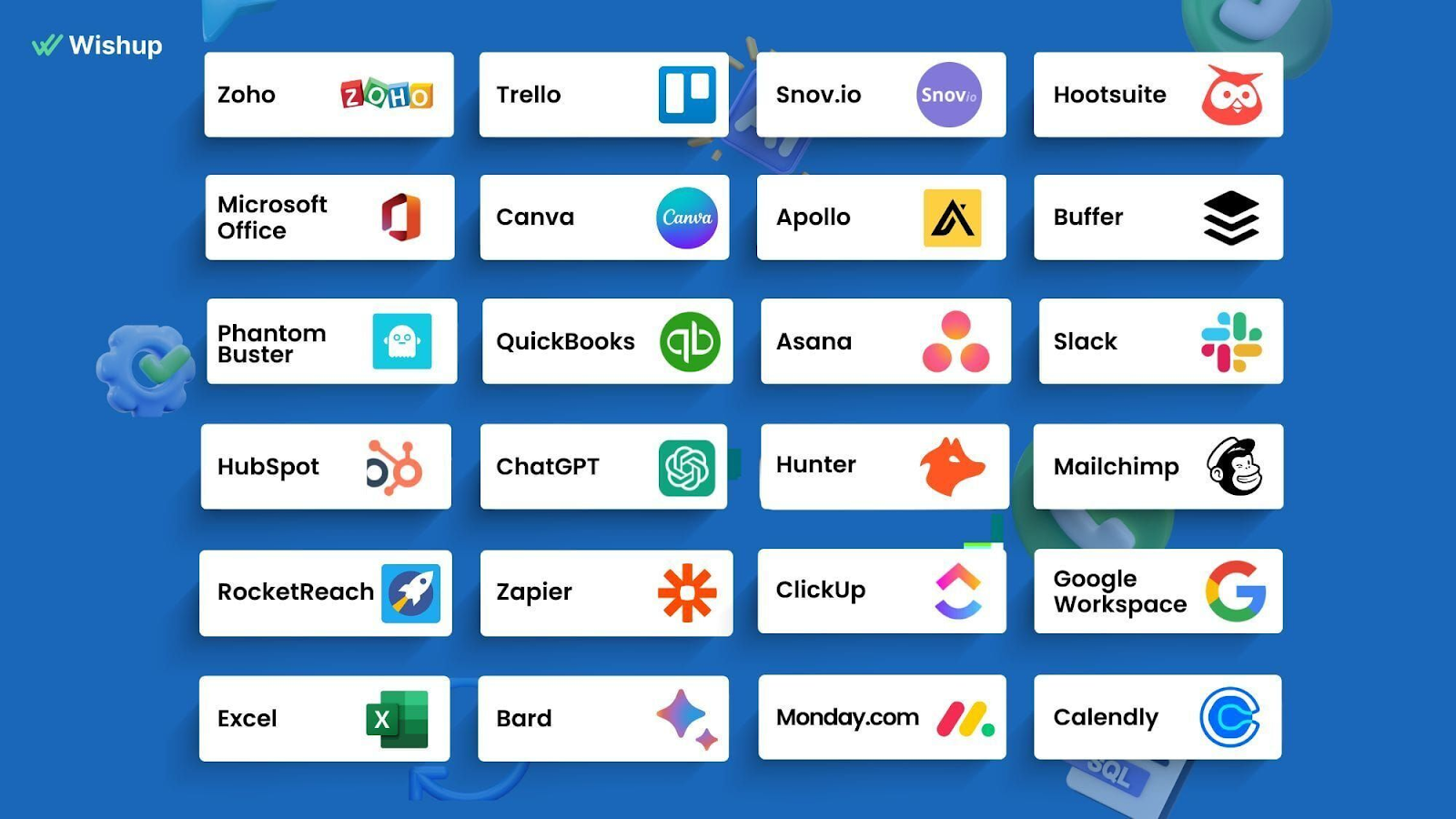
BuildOps is the central operating platform for commercial HVAC dispatch, billing, portal management, and reporting.
For a full breakdown of what a virtual assistant can own inside BuildOps specifically, see the BuildOps Virtual Assistant guide.
Why Choose Wishup for HVAC Virtual Assistant Support?
Wishup is the only managed VA service with a live deployment inside a commercial HVAC operation running BuildOps across dispatch, billing, fleet coordination, and HR administration.
Here is what that means operationally for HVAC contractors evaluating VA support.
1. 0.1% selection rate across 51,119 applicants in 6 months
Every Wishup VA cleared written English tests, aptitude assessments, real-world scenario assignments modelled on actual client workflows, structured interviews, reference checks, and an 8-week training program before deployment. The average Wishup VA has 5 to 10 years of prior corporate experience. No freshers are hired.
2. FSM workflow fluency before deployment
Wishup VAs have operated inside ServiceTitan, ServiceFusion, and Jobber before joining the bench.
Commercial dispatch logic, PO-driven billing, portal submission rules, and service agreement workflows transfer across FSM platforms because the operational structure is consistent. HVAC contractors do not train Wishup VAs on commercial trade fundamentals. That knowledge arrives pre-built.
3. 90-day supervised deployment
For the first 90 days, the VA manager reviews all task outputs and client-facing communications before they reach the billing cycle, the portals, or the customer. Errors get caught before they become cash flow events.
4. Dedicated CSM, replacement on request, 2-week knowledge transfer
Every Wishup client has a named Customer Success Manager. Replacement requests go through one email or text. When a VA exits, a mandatory 2-week knowledge transfer covers active portal submissions, open invoice statuses, client billing rules, and BuildOps workflow documentation before the last working day.
How Does HVAC VA Onboarding Happen at Wishup?
Wishup onboards an FSM-trained HVAC virtual assistant in three structured steps, taking a contractor from consultation to a live first task in under 60 minutes. The Wishup onboarding process never hands active dispatch or billing to a VA on day one without platform alignment first.
Tap any step to expand
What Mistakes Should HVAC Contractors Avoid When Hiring a VA?
Hiring the wrong virtual assistant can create more work instead of reducing it. Avoid these common mistakes to get the most value from your investment.
1. Hiring a General VA Without HVAC Software Experience
Choose a VA familiar with platforms like BuildOps or ServiceTitan to avoid scheduling and billing errors.
2. Assigning Critical Tasks Too Soon
Allow time for proper onboarding before handing over dispatch, billing, or customer communication.
3. Providing Unrestricted System Access
Give access only to the tools and information the VA needs to perform their role securely.
4. Hiring Without a Backup Plan
A managed VA service ensures business continuity if your primary VA is unavailable.
5. Focusing Only on Hourly Rates
Measure success by the time saved, improved efficiency, and smoother operations, not just the cost per hour.
🚀 Meet Wishup in 30 Seconds
Wishup is a US-based (Delaware) virtual assistant company that offers remote virtual assistants to busy founders and executives worldwide. Our trained VAs handle everything from admin tasks to specialized work, helping you focus on what truly matters.
- ✅ 10+ years in the industry
- ✅ 1,500+ founders served across 50+ industries
- ✅ 200+ skill areas, 70+ no-code tools, 50+ AI tools
- ✅ Clients from Harvard and Y Combinator-backed startups
- ✅ Onboards trained VAs in just 60 minutes
- ✅ 98.8% client satisfaction | 99% on-time delivery
- ✅ Top 0.1% talent only – pre-vetted & ready to start
- ✅ 6-step vetting process (aptitude, cognitive, English, and more)
- ✅ Lifetime satisfaction guarantee
Hire a Wishup HVAC virtual assistant and get deployed in 60 minutes.
Frequently Asked Questions on HVAC Virtual Assistant
Can a virtual assistant engineer help with HVAC tasks?
A virtual assistant engineer and an HVAC virtual assistant are two different roles. A virtual assistant engineer refers to a technical software role involving AI systems and machine learning pipelines.
An HVAC virtual assistant is an administrative and operations professional trained in field service management workflows, including dispatch coordination, BuildOps management, invoice creation, portal submissions, and technician scheduling. HVAC contractors need the latter, not the former.
Can a virtual assistant really handle HVAC dispatching remotely?
A trained HVAC virtual assistant manages the complete dispatch workflow remotely through BuildOps, Slack, and customer portals without requiring on-site presence. Service requests arrive through the Slack dispatch channel and customer portals.
The VA creates service calls in BuildOps, assigns technicians by trade and location, posts jobs to Corrigo and ServiceChannel, monitors GPS check-ins through Samsara, follows up on missing technician notes, handles emergency reassignments, and runs the end-of-day job review.
Every stage runs through software the VA operates in real time. Physical presence is not part of the workflow.
How much can an HVAC contractor save by hiring a VA vs. a local dispatcher?
A full-time local dispatcher costs $35,000 to $50,000 per year in base salary plus $13,000 to $15,000 in benefits, equipment, and overhead, totaling $48,000 to $65,000 annually for a single function.
A Wishup Prime VA at $1,999 per month covers dispatch coordination, portal management, and technician scheduling simultaneously at $23,988 per year, saving $24,000 to $41,000 on a single VA.
HVAC operations that build a 3-VA team across dispatch, billing, and HR save $100,000 to $140,000 annually compared to equivalent in-house hires.
How fast can an HVAC contractor get a Wishup VA started?
Wishup matches and onboards an HVAC virtual assistant in 60 minutes. After the initial consultation, Wishup matches the contractor with a VA based on prior FSM experience, communication skills, and operational fit.
The VA enters a 10-day unpaid BuildOps onboarding window before taking ownership of live workflows. Active dispatch and billing operations are never handed to a VA on day one without structured platform alignment first.
Can an HVAC virtual assistant work as a virtual receptionist?
Yes. An HVAC virtual assistant can answer inbound service calls, screen urgent no-cooling and no-heating emergencies, schedule appointments, and send confirmation reminders. This allows them to handle front-desk responsibilities while also supporting dispatch coordination and billing, eliminating the need for a separate virtual receptionist.
Is it common for HVAC companies to use virtual assistants?
Yes. Virtual assistants have become a common part of back-office operations for both residential and commercial HVAC companies, particularly those using field service management platforms like BuildOps and ServiceTitan. Many business owners delegate tasks such as dispatch coordination, portal invoicing, and payroll support to virtual assistants, helping them reclaim 15 to 30 hours each week.
