

64% of business owners manage their own books. And if you’re running a cleaning business, chances are you’re one of them. You’re sending invoices after dinner, reconciling bank feeds on weekends, and hoping you didn’t mess up your taxes again.
Bookkeeping for a cleaning business is the process of tracking the company's income, supply and equipment costs, mileage, payroll, and taxes, and keeping them organized for accurate reporting and tax filing.
The most common challenges are separating personal and business spending, categorizing cleaning supplies and fuel as cost of goods sold, correctly classifying cleaners as W-2 employees or 1099 contractors, and following up on overdue invoices to protect cash flow.
The problem is that most small cleaning business owners get bookkeeping wrong. Not because they’re careless but because they’re doing too much, or trusting tools they don’t fully understand.
Let’s break down what’s really going wrong and how to fix it without hiring an in-house accountant and switching to virtual assistant for cleaning businesses.

Why Bookkeeping Matters for Your Cleaning Business
In a cleaning business, accounting is not a compliance chore. It is the only way to find out which jobs are actually making you money. Most owners can tell you their revenue. Far fewer can tell you whether the recurring office contract earns more per hour than the move-out deep cleans, and that is the number that decides what you should be selling.
Four things good bookkeeping gives a cleaning company that nothing else does.
You find out which service line is profitable
Recurring commercial contracts, one-off residential deep cleans, and move-out jobs have completely different margins once you account for drive time, supply consumption and crew hours.
Without a chart of accounts for cleaning services that splits income by service line, all three land in one bucket and profit tracking becomes guesswork. Businesses that get this right often discover the job they thought was their bread and butter is their worst margin.
You stop overpaying tax
Cleaning supplies, fuel and equipment belong in Cost of Goods Sold, not in general overheads. When bleach, mop heads and van fuel get categorised as office expenses, your COGS is understated, your gross margin looks better than it is, and you leave deductions on the table. Every mis-categorised expense in accounting is money you already spent and will not get credit for.
You avoid the misclassification penalty
A crew that mixes W-2 cleaners and 1099 subcontractors needs each one classified correctly, and cleaning companies get audited on exactly this. If you set their schedule, supply their equipment and pay their mileage, the IRS is unlikely to accept a 1099. Clean payroll records are what stand between you and a retroactive assessment.
You know your cash position before it becomes a problem
Cleaning is a business where a handful of unpaid invoices chokes payroll. An accounts receivable aging report you actually look at is the difference between chasing a payment at day 14 and discovering it at day 75.
Where do most owners go wrong in bookkeeping for cleaning business?
There are two reasons:
1. DIY Bookkeeping: when the boss becomes the bookkeeper
You run the crews. You scout leads. You manage supplies. And somehow… you're also the bookkeeper. Here’s how that affects your business:
🚨 Missed or late invoices
You finish a deep clean on Friday, promise yourself you’ll send the invoice by evening… and five days later, it’s still sitting in drafts.
In cleaning businesses, it only takes a few unpaid jobs to choke the cash flow. What starts as “I’ll do it later” becomes 30, 60, even 90 days overdue. And when your Accounts Receivable Aging Report starts looking like a calendar, you're the one floating payroll and buying supplies out of pocket.
🚨 Guess-timated expenses
You’re buying bleach, degreasers, mop heads, and microfiber cloths. Half of it with your personal card, half from petty cash. Receipts get stuffed in a glove box or tossed in the back of the van.
Come tax season, you’re scrolling bank feeds, trying to remember which Amazon charge was for vacuum parts and which one was your kid’s school supplies. No clear expense categories. No COGS (Cost of Goods Sold) tracking. That’s money left on the table. Every missed deduction = higher tax bill.
🚨 Weekend “crunch sessions”
You tell yourself you’ll catch up on bookkeeping Sunday evening. Instead, you’re knee-deep in mismatched Stripe deposits, wondering why QuickBooks says you made $43 more than your bank account shows. And one wrong click? Suddenly, your General Ledger is off, your “Uncategorized Transactions” are piling up, and your CPA’s charging triple to sort the chaos later.
🚨 Audit anxiety
You’ve been calling your field cleaners “1099 contractors” because it’s easier. But… you set their schedules, supply their tools, and pay for mileage. That’s a red flag. The IRS might see them as W-2 employees, which means missed payroll taxes, misfiled 941s, and potential penalties. If the IRS ever audits you (and they do audit cleaning companies), one misclassified worker could cost you thousands.
But when you add up lost time, delayed payments, tax issues, and stress? It’s costing way more than you think.
There’s a better way. And we’ll get to that after we look at mistake #2.
2. “I Bought Cloud Software, Problem Solved”… Right?
Software is just a tool. And tools only work if someone skilled is using them.
Let’s look at how that usually goes sideways:
🚨 Wrong hands, wrong data
These platforms were built for bookkeepers. If you don’t understand double-entry bookkeeping or where each transaction should land on the Chart of Accounts, one wrong click can throw your books off for months.
So while you think your books are fine, your Profit and Loss statement is probably showing fuel as “Office Supplies,” or client refunds as “Income.” Not great when tax time rolls around.
🚨 Automation is not intelligence
Yes, cloud software comes with smart rules. But guess what? They’re only smart if you teach them well.
Let’s say you have a recurring charge for disinfectant from Home Depot. The system auto-categorizes it as “Office Expenses.”
Over time, these small mis-categorizations mess up your Cost of Goods Sold, inflate your overheads, and potentially reduce your tax deductions. You might even end up under-reporting income or overpaying tax.
The system is good, but it’s just not trained right.
🚨 Fancy dashboard nobody checks
Sure, your software has dashboards. But when was the last time you clicked “Reports”? If you’re like most cleaning business owners, you’re too busy managing crews and answering client texts.
Real-time insights are only useful if someone is watching them. Otherwise, it’s just digital clutter.
🚨 Still chasing payments
Yes, your software can send auto-reminders. But let’s be honest, that doesn't mean clients will pay.
You still need a human to follow up, escalate overdue payments, and sometimes, tactfully nudge that one customer who always “forgets.” A robot reminder doesn’t replace human follow-through.
For cleaning businesses scaling past a few dozen recurring clients, that human follow-up is exactly where AR tools like Jobber's built-in reminders, Chaser, InvoiceSherpa start to pay off. Bookkeeping keeps the books accurate, but AR automation is what keeps the cash actually arriving.
The tool isn’t the problem. The lack of trained help is.
What challenges make a cleaning business owner finally need a bookkeeper?
Most cleaning business owners don't wake up one day and decide to hire a bookkeeper. They hit a wall. Usually one of these five:
🚨 The books are always "almost done": You're a month behind on reconciliations, then two, then it's tax season and you're staring at a year of uncategorized transactions. The work never stops piling up because you're the one doing it between jobs.
🚨 You can't tell which jobs actually make money: Recurring office contracts, one-off deep cleans, move-out jobs, they all land in one big "income" bucket. So when someone asks which service line is most profitable, you're guessing. Accountability starts with knowing your numbers by job type, and right now you don't.
🚨 Payroll for a mixed crew is getting scary: A few W-2 cleaners, a couple of 1099 subs, seasonal help in spring. Every one of them has different tax treatment, and one misclassification is a penalty waiting to happen. This is the point most owners realize they're out of their depth.
🚨 Cash flow feels like a mystery: Money comes in, money goes out, and somehow the account is tighter than it should be. Without someone tracking receivables and forecasting, you're floating payroll on hope.
🚨 An accountant just quoted you triple for "cleanup": The classic. You hand a year of messy books to a CPA and they charge a premium to untangle it, work a bookkeeper would have prevented for a fraction of the cost.
If two or more of these sound familiar, you're past the DIY stage. The question isn't whether you need help, it's how to hire it without adding a full-time salary.
What are the best bookkeeping software for a cleaning business?
The best bookkeeping software for a cleaning business is QuickBooks Online for most operators, Xero for teams needing multiple users, FreshBooks for solo cleaners, and Wave for brand-new businesses.
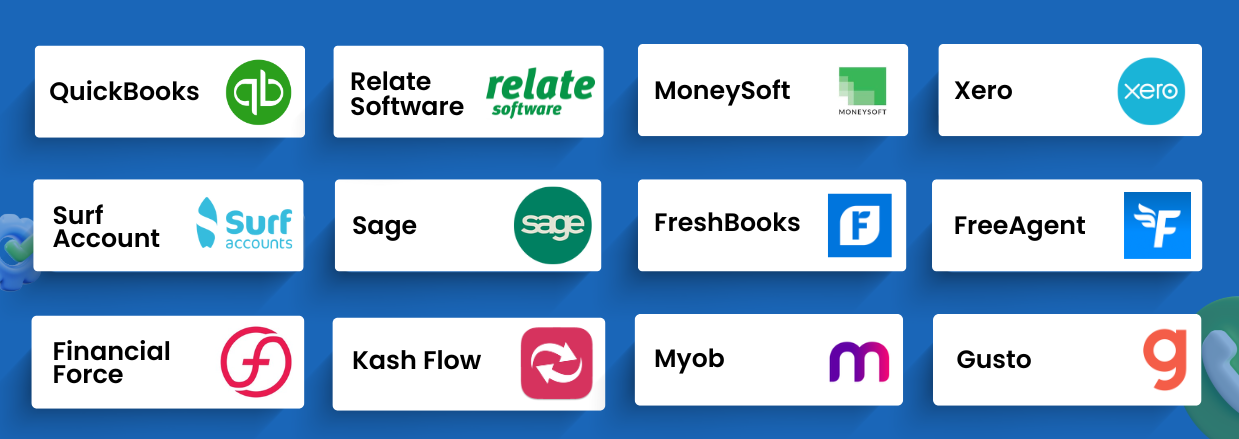
Here are the core tools a Wishup virtual bookkeeper works with for cleaning businesses:
| Tool | Category | What it's used for in a cleaning business |
|---|---|---|
| QuickBooks Online | Accounting software | The default for most U.S. cleaning businesses — invoicing, expense tracking, P&L, and chart of accounts |
| Xero | Accounting software | Strong alternative to QuickBooks; good for multi-user access and clean bank reconciliation |
| FreshBooks | Accounting software | Simple invoicing-first option for smaller residential or solo cleaning operators |
| Wave | Accounting software | Free, lightweight bookkeeping for very small or new cleaning businesses |
| Jobber | Field-service management | Scheduling, job tracking, and invoicing for cleaning crews; syncs jobs to accounting |
| Housecall Pro | Field-service management | Dispatching, recurring job booking, and payments that flow into the books |
| Stripe | Payment processing | Online and recurring card payments; reconciled against invoices |
| Square | Payment processing | In-person and mobile card payments for on-site collection |
| Gusto | Payroll | Running payroll, W-2/1099 filings, and contractor payments for cleaning staff |
| Melio / Bill.com | Accounts payable | Paying suppliers and vendors and scheduling outgoing payments |
| Dext / Hubdoc | Receipt & document capture | Digitizing supply and fuel receipts so nothing gets lost in the van |
| Excel / Google Sheets | Spreadsheets | Custom job-costing, forecasting, and reporting alongside the accounting software |
How do you set up a bookkeeping system that actually works for you?
You don't need an accounting degree to set up books that hold up. You need five things in the right order, done once, properly:
1. Separate business and personal, completely
One business checking account, one business card, zero personal swipes. This single move eliminates the biggest mess in cleaning-business books and protects you if the IRS ever looks.
2. Build a chart of accounts that fits cleaning work
Not the generic QuickBooks default. You want income split by service line (recurring contracts, deep cleans, move-outs), and cleaning supplies, fuel, and equipment sitting in Cost of Goods Sold where they belong, so your deductions are actually captured.
3. Pick your software and connect it
QuickBooks or Xero for the books, Jobber or Housecall Pro for the field, Stripe or Square for payments. Wire them together so job data flows in automatically instead of being typed twice.
4. Set a weekly rhythm
Fifteen minutes a week beats a 12-hour tax-season scramble. Reconcile, send invoices, chase overdue payments, done. Consistency is the whole game.
5. Get eyes on your numbers monthly
A quick monthly look at your P&L, cash flow, and receivables tells you what's working before it becomes a problem.
Here's the honest part: every step above is simple to describe and easy to let slide when you're running crews all day. Setting it up takes an afternoon. Keeping it running, week after week, is where most owners fall off, and that's exactly the gap a virtual bookkeeper fills.
Does Location Change Bookkeeping for a Cleaning Business?
Yes, in three specific ways: worker classification rules, sales tax treatment of cleaning services, and local licensing. All three vary by state, and all three are areas where cleaning businesses get assessed.
Worker classification
States differ on when a cleaner counts as an employee rather than a contractor, and some apply far stricter tests than the federal one. A crew structure that is compliant in one state can be a penalty in another.
Sales tax on cleaning services
Some states tax residential cleaning, some tax commercial only, some tax neither, and a few tax janitorial work differently from specialised cleaning. If you work across county lines, revenue needs categorising by job location.
Local licensing and insurance filings
Business licence renewals and bonding requirements sit in the same records your bookkeeper maintains, and missing a renewal date is an avoidable and expensive mistake.
Most run QuickBooks Online with a field-service platform such as Jobber or Housecall Pro feeding job data in, and Stripe or Square handling payments. The software is rarely the hard part.
Keeping it current through a twelve-month service calendar is, which is why most LA operators past a handful of recurring clients delegate the daily maintenance rather than doing it themselves.
How do dry cleaners in Los Angeles handle bookkeeping?
Dry cleaning is a different business from a cleaning service, and the books reflect that. Instead of crews, routes and job costing, you have a retail counter, garment tracking, plant equipment depreciation, and POS reconciliation against daily takings. Payroll tends to be simpler and inventory tends to be harder.
Should I hire a bookkeeper for my house cleaning business in Los Angeles?
If you are running more than one crew in the LA market, yes, and for reasons specific to California rather than general advice.
California applies one of the strictest worker classification tests in the country, and cleaning businesses running a mix of W-2 cleaners and 1099 subcontractors carry real exposure under it.
What matters is not that your bookkeeper sits in Los Angeles. It is that they understand California classification rules and can track job costs by service line and location. A virtual bookkeeper working inside your QuickBooks or Xero does that from anywhere.
The fix: Bookkeeping virtual assistants for cleaning businesses
Virtual bookkeeping assistants live inside QuickBooks, Xero, and spreadsheets. While you’re out managing crews and quoting new jobs, they’re in the background making sure your books are spotless, your invoices go out on time, and your taxes stay on track.
🚀 Meet Wishup in 30 Seconds
- ✅ 10+ years in the industry
- ✅ 1,500+ founders served across 50+ industries
- ✅ 200+ skill areas, 70+ no-code tools, 50+ AI tools
- ✅ Clients from Harvard and Y Combinator-backed startups
- ✅ Onboards trained VAs in just 60 minutes
- ✅ 98.8% client satisfaction | 99% on-time delivery
- ✅ Top 0.1% talent only – pre-vetted & ready to start
- ✅ 6-step vetting process (aptitude, cognitive, English, and more)
- ✅ Flexible plans starting at $300/month for bookkeeping — no long-term contracts
Wishup has 500+ certified virtual bookkeepers with real-world experience and serious financial chops. Each of them has got 3 to 10 years of hands-on experience in U.S. bookkeeping standards and state-specific regulations. Many have spent over a decade keeping books clean and compliant for American service businesses, including fast-paced, high-volume operations like yours.

Whether you follow GAAP, cash, or accrual accounting, our team knows the rules and sticks to them, delivering 100% accurate, transparent, and audit-ready books every single time.
And it’s not just one person working in isolation. You get:
- A dedicated virtual bookkeeper who handles your day-to-day tasks
- An account manager who keeps things on track
- A bookkeeping manager who cross-verifies your statements for complete peace of mind
Here is a list of tasks they do for you.
Tasks handled by Wishup's virtual bookkeepers for cleaning businesses
Wishup’s virtual bookkeepers take care of everything from sending invoices and tracking expenses to payroll, tax prep, cash flow, and tool setup. Basically, all the money stuff that slows you down.
Click each of the categories below to see the full list of tasks they can handle for your cleaning business.
🧾 Invoicing & Payments
- Create and send client invoices promptly
- Set up recurring invoices for contracts
- Apply payments to open invoices
- Send reminders and follow-ups
- Process refunds or adjustments
- Manage payment gateways (Stripe, Square)
- Match payments to jobs
- Handle chargebacks
- Track overdue accounts
- Run A/R aging reports
🧾 Expense Tracking & Categorization
- Record expenses (fuel, supplies, tools)
- Track mileage and job-related costs
- Reconcile bank and credit card accounts
- Categorize transactions accurately
- Handle uncategorized transactions
- Organize digital receipts
- Separate personal vs business spends
- Set vendor auto-categorization rules
- Track equipment maintenance costs
- Maintain clean COGS records
🧾 Payroll, Contractors & Compliance
- Track employee hours
- Calculate and run payroll
- Send paystubs and direct deposits
- File 1099s for contractors
- Ensure W-2/1099 classifications
- Handle tax withholdings
- Reconcile payroll in books
- Stay compliant with labor laws
- Track PTO and time off
- Maintain clean worker records
🧾 Reporting & Tax Prep
- Monthly P&L and cash flow reports
- Balance sheet tracking
- Track income by job type
- Monitor cash burn
- Export files for your CPA
- Reconcile sales tax collected
- Handle quarterly tax prep
- Spot financial red flags
- Summarize year-end data
- Audit prep and documentation
🧾 Software, Tools & Admin Cleanup
- Set up QuickBooks or Xero
- Connect banking feeds
- Clean up vendors/clients
- Tag jobs and locations
- Maintain Chart of Accounts
- Build custom dashboards
- Sync with Jobber, Housecall Pro
- Migrate data from spreadsheets
- Set up financial alerts
- Create SOPs for workflows
💸 Cash Flow & Forecasting
- Monitor weekly/monthly cash flow
- Forecast future expenses
- Project income by pipeline
- Create 30-60-90 day forecasts
- Set alerts for low cash
- Track slow-paying clients
- Model “what-if” scenarios
- Plan big purchases
- Recommend improvements
- Maintain a cash buffer log
In addition to managing your books, we also offer expert support with:
✅ Federal and state income tax filings, including:
- Form 1040 (Individual Income Tax Return)
- Form 1065 (Partnership Return)
- Form 1120 (C Corporation Return)
- Form 1120S (S Corporation Return)
✅ Contractor and employee tax forms:
- 1099 for independent contractors
- W-2 for employees
- W-9 for vendor compliance
✅ Franchise tax filings, as required by your state.
How do virtual bookkeepers actually handle bookkeeping in your cleaning business?
A virtual bookkeeping assistant is like a detail-oriented operations manager for your books. One who knows how to deal with client invoices and last-minute reschedules. They understand the seasonality of cleaning jobs, mileage logs, van repairs, late payments, and that one recurring client who still pays by check.
Here’s how it works in real life:
✅ They fit into your system right away: Whether you're using QuickBooks, Xero, or even just spreadsheets, they get access, clean things up, and start organizing your data like pros.
✅ They map your chart of accounts to your actual business: No more “miscellaneous” expenses or lump-sum charges. They’ll break down what you’re spending on gas, equipment, team supplies, and subcontractors.
✅ They invoice your clients on time (every time): Weekly, biweekly, or per job, they'll send branded invoices, track who paid and who ghosted, and follow up (gently but firmly).
✅ They reconcile your books monthly: Every swipe of the business card and every deposit gets matched and categorized. You’ll finally know what’s going in and out without chasing receipts.
✅ They prep you for taxes year-round: No more April panic. Your books stay tidy, deductions are tracked (yes, even that mop head from Lowe’s), and everything’s ready for your CPA.
✅ They make cash flow make sense: You’ll get actual reports that show what you earned, what you spent, and what’s coming up next. No more guessing.
How to Track Profit by Service Line in a Cleaning Business?
Cleaning company profit tracking works by splitting income and direct costs by service line, so you can see margin on recurring contracts separately from deep cleans and move-outs. Most cleaning businesses cannot do this because their chart of accounts has one income line called "cleaning income".
A chart of accounts for cleaning services should split income at minimum into
recurring commercial contracts, recurring residential, one-off deep cleans, move-in and move-out cleans, and specialty work such as post-construction or window cleaning.
Direct costs need to follow the same split
Supplies consumed, crew labour hours, and mileage all belong in Cost of Goods Sold, allocated to the service line that generated them. That allocation is what turns a profit and loss statement for a cleaning business from a summary into a decision tool.
None of that is visible from a single income number, however healthy it looks.
How much does a virtual bookkeeper for a cleaning business cost?
Hiring an in-house bookkeeper can cost you over $45,000 a year. That’s a lot of deep cleans and recurring clients just to cover payroll for one role.
But with Wishup, you get experienced bookkeeping assistants for your cleaning business at just $14.99/hour without compromising on quality. There are two more plans (managed bookkeeping services and dedicated virtual bookkeeping) to meet your needs.
Here’s how it breaks down:
1. Managed Bookkeeping Services ($300 per month)
Great for solo cleaners or small teams who don’t need someone full-time.
- We handle your entire bookkeeping behind the scenes.
- No need to manage or train anyone. Just send your data and relax.
- Perfect for seasonal cleaning businesses or those just getting started.
- No hidden fees. No fluff.
Think of it like your monthly cleaning supplies restock. Essential, stress-free, and always done on time.

2. Dedicated Virtual Bookkeeper ($999 or $1799 per month)
Need someone to handle your books like it’s their full-time job?
- You get your own virtual bookkeeper, fully trained and embedded into your business.
- They manage everything like invoices, payments, payroll, reconciliations, expense tracking, job costs, reports, you name it.
- Ideal for cleaning companies with regular income, recurring clients, vendor payments, and growing teams.
Choose your support level:
- 80 hours/month → $999
- 160 hours/month → $1799
Want More Time to Grow Your Cleaning Business?
Let a Virtual Assistant take care of your bookings, invoices & admin while you focus on clients.
Discover How a VA Can Help →Hire a trained virtual bookkeeper for your cleaning business from Wishup in 60 minutes
With Wishup, you can onboard a pre-vetted, professionally trained virtual bookkeeper in under an hour. We’ve already done the hard work, sourcing, screening, and training talent specifically for cleaning businesses like yours.
Whether you need help catching up on months of backlogs or want someone to manage your books daily, our VAs are ready to plug into your systems and get started today.
🚀 Meet Wishup in 30 Seconds
Wishup is a US-based virtual assistant company that offers remote virtual assistants to busy founders and executives worldwide. Our trained VAs handle everything from admin tasks to specialized work, helping you focus on what truly matters.
- ✅ 10+ years in the industry
- ✅ 1,500+ founders served across 50+ industries
- ✅ 200+ skill areas, 70+ no-code tools, 50+ AI tools
- ✅ Clients from Harvard and Y Combinator-backed startups
- ✅ Onboards trained VAs in just 60 minutes
- ✅ 98.8% client satisfaction | 99% on-time delivery
- ✅ Top 0.1% talent only – pre-vetted & ready to start
- ✅ 6-step vetting process (aptitude, cognitive, English, and more)
- ✅ Lifetime satisfaction guarantee
FAQ about bookkeeping for cleaning business
Does a virtual bookkeeper for cleaning business actually understand the cleaning industry?
Bookkeeping for cleaning business owners has specific pain points that don't show up in generic bookkeeping playbooks — mileage tracking across multiple job sites, COGS for supplies bought half on personal cards, the 1099 vs W-2 misclassification trap that gets so many cleaning companies audited.
Wishup's virtual bookkeepers for cleaning businesses arrive already familiar with these patterns because they've worked inside cleaning operations before, not because they're learning on the job at your expense.
Here's what that experience covers:
- Industry-based matching to cleaning and field-service businesses specifically
- 50+ industries served, with cleaning and home services as a core specialty
- Minimum 3 years of professional bookkeeping experience
- Peer-trained for US-specific cleaning industry issues — mileage allocation, COGS for supplies, route-based job costing, 1099 vs W-2 compliance for crew classification
- Familiarity with field-service tools like Jobber and Housecall Pro alongside QuickBooks and Xero.
How much does bookkeeping for a cleaning business cost compared to DIY or hiring in-house?
Doing your own books costs you weekends, missed deductions, and the slow drift of financial chaos that ends in an April panic.
Hiring in-house costs you $45,000+ a year before benefits. Wishup's bookkeeping for cleaning businesses sits in between — three transparent pricing tiers that map to where your cleaning business is right now, whether you're a solo cleaner taking on residential jobs or running multiple crews across commercial accounts.
Here's how the tiers break down:
- $300/month — Managed bookkeeping services. Best for solo cleaners or small teams who want hands-off bookkeeping with no oversight burden.
- $999/month — Dedicated part-time bookkeeper. Best for growing cleaning companies with recurring clients, vendor payments, and multiple crews.
- $1,799/month — Dedicated full-time bookkeeper. Best for multi-location or multi-crew operations with high job volume and complex AR.
- In-house bookkeeper alternative: $45,000+/year before taxes and benefits
- No hidden fees, no setup fees, no long-term contracts
- $299 worth of Workforce Management App included free
How fast can I onboard a virtual bookkeeper for my cleaning business?
Most cleaning business owners researching bookkeeping help aren't planning ahead — they're already behind on invoicing, sitting on a backlog of receipts, and dreading the next tax filing. Wishup is built for that timing.
You can onboard a virtual bookkeeper for your cleaning business in 60 minutes from decision to first task, with zero recruitment overhead on your end and no surprise delays. The bookkeeper plugs directly into your existing tools and starts clearing backlog the same day.
Here's how the speed actually works:
- 60-minute onboarding from sign-up to deployment
- No additional charge for client-bookkeeper interviews, unlike most virtual bookkeeping services
- Unlimited same-day interviews until you find the right match
- 90% first-match success rate, 100% second-match
- First-Task Completion Guarantee — your first delegation executes correctly from day one
- 30-day ROI Report showing what was delegated and time recovered
What happens if my virtual bookkeeper for cleaning business goes on leave or quits?
As a cleaning business owner you might have been burned before — usually by a freelancer who vanished mid-month leaving books half-reconciled and invoices unsent. Wishup's virtual bookkeeping service is designed so that doesn't happen to your cleaning company.
Continuity is built in: replacements step in within 24 hours, backup coverage handles vacations and sick leave automatically, and your books stay on track regardless of who's doing the day-to-day work.
Here's what's built into the service to protect your books:
- Replacement within 24 hours, no additional charge
- Backup coverage during VA leave or vacation
- 36-month average bookkeeper retention rate
- Enterprise-grade data security, strict NDAs, monitored workflows
- Free lifetime access to Wishup Workforce Management App (worth $299)
- EOD reports, time tracking, and consistent feedback cycle
How is bookkeeping different for janitorial and commercial cleaning businesses?
Janitorial bookkeeping deals mostly with recurring B2B contracts, which means tracking invoices against service agreements, managing net-30 or net-60 payment terms, and reconciling per-site billing for clients with multiple locations.
Cash flow is steadier than residential cleaning but slower-paying, so accounts-receivable follow-up matters more. Wishup's virtual bookkeepers handle contract invoicing, A/R aging, and per-location reporting so janitorial owners always know which accounts are paying on time.
What does bookkeeping look like for a maid service or residential cleaning business?
Maid service bookkeeping involves high volumes of small, frequent transactions, many one-off and recurring residential jobs, tips, and payments across Stripe, Square, and cash.
The challenges are matching each payment to the right job, tracking supplies and mileage per route, and keeping personal and business spending separate.
A Wishup bookkeeper categorizes every transaction, reconciles your payment gateways daily, and keeps clean COGS records so your books stay accurate even at high job volume.
What's the best all-in-one software for a cleaning business?
All-in-one platforms like Jobber and Housecall Pro handle scheduling, invoicing and payments but are not full accounting systems, so most cleaning businesses run one of each and sync them.
How do you get commercial cleaning accounts?
Commercial cleaning accounts usually come from targeted outreach to property managers, offices, and facilities teams, consistent follow-up, competitive bids, and reliable references.
Winning them is one challenge; staying profitable on them is another, commercial contracts live or die on accurate job costing and on-time invoicing.
Beyond bookkeeping, a Wishup virtual assistant can also support the sales side: building prospect lists, sending outreach, scheduling estimates, and managing the bid follow-up pipeline, while your bookkeeper keeps each new contract's numbers clean.
How do you hire a bookkeeper or accountant for a cleaning business?
Hiring through Wishup takes three steps and 60 minutes:
Step 1: Free consultation: Tell us your crew size, how many recurring versus one-off clients you run, which software you are on, and what is currently falling behind. Come with your three biggest problems, not a full task list.
Step 2: Review and interview your bookkeeper: You get matched with a pre-vetted bookkeeper whose experience fits cleaning and field-service books. Interviews are unlimited and free until the match is right, with a 90% first-match success rate.
Step 3: Onboard in 60 minutes: Sign the NDA, grant access to QuickBooks or Xero and your field-service platform, and walk through one live workflow together. Start with three tasks, usually invoicing on job completion, weekly reconciliation, and receivables follow-up.
Managed bookkeeping starts at $300 a month, a dedicated part-time bookkeeper is $999 a month, and full-time is $1,799.
When does a cleaning business need bookkeeping cleanup services?
You need a bookkeeping cleanup when your books no longer match reality, months of unreconciled transactions, expenses landing in the wrong categories, or a Profit and Loss statement you don't trust.
It's most common right before tax season, before applying for a loan, or after a year of DIY bookkeeping that got away from you. A cleanup resets your Chart of Accounts, recategorizes past transactions, and gets you audit-ready, and it's far cheaper to fix once than to keep filing on bad numbers.
Where do cleaning services go in a chart of accounts?
If you are a business paying for office cleaning, janitorial services are an operating expense, not cost of goods sold. Most charts of accounts list them under Facilities or Office Expenses as "Cleaning and Janitorial." Cleaning supplies you buy yourself sit in Office Supplies.
The one exception is a business where cleaning is part of delivering the service you sell, such as a hotel or a restaurant, where it belongs in COGS. If you run the cleaning business rather than pay for one, the treatment is different and covered above: supplies, fuel and equipment belong in Cost of Goods Sold.
