

Healthcare professionals are no strangers to long hours and administrative overload.
If you find yourself spending evenings on charts and insurance claims instead of patient care, a medical virtual assistant (MVA) could be what your practice needs.
But jumping into hiring a virtual assistant without preparation can lead to mismatched expectations or security hiccups.
Below is a comparison between Wishup and other providers to support your decision-making.

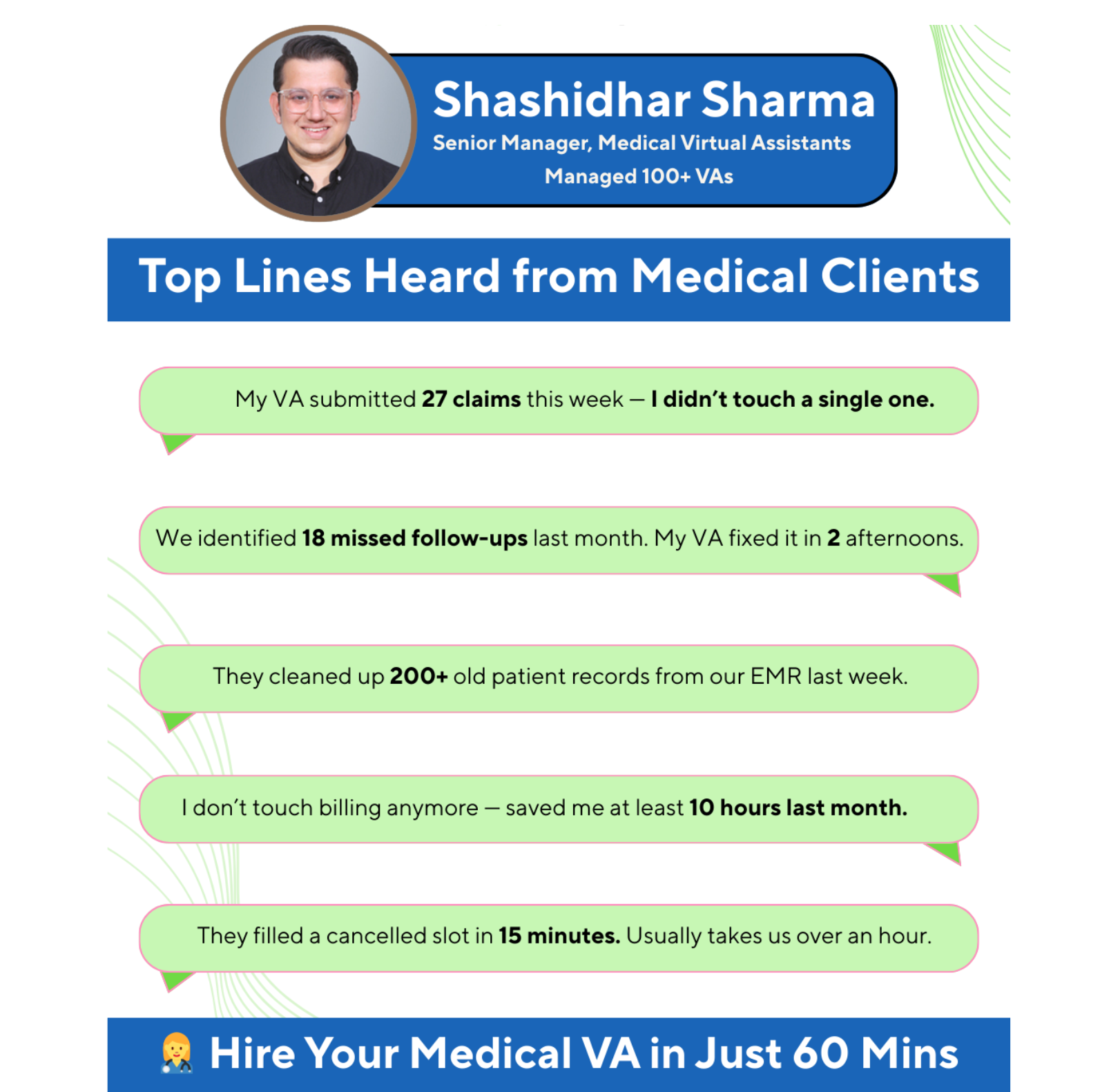
This comprehensive guide covers the essentials from self-assessment and preparation to vetting candidates, so you can delegate with confidence and get back to caring for patients.
1. Assess Your Practice’s Needs and Pain Points
Start with a thorough self-assessment of your practice’s daily operations.
Identify the administrative and routine tasks that are eating up your time or causing bottlenecks.
Every clinic is different, so be specific: do you need help
- Answering phones and scheduling
- Managing insurance claims
- Updating medical records
- Handling patient emails, or
All of the above?
Write down every task you might delegate, along with roughly how much time you spend on it each week. This exercise offers two benefits:
- Clarity on what to outsource: By mapping out tasks, you get a clear picture of which responsibilities a virtual assistant should take over. For example, a pediatrician might discover that an hour each day goes into returning patient calls and could delegate that to a VA. Another practice might realize that billing follow-ups or prior authorizations are a major pain point.
- Defining the role’s scope: Knowing your pain points helps ensure you hire for the right skills and don’t waste effort on irrelevant tasks. It also prevents overloading your future VA with tasks outside their expertise.
Take time with this. It needs assessment; it’s the foundation for everything else.
Skipping this step is one of the most common mistakes clinics make.
In fact, failing to conduct a comprehensive needs analysis is cited as a top reason for bad hires. To avoid that pitfall, clearly pinpoint what you need help with before seeking a candidate.
2. Define the Skills and Qualifications Required
Once you know what you want to delegate, outline the skills and background your ideal medical VA should have.
Medical virtual assistants aren’t one-size-fits-all; some are generalists for front-desk tasks, while others have specialized training in billing, coding, or scribing.
Being clear about required skills will help attract the right candidates:
Medical knowledge and experience
Prior experience in a healthcare setting is invaluable.
Look for familiarity with medical terminology and workflows, and even better, experience with your specialty (for instance, a dental office might seek a VA who has worked with dental billing, or a therapy clinic might want someone who understands therapy scheduling).
A virtual assistant who’s fluent in healthcare will understand the unique challenges of a medical practice and require less hand-holding.
Healthcare providers do not need a general virtual assistant who is “willing to learn medical workflows.” That learning curve is expensive, risky, and slow.
At Wishup, every healthcare virtual assistant comes with a minimum of three years of hands-on professional experience supporting medical practices. This experience is not generic.
Our assistants are trained and deployed across 50+ healthcare specialties, including primary care, dentistry, mental health, pediatrics, dermatology, pain management, optometry, and multi-location clinics.
Handling Administrative Operations Across 60+ Healthcare Specialties
And Why It Matters to You
- Dentists
- Therapists
- Veterinarians
- Chiropractors
- Optometrists
- Psychiatrists
- Dermatologists
- Pain Management Clinics
- Urgent Care Centers
- Phlebotomy Services
- Gastroenterologists
- Many more
Fast setup • HIPAA-aware workflows • Dedicated support
This means:
- They already understand medical terminology and payer workflows
- They know how clinics actually run day to day
- They require significantly less ramp-up time
Our healthcare virtual assistants are trained by physicians and senior healthcare operators, not generic trainers. They are exposed to real-world scenarios such as insurance verification edge cases, prior authorization delays, appointment overflow, and patient communication sensitivity.
Because Wishup maintains a pre-vetted, healthcare-only talent bench, providers can be matched with a medical virtual assistant in as little as 60 minutes, without compromising on experience or specialization.
Technical proficiency
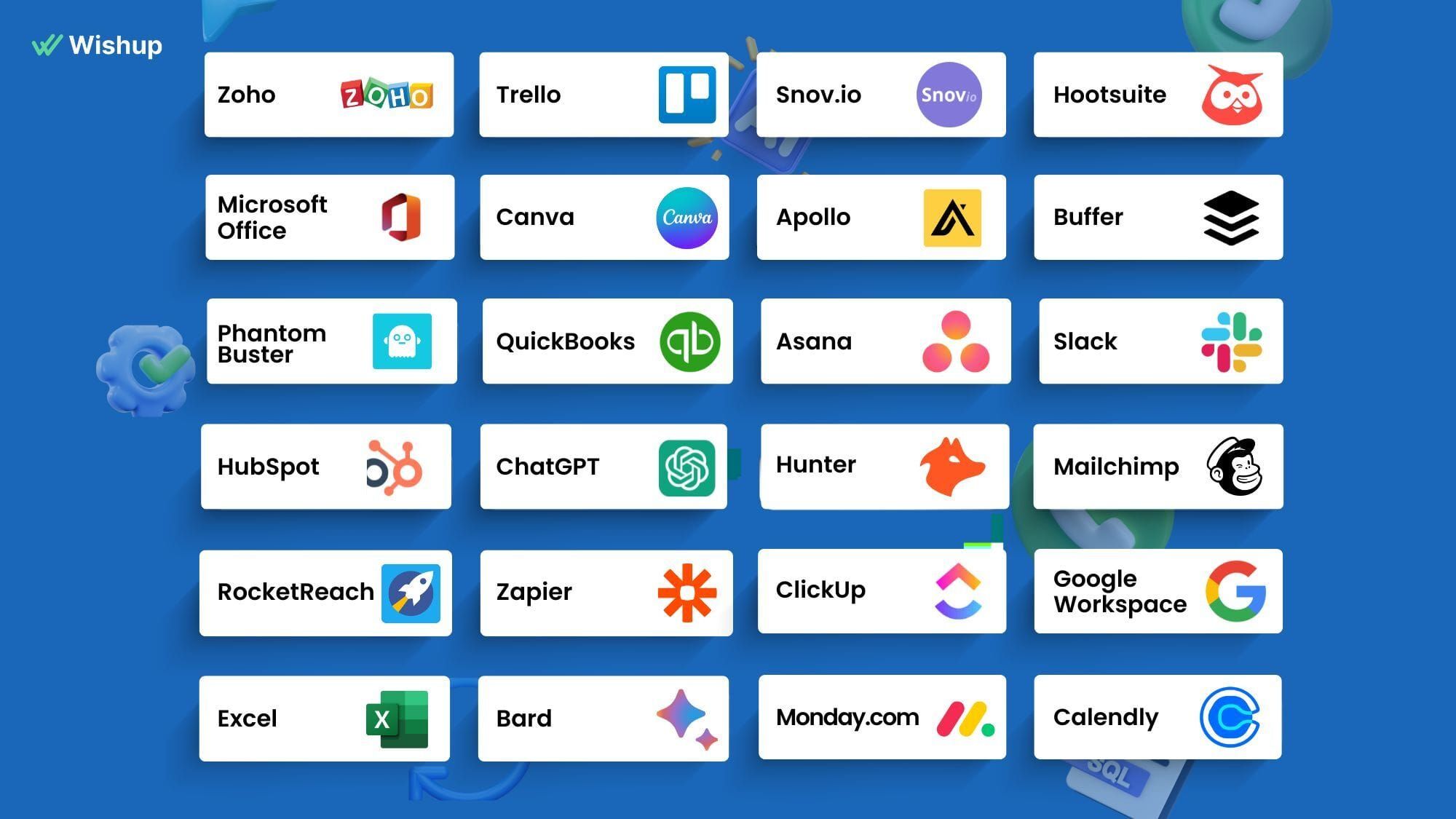
Ensure any candidate you hire is tech-savvy with the software and tools you use.
If you rely on an Electronic Health Record (EHR) system, practice management software, telehealth platforms, or billing software, your VA should be comfortable with them.
Ask about specific tools (e.g., “Have you used Epic or Kareo EHR?”). Strong computer skills are a must since most work will be digital.
Communication skills
In healthcare, communication is critical. Another important thing to do before hiring a Medical Virtual Assistant.
Your VA will likely interact with patients (via phone, email, or chat) and with your team.
Ensure they have excellent verbal and written communication skills, with a professional and empathetic tone. Patients should feel at ease and understood, even if they’re talking to your assistant remotely.
During interviews, pay attention to clarity, warmth, and responsiveness in communication.

Organization and problem-solving
A great medical virtual assistant is proactive and can handle sudden issues calmly.
They should demonstrate good time management, attention to detail, and the ability to follow procedures (for example, handling a last-minute schedule change or resolving a billing denial).
Ask scenario-based questions: “What would you do if a patient calls upset about a billing error?” to gauge their problem-solving approach.
Certifications or credentials (if relevant)
While not always required, it’s a bonus if a virtual medical administrative assistant has certifications like medical billing and coding certificates, a background as a medical assistant or nurse, or other healthcare admin training.
If you need specialized tasks (like coding), insist on those qualifications in your job description.
By determining the required skills upfront, you create a filter that saves time later.
You’ll target candidates who meet your criteria and avoid those who don’t.
3. Ensure HIPAA Compliance and Data Security Knowledge
Handling patient information comes with serious responsibility.
One non-negotiable requirement for any medical virtual assistant is a solid understanding of privacy laws and HIPAA compliance.
Before hiring, make sure you address how the candidate or service will keep protected health information secure.
HIPAA awareness
Ask explicitly if the assistant is familiar with HIPAA regulations and how they ensure confidentiality.
A reputable virtual healthcare assistant services provider should be able to explain, for instance, the basics of safeguarding electronic health information and following proper procedures for handling patient data.
If a candidate of a reputable services provider doesn’t know what HIPAA is, this is a big red flag.
Remember, you as the provider are ultimately accountable for any breaches, so your VA must be trustworthy with PHI.
Security measures
Inquire about their remote work setup. Do they use secure, encrypted channels for communication? How will they access your EHR or files – via VPN or a secure portal?
Ensure that all access to patient info will be through secure, encrypted means.
Many clinics use shared login systems or grant limited access profiles to their VAs. Plan this out in advance with your IT team or EHR vendor.
Confidentiality agreements
It’s wise to have a Business Associate Agreement (BAA) if you’re hiring through an agency, or a confidentiality/NDA agreement if hiring directly.
This is an extra layer of legal protection that the assistant understands the importance of patient confidentiality. Most professional VA services will have these ready for you.
For example, some providers have their VAs sign strict HIPAA and confidentiality agreements before starting.
Training on privacy
If healthcare regulations update or if your practice has specific privacy protocols, be prepared to include your VA in those trainings. A good VA will appreciate it and integrate the policies into their workflow.
Avoiding the HIPAA mistake
It’s worth noting that “ignoring HIPAA compliance” is listed as a critical mistake to avoid when onboarding a virtual medical assistant.
The consequences of a violation are too severe (fines, legal issues, patient trust loss). So prioritize this in your vetting process.
Confirm any service you use only provides HIPAA-compliant virtual assistants who are trained on handling sensitive data.
By ensuring compliance knowledge up front, you protect your practice and patients.
It also gives you peace of mind to delegate tasks like accessing EMRs, handling lab results, or managing telehealth appointments to your medical healthcare virtual assistant without constantly worrying about privacy slip-ups.
4. Set a Realistic Budget and Decide on Hiring Method
Hiring a virtual assistant is an investment and often a cost-effective one, but you still need to establish a clear budget and hiring plan before you proceed.
There are a few factors to consider before hiring a medical virtual assistant:
Full-time, part-time, or ad-hoc?
Determine how many hours of help you need per week. One advantage of virtual assistants is flexibility; you can hire a VA for, say, 10 hours a week instead of a full 40-hour employee.
Many healthcare virtual assistant companies work hourly or on retainer.
If you only need a remote healthcare virtual assistant for a few specific tasks, you might start part-time and scale up if needed.
On the other hand, if your practice is growing fast or you have a heavy workload (e.g., a large clinic), you might budget for a near full-time VA.
With Wishup, you can scale up or scale down without extra cost or operational friction. You can start part-time at $1,299/month for 80 hours, move to full-time at $1,999/month for 160 hours, and adjust later as your practice demand changes. There is no strict cancellation policy, no lock-in period, and no penalty-driven “notice window” that traps you when priorities shift.
Continuity is also built in. If you ever need a switch, we provide replacement within 24 hours and structured knowledge transfer so your workflows do not reset and your team does not lose momentum. During working hours, your dedicated medical virtual assistant is trained for a 5-minute response time, and your point of contact responds within 60 minutes, so you are not left waiting when something operational is blocked.
Decide this upfront so you can communicate it to candidates and avoid overspending or under-staffing.
Research going rates
Virtual assistant rates vary based on experience, location, and skill level. U.S.-based medical VAs may charge more per hour than international VAs, but there can be trade-offs in time zones and familiarity with U.S. healthcare.
Check local pay rates or typical freelance rates for medical admin work. For instance, if an in-office medical receptionist would cost you $18-20/hour plus benefits, a virtual assistant might charge a similar hourly rate but save you money on benefits and office space.
Many practices find that hiring a VA is far less expensive than adding another in-house staff member when you factor in overhead.
With Wishup, the cost advantage goes beyond hourly savings.
Healthcare providers get a fully managed medical virtual assistant service, not just an individual resource. Monthly pricing starts at $1,299 for part-time support (80 hours per month) and $1,999 for full-time support (160 hours per month). There are no long-term contracts, no rigid cancellation clauses, and no surprise add-ons as your needs change.
What that monthly cost includes is where the real difference shows up.
Instead of hiring one in-house employee, you effectively get three roles working together:
- A dedicated medical virtual assistant handling your day-to-day workflows
- A medical assistant manager conducting weekly QA reviews and fortnightly SOP adherence checks
- A customer success manager running monthly performance reviews and outcome planning
This structure ensures the assistant is not only completing tasks but doing so consistently, correctly, and in line with your practice standards.
To reduce ramp-up risk, we also include a First-Task Completion Guarantee, so critical workflows are executed correctly from the start. Within the first 30 days, practices receive an ROI report that clearly shows what work was delegated, what time was saved, and how operational load shifted away from clinicians and office managers.
Account for additional costs
Besides the VA’s pay, consider any software subscriptions or equipment they’ll need.
Will you provide a VOIP line or a login to your scheduling software? Do you need to budget for a secure messaging app or a fax service for them? Also consider one-time onboarding costs like training time.
These costs are usually minor (and often things you already pay for), but it’s smart to list them out. For example, you might decide to pay for a HIPAA-compliant email service or a password manager for your VA, which is a small price for security.
Hiring directly vs. through an agency
Your budget decision ties into how you hire. You have two main routes:
- DIY hiring: Post the job yourself on job boards, LinkedIn, or healthcare forums and pay the VA directly. This can save agency fees, but it costs your time to recruit, vet, and manage payroll. You’ll need to handle screening and maybe multiple rounds of interviews. Direct freelancers might have slightly lower hourly rates, but remember to account for the time you spend in recruitment and the risk of a bad hire.
- Using a VA service or agency: A specialized medical VA service can streamline finding the right match (they pre-vet candidates, handle HR paperwork, etc.). This might come at a higher hourly cost or a placement fee, but you save time and often get more guarantees (like a replacement if the first VA doesn’t work out). As an example, some services allow unlimited interviews with candidates until you find the perfect fit, and they maintain a bench of pre-screened, trained VAs ready to start in days. We’ll discuss an option like this (Wishup) later on, which can be very handy for busy healthcare professionals who can’t spend weeks in the hiring process.
Hidden savings
Don’t forget the indirect financial benefits. Hiring a medical practice virtual assistant can increase revenue opportunities by freeing you to see more patients or take on additional services.
Also, you typically pay only for productive work time. If you hire a VA for 10 hours a week, you pay for 10 hours, unlike a full employee, where you pay for downtime, breaks, etc.
Plus, there’s no office space, no equipment, and often no taxes/benefits on your side (agencies cover the VA’s benefits). These savings are part of why virtual assistants are so cost-efficient for clinics.
Action point: Decide on a comfortable monthly budget for a VA and how you want to hire. It could be, for example, $800-$1000/month for 40 hours of VA support, or whatever fits your needs.
Knowing this number will guide your discussions and prevent you from overspending. If using an agency, clarify the pricing model (hourly vs. package) and any minimum commitments.
Some agencies offer risk-free trials or no long-term contracts, which can reduce financial risk.
Lastly, when budgeting, also plan for growth. If you anticipate needing more help in 6 months (say your patient volume is rising or you plan to expand services), choose a solution that lets you scale easily – whether increasing your VA’s hours or adding a second VA.
The goal is to have a sustainable support system that grows with your practice.
5. Craft a Detailed Job Description and Set Expectations
With needs, skills, and budget in hand, you’re ready to write a comprehensive job description for your medical virtual assistant position.
This step is crucial whether you’re hiring on your own or communicating your requirements to an agency. A clear job description not only attracts the right candidates but also sets the stage for clear expectations.
Key components to include in the job description:
- Job Title: Make it clear you’re seeking a Medical Virtual Assistant (or Virtual Medical Receptionist, Medical Billing VA, etc., if you want a particular focus).
- Responsibilities: List all the tasks you expect the VA to handle. For example: “Manage patient scheduling and appointment reminders; Handle incoming calls and messages; Verify insurance and assist with billing claims; Maintain and update patient records in EHR; Coordinate referrals and lab follow-ups; Respond to patient emails or portal inquiries; General administrative support as needed.” The more specific, the better. This ensures candidates know what a day in the life of the job looks like.
- Required Skills/Qualifications: Here’s where you include the must-haves determined earlier – e.g., “2+ years experience in a healthcare administrative role or as a medical VA; familiarity with [Your EHR system] and insurance verification; excellent phone and email communication skills; HIPAA certified or strong knowledge of patient privacy laws; bilingual (if relevant to your patient base); [Any specific certification like CMA, CPC, etc., if desired].”
- Soft Skills & Traits: It’s okay to mention qualities like “attention to detail, empathy in patient communications, ability to work independently, problem-solving skills, reliability” – these help paint the picture of your ideal hire.
- Working Hours & Time Zone: Specify when you expect the VA to work. If you need coverage during clinic hours (e.g., 9am–5pm EST) or just a few hours in evenings, state that. Mention if any flexibility is needed for after-hours calls or weekend catch-up. Clarity here prevents issues later – for instance, some VAs might be overseas and only available at certain times. Make sure their availability aligns with your needs.
- Employment Type: Note if this is hourly contract, part-time/full-time, and whether it’s a long-term role. Also clarify that it’s remote. For example, “Position is 100% remote, ~15 hours per week to start, with potential to increase hours. Long-term engagement preferred.”
- Tools & Environment: It can help to mention what tech you use – e.g., “We use eClinicalWorks for EHR, Google Workspace for email/calendar, Doxy.me for telehealth, and Slack for internal messaging.” This gives candidates a sense of whether they’ve worked with similar tools. If you expect them to use their own computer and have a stable internet connection (most will, but it’s implied), you can mention any technical requirements (“Must have reliable high-speed internet and a quiet, private workspace for handling calls”).
- Practice Culture or Values: While not as extensive as hiring an in-office employee, giving a line or two about your practice ethos can attract someone who fits. E.g., “We’re a small pediatric clinic that values compassion, patience, and teamwork. We prioritize patient experience and a supportive work environment.” Cultural fit matters even for remote workers – you’ll be working closely, so a shared mindset helps.
By including these details, you create a job post that stands out to the right people. Candidates who aren’t comfortable with something (say, making calls or working your specific hours) will self-select out, saving you time. Those who are excited and qualified will zero in on your listing.
Pro Tip: Use bullet points for responsibilities and qualifications to make the posting easy to scan. Busy professionals (including experienced VAs) appreciate clarity. Also, explicitly mention in the description that applicants should be prepared to provide references and undergo a HIPAA compliance quiz or whatever screening you plan – this signals the seriousness of the role.
Finally, setting expectations early goes beyond the job description text. During interviews or your initial conversations, reiterate what success looks like in this role.
If you expect, for example, daily end-of-day reports or a certain turnaround time on tasks, let them know.
Setting clear performance expectations from the outset helps avoid confusion or conflicts down the line. As one resource notes, failing to establish clear expectations is a common mistake that can lead to dissatisfaction later.
So, be upfront about how you like to work and what you’ll expect from your VA once hired (we’ll touch more on onboarding and communication in a bit).
6. Find Candidates: Where and How to Source Your Medical VA
With your “job ad” ready, the next step is finding the right candidates. As a busy healthcare professional, you’ll want to source efficiently and effectively. Here are a few strategies:
Healthcare-specific job boards and platforms
Consider posting your opening on platforms that cater to medical or virtual assistant roles.
Websites like HealthcareJob boards, medical office forums, or LinkedIn groups for medical VAs can yield quality candidates.
The advantage is these platforms have candidates who likely already have relevant experience. As one guide suggests, use sites that let you filter by specific experience (like familiarity with EHR, coding, etc.) to speed up your search.
General freelance marketplaces
Websites such as Upwork, Freelancer, or Fiverr have many virtual assistants (including medical VAs). You can post your job and receive proposals.
When using these, be very specific in your post to filter out general VAs. You might get dozens of applications, so be prepared to vet for healthcare experience and HIPAA knowledge.
Look for those who mention relevant background in their profile. The benefit here is a large pool, but the drawback is more legwork filtering quality.
Virtual assistant agencies or services
As mentioned, using a VA service can simplify sourcing.
Agency like Wishup specializes in connecting you with pre-vetted virtual assistants.
At Wishup, we maintain a roster of top 0.1% talent and can match you with a healthcare-trained VA in as little as 60 minutes.
If you go this route, you’d skip directly to interviewing a few handpicked candidates rather than sifting through dozens.
It’s a bit like using a hiring consultant – they do the initial heavy lifting.
This is especially useful if you had a poor experience before or are nervous about hiring; a good service will provide replacement guarantees and support, which adds peace of mind.
Professional networks and referrals
Don’t underestimate your own network. Let colleagues or practice managers know you’re looking for a virtual assistant – someone might have a recommendation.
If you’re part of any professional associations or online communities (like a Facebook group for private practice doctors or r/smallbusiness on Reddit), ask around. Referrals often lead to “hidden gem” candidates who aren’t actively advertising.
Plus, you can get candid feedback about someone’s work ethic or skills from a colleague who used them. Networking can also teach you tips on managing VAs from those who’ve done it before.
Reddit and Quora
Interestingly, communities like Reddit have threads on hiring virtual assistants. You might not hire directly from there, but you can glean advice on where others found theirs.
Leverage social media
LinkedIn can be both a place to post a job and to proactively search. Try searching for “medical virtual assistant” or “virtual scribe” on LinkedIn and you’ll find individuals offering services.
Check their profiles for credentials and recommendations.
You can even directly message a few who look promising. Additionally, posting on your practice’s LinkedIn or Facebook page that you’re hiring a remote assistant might attract candidates.
Organize and filter
However you source candidates, keep track of them in a spreadsheet or an applicant tracking system.
Note their experience, any certifications, and how they applied. From an initial batch, filter out anyone who clearly doesn’t meet your must-haves (e.g., if they have zero medical experience or can’t work your hours).
For those who look good, proceed to the next step: screening and interviewing.
Before we move on, remember to stay patient but diligent in this phase. It might take a bit of time to find a handful of strong candidates, especially if you’re doing it solo.
Don’t settle for “close enough” if someone lacks a key requirement; the right fit is out there, and taking a bit longer to find them is worth it in the long run (a mismatched hire will cost you more time and hassle to correct).
If you feel overwhelmed by the search, it’s a signal to consider an agency partner to help.
Next, let’s assume you have a shortlist of candidates or are working with an agency that provided a few options. It’s time to really evaluate them through interviews and tests.
7. Screen, Interview, and Test Candidates Thoroughly
The screening and interviewing process is your chance to separate the truly great medical VAs from the mediocre.
Since your patients’ experience and your own sanity will depend on this hire, take the interviews seriously.
Here’s how to approach it:
Initial screening (pre-interview)
If you have a pile of resumes or profiles, you might do a quick phone screen or send an email questionnaire to confirm basics.
For example, verify their available work hours, their familiarity with your EHR/software, and their internet connectivity/setup. You can also ask for a short written response to a scenario (“How would you handle a patient who emails about a prescription refill?”).
This helps gauge written communication and responsiveness. This initial step can narrow the pool before live interviews.
In-depth interviews
Schedule a video interview (Zoom, Skype, etc.) if at all possible. Seeing the candidate “face-to-face” (even virtually) helps assess professionalism and communication skills better than a phone call.
During the interview:
- Reference and background checks: Don’t skip this. Especially for a role dealing with sensitive info, it’s worth calling a couple of references. Speak to a former employer or client of the candidate to verify their reliability and performance. Ask straightforwardly: Did they handle patient information securely? How was their communication? Any issues with attendance or quality of work? Verifying credentials (if they claim a certification or degree) is also wise. Many agencies do this for you, but if you’re hiring directly, it’s on you. Also consider a background check if they’ll handle financial info or significant access – some providers run one as a precaution.
- Skill tests or trial tasks: It can be highly revealing to give a short practical test. For example, you might share a de-identified sample patient scenario and ask the candidate to compose a draft email response, or have them enter some dummy data into a spreadsheet to see their attention to detail. Another idea: set up a role-play where you’re a patient calling, and see how they manage the call. Keep any test short (30 minutes or so) and relevant. If using an agency, see if they offer a trial period or have already tested the candidate’s skills.
- Consider a paid trial period: Many healthcare providers like to start with a trial period – say 2 weeks or 1 month – before fully committing, essentially an extended, hands-on interview. This trial can be paid (of course), and agreed that either party can decide not to continue afterward. It’s a low-risk way to see the VA in action with real tasks. You’ll quickly learn if they truly can handle the work. Some virtual assistant companies even offer a short risk-free trial or easy cancellation in the first week, which helps you test compatibility without stress.
- Cultural and personality fit: Though harder to quantify, trust your gut on whether the person will mesh well with you and your team. If your practice is very formal, and the candidate is extremely casual (or vice versa), there could be friction. As noted earlier, cultural fit is important even in remote collaborations. If something feels off in attitude or professionalism, think carefully. You want someone who aligns with your values (e.g., compassion, efficiency, innovation – whatever matters in your practice).
- Dive into experience: Ask them to elaborate on their past medical admin experience. For instance, can you walk me through your routine at the last clinic you assisted? What tasks did you handle daily? A strong candidate might say they managed scheduling, took triage calls, followed up on labs, etc., which shows they understand clinic workflows.
Interest and attitude
Great candidates often ask you questions too – about your practice, workflow, and expectations. If they’re asking about your EHR or volume of patients, it shows proactiveness.
Meanwhile, clarify their career goals: Are they doing VA work long-term, or is it a side gig?
You ideally want someone who will stick around and see this as a professional role, not a very temporary stopgap (high turnover is painful, even if a service provides replacements).
Assess knowledge with scenarios
Pose a few hypothetical situations:
If a patient calls and says they’re unhappy about waiting for a referral, how would you handle it? or You notice an insurance claim was denied, what steps would you take next?”
Look for answers that show both practical knowledge and good judgment. You want someone who can think on their feet and follow proper procedures.
Test communication clarity
Pay attention to how clearly they speak and if they convey empathy (for patient-facing scenarios). If you serve a specific patient population (e.g., Spanish-speaking), test for that language skill if needed.
Discuss tools & tech
Ask what EHRs or scheduling systems they’ve used. If they haven’t used yours, ask how they would go about learning it.
Many good VAs will proactively mention they are quick learners on new platforms (some even watch tutorials on their own time).
Gauge their comfort level with tech. For example: “Have you worked with telehealth platforms or electronic prescription systems?”
Organizational skills
Inquire how they organize their work day when remote. Do they use any task management tools (Trello, Asana, etc.) or have a method for ensuring nothing falls through the cracks?
A thoughtful answer here is a green flag – it means they have a system to stay accountable without in-person supervision.
Take notes during interviews and score candidates if that helps. Sometimes one will emerge as the obvious choice; other times, you might have two strong contenders. In that case, you could even do a second interview or a short paid trial for both to see who excels.
Remember: It’s easier to invest time now in interviewing than to deal with replacing a poor hire later. Don’t rush the process.
If the candidate shows they can adapt to your systems (or even suggests improvements), that’s golden.
By the end of this stage, you should feel confident about who you want to bring on as your virtual assistant. Now it’s time to set them (and you) up for success with proper onboarding.
8. Plan for Smooth Onboarding and Training
Hiring a medical virtual assistant isn’t the finish line – a smooth onboarding process is essential to get them integrated into your practice quickly and effectively.
Many healthcare professionals make the mistake of underestimating training because the VA “already has experience.” While a good VA will be able to ramp up fast, you still need to show them your way of doing things and establish communication norms.
Neglecting onboarding can lead to misunderstandings and miscommunications, so let’s avoid that.
Here’s how to onboard your virtual assistant for success:
- Prepare documentation and access: Before your medical healthcare virtual assistant's first day, get all their accounts and access set up. Create any necessary logins (EHR, scheduling system, billing portal, etc.) or have IT create a secure user profile for them. Use a password manager to share credentials safely. Also, compile key resources: office SOPs, reference guides, phone scripts, templates for emails, etc. For example, if you have a specific way you want phone messages documented or a template for new patient intake, have those ready. This gives the VA a head start in learning your operations.
- Orientation meeting: On day one (or before they start handling tasks), set up a video call to introduce them to the team (if applicable) and go over the big-picture workflow. Explain your practice’s mission briefly and how their role contributes to patient care. Cover important policies (e.g., “always double-check DOB when verifying patient identity on calls” or “we never email patient data, only use the portal”). This is also a great time to reiterate the important dos and don’ts. As one guide suggests, providing a short tutorial on your processes, like how you prefer notes entered or how to handle appointment scheduling nuances, can make a huge difference.
- Train on systems: Even if a VA has used an EHR before, every practice has slight differences. Walk them through how you use your systems. For example, demonstrate how to log a phone encounter in the EHR, how to check insurance eligibility on your clearinghouse, or how to route a refill request. Hands-on demonstration (screen-sharing works well here) will accelerate their learning. Encourage them to ask questions and maybe even record the session (or record a demo video for them) so they can re-watch if needed.
- Create a reference guide: It’s helpful to have a simple reference or “VA handbook” for your clinic. It might include key contacts, frequent phone numbers (like pharmacies, hospitals), common CPT codes or diagnosis codes used if they’ll help with billing, step-by-step instructions for routine tasks, etc. One Reddit business owner shared that once they documented their processes and intent for each task as a checklist, 95% of issues disappeared. Consider doing the same – even a one-page checklist for “Daily Opening Tasks” and “Daily Closing Tasks” for your VA can ensure consistency.
- Establish communication channels and cadence: Decide how you will communicate day-to-day. Options include email, instant messaging (Slack/Teams), phone, or project management tools. Many find it efficient to have a quick check-in each morning or evening via chat or a short call. Set expectations: e.g., “Please send me a brief update by end of day with what was completed and any pending issues”. Also, determine how the VA should reach you for urgent matters. Perhaps you say, “If anything urgent (like a critical patient issue) comes up, text my cell immediately, otherwise email is fine.” By establishing clear communication channels from the start, you avoid confusion.
- Start with guided training tasks: In the first week or two, it’s wise to closely monitor and guide the VA’s work. Assign tasks gradually – maybe start with scheduling and phone calls, then add billing tasks once they’ve mastered the first set. Review their work carefully initially. For example, if they schedule patients, glance over the schedule to ensure it’s done correctly. Provide feedback kindly but clearly. If something isn’t up to standard (say, their phone note lacks some info), use it as a teaching moment early on. It’s much easier to correct habits in week one than after six months. As one small business owner warned, giving too much freedom too soon can backfire. Instead, invest time upfront to train them step-by-step – it pays off in the long run.
- Daily or weekly check-ins: In the first week, consider daily brief check-ins (5-10 minutes). This can be a quick morning agenda-setting or end-of-day recap. It helps catch any issues and answers questions while the VA is still learning. After the initial onboarding phase, you might move to weekly check-ins if all is going smoothly, but maintain an open door for questions. Some practices do a Monday planning call and a Friday review call each week. Figure out what level of oversight you need to feel comfortable, then stick to that routine.
- Encourage questions and feedback: Let your VA know you welcome questions, especially early on. You’d rather they ask than guess and make a mistake when it comes to patient matters. Foster an environment where they can say, “I’m not sure how Dr. Smith likes this formatted, can you advise?” Similarly, ask if they have any suggestions after a few weeks. Sometimes, a fresh set of eyes can spot inefficiencies in your workflow. A competent VA might suggest, “I noticed we manually enter patient insurance info; I could create a template to speed this up.” This shows initiative. Embrace useful suggestions – it means your VA is invested in improving your operations (a great long-term sign!).
- Monitor performance early: Keep an eye on key metrics or outputs that the VA handles. If part of their job is to reduce no-show rates by doing reminder calls, watch the no-show numbers. If they’re handling billing submissions, monitor the error rate or rejection rate of claims. Regular performance evaluation ensures they are meeting expectations and allows you to course-correct if not. This isn’t about micromanaging, but about being proactive. Many sources recommend having a formal or informal review after the first month to discuss what’s going well and what can improve. Use that as an opportunity to celebrate wins (e.g., “our backlog of messages is gone thanks to you!”) and address any gaps.
Onboarding might sound intensive, but a well-onboarded VA can start delivering value within a week or two, and then you really start to feel the burden lift off your shoulders.
The alternative – a sink-or-swim approach – could result in mistakes or frustrations that sour the relationship.
Given that thorough training is often overlooked due to a VA’s existing skills, making the effort to integrate them into your practice’s way of working is what distinguishes a merely okay hire from an absolute rockstar team member.
In sum, treat your virtual assistant as a true extension of your staff. Invest in them as you would a new in-office hire: orientation, training, supportive supervision, and feedback. This not only helps them succeed but also builds loyalty.
Many VAs will go above and beyond when they feel genuinely part of your mission. And for you, seeing your virtual assistant handle the routine grind while things run smoothly is immensely satisfying – it’s the whole reason you hired them!
By this point, you’ve assessed, hired, and onboarded your medical virtual assistant.
If done right, you should start noticing results: fewer late nights on admin work, happier patients getting timely responses, and a general easing of your workload pressure.
Next, let’s look at some real-world outcomes others have achieved with medical VAs, and why choosing the right partner for hiring can make all the difference, especially if you’re cautious from past experiences.
9. Learn from Real Case Studies: The Impact of the Right VA
To truly appreciate the difference a skilled medical virtual assistant can make, consider a few real-world success stories. These are cases where healthcare professionals delegated smartly and partnered with high-quality Wishup VAs to deliver outstanding results:
Case Studies of Wishup Healthcare Virtual Assistants


- Case Study 1 – Pediatric Therapy Practice Cleans Up $100k+ in Bad Debt: Springboard Pediatric Therapy, run by Patricia O’Brien, was drowning in overdue accounts and insurance claim chaos. By hiring a dedicated Wishup healthcare VA (with expertise in billing and insurance), she saw dramatic improvements. Accounts receivable dropped by 60%, as the VA proactively chased down outstanding payments and fixed claim denials, significantly improving cash flow. He also took over 30+ daily patient calls, relieving the front desk and ensuring no call went unanswered. The result? The clinic’s revenue cycle stabilized, stress levels plummeted, and Patricia could breathe easier focusing on patient care. “Himmi is invaluable. He is a natural leader and problem solver,” she said of her VA, highlighting how one person optimized the entire back-office operation. It’s a powerful example of how addressing billing and admin bottlenecks with the right hire can directly translate into financial and operational gains.
- Case Study 2 – Healthcare CEO Reclaims Her Time and Sanity: Amita Garg, CEO of Health Care Career College in California, was juggling accreditation deadlines, recruiting staff, and daily admin, leading to severe burnout. She onboarded Ujjwal, a Wishup virtual assistant, and quickly transformed her workflow. Recruitment became seamless – Ujjwal screened resumes and scheduled interviews, helping Amita fill roles without draining her time. He also wrangled her jam-packed calendar, managed licensing paperwork on time, and kept institutional documents up to date. The outcomes were immediate: Amita got hours back in her day for strategic work, no compliance deadlines were missed, and even documentation tasks were handled proactively. She attests that bringing on a VA to offload routine tasks “made it possible [for her] to focus on growing the business instead of getting bogged down by routine tasks”. This case reinforces that even if your needs are a bit broader (not just patient-facing tasks, but internal operations too), a versatile medical VA can be a true right-hand, keeping your initiatives on track and preventing executive burnout.
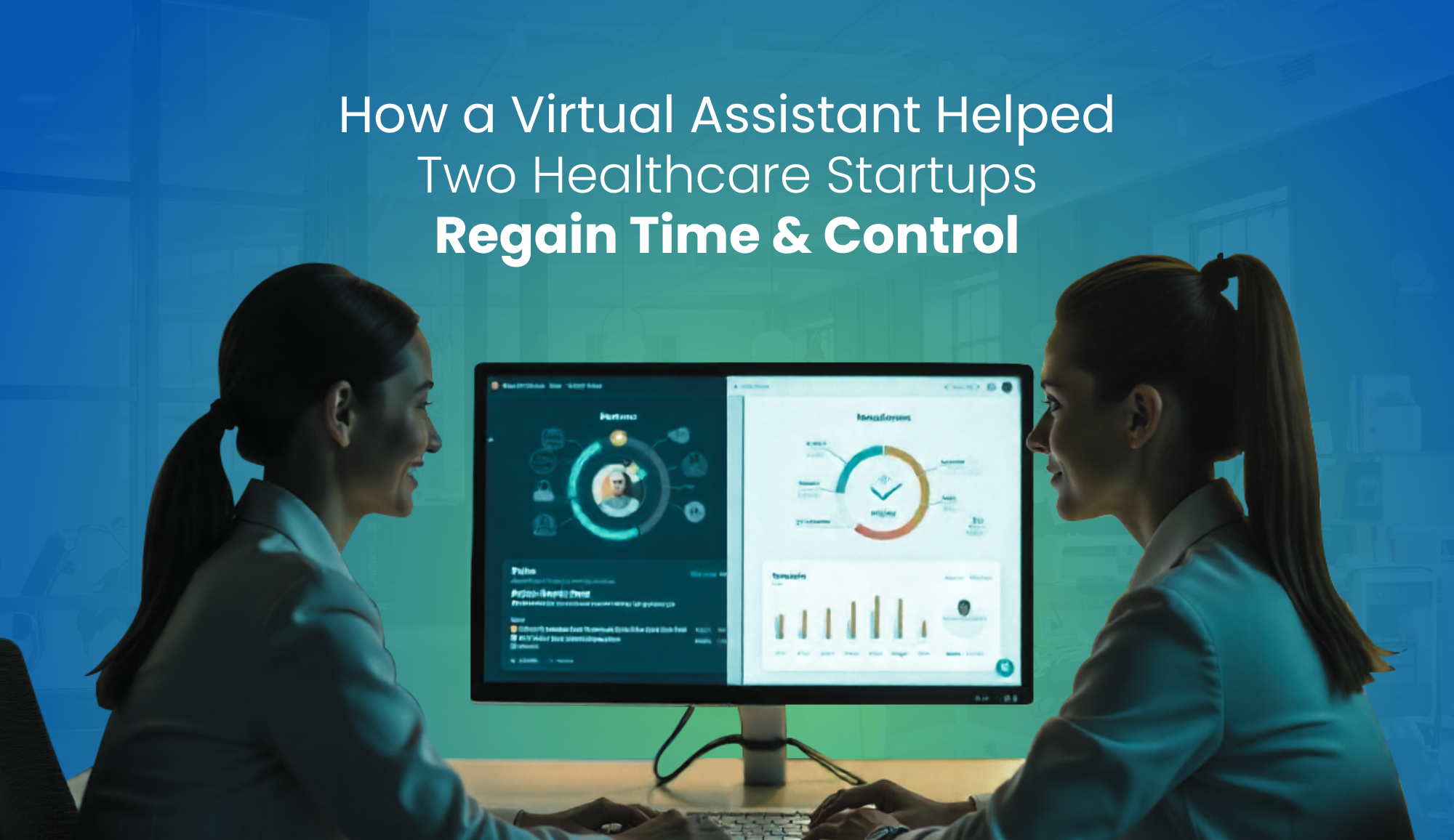
- Case Study 3 – One VA Powers Two Fast-Growing Startups: Dr. Rikin Mehta, an ambitious healthcare entrepreneur, was running two startups simultaneously – one developing therapies and another a licensing platform. He was stretched impossibly thin. Enter Kate, a Wishup virtual assistant, who effectively became the operational backbone for both companies. She managed a high volume of investor and client communications with ease, ensuring timely follow-ups and organized scheduling for Dr. Mehta. On one front she handled inbox and calendar management, and on the other she took on lead generation and hiring support. Thanks to Kate’s behind-the-scenes orchestration, “internal chaos gave way to clarity” and crucial opportunities were no longer slipping through cracks. The impact was so pronounced that Dr. Mehta’s companies nominated her for a client choice award, acknowledging that her dedication and attention to detail significantly improved operational efficiency. This story illustrates that a top-notch virtual assistant can wear multiple hats and truly become a force-multiplier for busy healthcare leaders, even across diverse projects.
These case studies share a common theme: delegating the right tasks to a well-matched, highly trained virtual assistant can lead to measurable improvements – be it financial (faster billing, more revenue collected), operational (better organized schedules and documents), or personal (time and stress relief for the provider). The key was that each professional identified what they needed (billing help, admin coordination, etc.), and partnered with a service that could deliver a VA with the exact skillset to tackle those pain points.
If you’ve had a poor VA experience in the past, these examples also highlight what might have been missing: perhaps the prior assistant wasn’t properly vetted, or didn’t have the specific expertise needed. Or maybe there wasn’t enough support from the provider to integrate the VA. When those gaps are addressed, the outcomes can be vastly different.
So how do you ensure your story will be a success story too? This leads us to the final consideration: choosing the right hiring partner and process to set yourself up for a win.
10. Choose a Trustworthy Partner (and Avoid Common Pitfalls)
By now, you know what to do before hiring a medical VA – assess needs, check skills, ensure compliance, etc.
The final piece of the puzzle is executing the hire with the right support structure. If you’re going the DIY route, be extra mindful of the pitfalls we discussed (unclear expectations, no training plan, not checking references, etc.).
However, many busy healthcare professionals opt to use a specialized service to hire their first medical virtual assistant.
Why?
Because a reputable VA partner can address the common pain points and provide built-in solutions:
| Common Concern or Hiring Pitfall | Solution with the Right VA Partner (Wishup) |
|---|---|
|
“How do I know the VA will be skilled and trustworthy?” Quality and reliability Risk of unqualified hires, inconsistent delivery, or flaky freelancers. |
Rigorous vetting: We use a 6-step pre-vetting process where only the top 0.1% make the cut. Candidates are screened for aptitude, communication, professionalism, and tool readiness before you ever meet them. We also support confidentiality by default through NDAs and controlled access practices so trust is not left to chance. |
|
“What if the first VA isn’t the right fit?” Finding the right fit Wasting time interviewing many candidates or dealing with a mismatch. |
Unlimited interviews and high first-match success: You can do unlimited same-day interviews at no cost until you are satisfied. Most healthcare clients select in the first round because matching is done to your workflow, specialty, and working hours. If you need a change, we move quickly without dragging the practice through weeks of re-hiring. |
|
“I had a VA before who quit suddenly and left me hanging.” Continuity and backup Fear of turnover or absenteeism disrupting operations. |
Replacement and continuity support: If you ever need a switch, we provide replacement within 24 hours and support knowledge transfer so workflows do not reset. Backup coverage is available for planned leave so your front desk, billing, and admin workflows keep moving. |
|
“Will a VA understand HIPAA and my specialty?” Compliance and specialization Need for healthcare-ready assistants who understand privacy and clinic workflows. |
Healthcare-trained, HIPAA-ready support: Our healthcare virtual assistants are HIPAA-trained and experienced across 50+ specialties, including dental, therapy, optometry, chiropractic, and psychiatry. You get a VA who can operate in healthcare workflows without needing weeks of “learn as you go.” |
|
“I don’t have time to train someone for months.” Training and onboarding Concern that onboarding will become another project on your plate. |
Pre-trained professionals plus structured management: Assistants complete mandatory training and are accustomed to SOP-driven execution. You also get a VA manager for weekly QA reviews and SOP adherence checks, plus a customer success manager for monthly reviews so quality stays consistent after week one. |
|
“How will I manage a VA remotely without micromanaging?” Management and accountability Worry about visibility, follow-through, and task ownership. |
Managed delivery and clear accountability: We support structured reporting and day-to-day visibility through a VA manager and a customer success manager. This keeps execution predictable, reduces back-and-forth, and prevents silent drift in quality over time. |
In short, partnering with a top-tier VA service like Wishup can eliminate many of the headaches traditionally associated with hiring. It’s like having an expert HR team that specializes in virtual healthcare staff, delivering you a perfect-fit assistant without the trial-and-error.
Why Choose Wishup Virtual Medical Assistants
- Experienced professionals: Every Wishup virtual assistant (VA) has a minimum of 3 years of professional experience, and we vet only the top 0.1% of talent through our 6-step hiring process.
- HIPAA-compliant: At Wishup, all medical virtual assistants are HIPAA-trained for your practice.
- Fast turnaround: Medical virtual assistants are trained to respond within 5 minutes, and your dedicated client success manager will respond within 60 minutes during working hours.
- 36-month average retention rate: Our medical virtual assistants have strong retention with Wishup and its clients.
- Direct interviews: You can interview VAs directly at no cost. Our talent has a 90%+ interview success rate.
- A dedicated team: You hire 3 people at the price of 1—a dedicated VA + VA manager + customer success manager.
- $1,000 offer: Hire a VA and get $500 worth of productivity tools free, plus $500 worth of bookkeeping services free.
- Money-back guarantee: Work with the virtual assistant with a 3-day money-back guarantee and a simple refund policy.
- Free VA management app: Clients get free access to our built-in workforce management app to track productivity.
- Trusted globally: Supporting 1,200+ founders in 2026, with 1,500+ high-ownership VAs managing 5,000+ tasks monthly.
- Tool expertise: VAs trained on 200+ AI tools and 70+ no-code tools through an intensive 8-week program.
- Zero risk: No cancellation fees, no VA interview fees, and no 30-day notice requirement before cancellation.
- Proven reliability: 98.8% client satisfaction—rated 4.8 on Trustpilot and 4.9 on Clutch.
- Fastest onboarding: Match with a pre-vetted virtual assistant in 60 minutes through a simple 3-step process.
Pricing
- Full-time Elite Virtual Medical Assistant: $1,999/month (160 hours/month)
- Part-time Elite Virtual Medical Assistant: $1,299/month (80 hours/month)
- Full-time Elite Automation Expert Virtual Medical Assistant: $2,999/month (160 hours/month)
- Part-time Elite Automation Expert Virtual Medical Assistant: $1,999/month (80 hours/month)
For example, if you run a therapy practice, Wishup can provide a VA experienced in mental health clinic operations. Need someone for an optometry clinic? They have optometry-specific virtual assistants ready. Running a dental office? You can get a trained dental VA who knows dental software and billing codes. This level of customization is hard to achieve when you hire on general platforms.
Ultimately, whether you choose to DIY with the tips from this guide or you opt for a concierge service like Wishup, you now have a roadmap to avoid common mistakes.
Before we conclude, let’s address some frequently asked questions that many healthcare professionals have when considering a medical virtual assistant. These might cover any remaining curiosities or concerns you have as you prepare to make this strategic hire.
Frequently Asked Questions (FAQ)
How many candidates will I get to interview before choosing?
We offer unlimited same-day interviews at no cost. You can meet multiple candidates quickly, compare communication style, and choose based on fit, not urgency.
Can you match for specific industries like healthcare, e-commerce, real estate, or SaaS?
Yes. We match by workflow type and domain context. For healthcare, we prioritize patient communication discipline, EHR familiarity, and HIPAA-safe operating habits.
Can I request a skills assessment or a test task before deciding?
Yes. We can run role-specific assessments and structured test tasks, such as inbox triage simulations, scheduling scenarios, or billing follow-up workflows.
Do you help me write the role scope and success criteria?
Yes. We help you convert “I need help” into 2 to 4 owned workflows, plus measurable outcomes for 30, 60, and 90 days.
What if I need to start with one assistant and scale to a team later?
Start with one workflow owner, then add assistants by workflow or by coverage needs. We can build a small pod for scheduling, billing support, and admin ops as you grow.
How do you transition from a discovery call to onboarding?
We confirm scope, align hours and tools, schedule interviews, then run a kickoff that includes access setup, SOP alignment, and first-week targets.
What does the first week look like?
Day 1: access, communication norms, scripts, and task triage rules.
Day 2 to 3: shadow workflows and start execution with approvals.
Day 4 to 5: independent handling of defined workflows, daily summaries, and KPI baseline setup.
Can I bring back a previous assistant if they’re available?
If the assistant is available and the scope aligns, yes. We treat it like a reactivation with a short ramp.
What happens if the first candidate isn’t a fit? How fast is a replacement?
We move quickly. If the fit is off, we rematch and replace within 24 hours, with no extra replacement fees.
Do you provide onboarding templates like SOPs, checklists, and an access matrix?
Yes. We provide templates and help you implement a minimum viable SOP set, plus an access matrix to control permissions.
Closing Thoughts
Hiring a medical virtual assistant can feel like a big step, but with the preparation and strategies outlined above, you can approach it with confidence.
Many healthcare professionals in the US have already made the leap and are enjoying a more balanced workload and improved clinic efficiency as a result.
By assessing your needs, setting clear expectations, and possibly leveraging a trusted partner like Wishup to find that perfect match, you’re setting up a solution that can save you time, money, and stress.
Imagine finally ending your day when clinic hours end, not hours later, because your VA handled the paperwork pile and your inbox is at zero.
That’s the freedom and focus a great medical virtual assistant can provide. So, check off the items on your hiring list, avoid the common pitfalls we discussed, and take the step towards a smarter way to manage your practice.
Your future self (and your staff and patients) will thank you!
Ready to find your own medical virtual assistant?
If you want the convenience of a fully vetted, HIPAA-compliant professional who can start right away, feel free to reach out to Wishup for a free consultation.
In one quick call, we’ll assess your needs and match you with an ideal VA within the same day.
With no obligation and a 7-day money-back guarantee, it’s a hassle-free way to experience the difference for yourself.
Don’t let burnout or backlogs hold your practice back. Embrace the support you deserve and focus on providing exceptional patient care.
