

Did you know that record auditing, AFE tracking, research, and vendor compliance documentation can drain hours from oilfield operators? These tasks are just as essential that requires the attention of a specialist. This is where an energy sector virtual assistant comes in.
Hire a pre-vetted virtual assistant for oilfield services from Wishup and start delegating tasks within 60 minutes.

By the end of this blog, you will have covered:
- What a virtual assistant for oilfield services companies does
- How the role differs from a general virtual assistant
- The difference between an AI assistant and a specialized energy sector virtual assistant
- The benefits of hiring one
- The tasks a virtual assistant takes off your plate
- The tools they need to know
- And lastly, what the hire could cost you in 2026
Who Is a Virtual Assistant for Oilfield Services Companies and What Their Role Covers?
A virtual assistant for an oilfield services company is a remotely based, trained professional. They manage the administrative, compliance, and reporting layer behind field operations.
The following are the scope of their responsibilities:
- Regulatory and compliance documentation
- Vendor and AFE administration
- Lease and land records management
- Reporting and stakeholder communication
Difference Between a General Virtual Assistant and a Virtual Assistant for Oilfield Services Companies
A general virtual assistant is responsible for inbox and calendar management mostly, and has no relevant work experience in the field-service context. However, a virtual assistant for oilfield services companies works in the industry and understands the tools used in it.
They are well-versed in the terminology used within the industry as well. Let’s discuss the difference between a general virtual assistant and a specialized virtual assistant in the oilfield industry.
| Dimension | General virtual assistant | Oilfield Services virtual assistant |
|---|---|---|
| Industry knowledge | None specific | AFE workflows, lease terms, regulatory filings |
| Tools | Google Workspace, basic CRM | Enverus, Quorum, P2 BOLO, WellDatabase, QuickBooks |
| Compliance handling | Not applicable | Permit tracking, environmental filings, safety documentation |
| Vendor management | Basic invoice entry | AFE reconciliation, purchase order tracking, vendor compliance docs |
| Onboarding time | 2 to 4 weeks | 60 minutes with Wishup |
But what about AI assistants? How does a specialised virtual assistant differ in this sector? Let’s find out.
AI Assistant vs. Specialized Energy Sector Virtual Assistant: Which One Should You Use?
This is a question that requires a thorough, fact-based answer. In oilfield operations, AI assistants are generally used to support:
- communication across channels,
- route information, and
- escalating issues to the appropriate teams.
However, the application of AI in the energy sector extends far beyond communication. It includes:
- Smarter forecasting for operational efficiency
- Demand response, predictive maintenance, and resource optimization
- Building governance frameworks for predictive analytics
But this raises an important question: Can an AI assistant deliver the same business value as a human virtual assistant who is AI-enabled?
This is where the difference lies. An AI-powered virtual assistant specializing in the energy industry can take the insights and outputs generated by AI agents and translate them into actionable business operations.
Instead of simply communicating information, the assistant can apply those insights to workflows, coordinate tasks, manage follow-ups, and support day-to-day decision-making.
However, an AI assistant primarily provides intelligence or automation, nothing more, nothing less. An AI-enabled energy virtual assistant combines that intelligence with human judgment, industry knowledge, and operational execution.
Apart from these, there are more benefits to hiring a virtual assistant for oilfield services companies.
What Are The Benefits of Hiring a Virtual Assistant for Oilfield Services Companies?
Hiring a virtual assistant for an oilfield services company delivers five measurable outcomes: recovered field-team time, lower admin cost, faster AFE turnaround, tighter regulatory compliance, and stronger lease record accuracy.
1. You Can Recover Time for Field and Ops Teams
You can recover time that you would have otherwise lost to admin-related tasks. A virtual assistant can easily take up the tasks of updating CRMs, scheduling, and reporting.
2. Get Lower Cost Than an In-House Hire
Do you know how much an in-house administrator could cost? It could be as high as $50,232 to $98,227, depending on the scope and level of the role. You can avoid it by hiring a virtual assistant at a fraction of that cost.
Wishup virtual assistant’s pricing starts at $1299, with no additional charges. Moreover, you get a trained, experienced virtual assistant in the industry itself who will be ready to tackle any hurdle, upon 60 minute onboarding.
3. Build Stronger Regulatory Compliance
We all know how permit renewals, environmental filings, and safety documentation come with hard deadlines. One miss can put a halt to the whole operation as well as land you penalties. A virtual assistant can help you maintain the compliance calendar per well site or facility to prevent fines.

Let’s discuss at length what tasks the energy virtual assistant can take for your business.
Tasks a Virtual Assistant for Oilfield Services Companies Can Do
An oilfield services virtual assistant can do the following tasks for your business across two categories:
1. In “General Administrative and Growth Support”, the energy virtual assistant can:
- Help you maintain and update the company's CRM database. It is done with client, vendor, and lease contact records.
- Help you produce researched data for acquisition or outreach targeting
- Create and manage direct mail programs
- Handle scheduling and calendar management across field teams and office staff
- Run lead generation and email marketing campaigns to develop business.
- Coordinate between projects and prepare status reports for stakeholders
- Manage invoicing and basic bookkeeping tasks
- Conduct research and maintain documentation across regulatory and operational needs
- Handle vendor communication and keep shared files organized
2. In “Industry-Specific Tasks”, the energy sector virtual assistant can:
- Track and reconcile AFE. The virtual assistant can log authorization, monitor approval status, and flag excessive spend.
- Track lease expiration dates, payment schedules, and division order updates so that they can alert the team.
- File regulatory and permit documentation. They can prepare and submit the filings through state and federal portals.
- Maintain a compliance calendar per well site or facility.
- Gather daily or weekly production data from field reports into standardized formats for management and investor updates.
- Utilise AI agents to streamline tasks and build automation workflows for efficient operation.
What tools do they use to get these tasks accomplished? Let’s find out.
Tools an Energy Sector Virtual Assistant Uses Inside Your Business Operation
An energy sector virtual assistant works across five tool categories. The following table discusses those.
| Task Category | Key Platforms | What the Virtual Assistant Uses It For |
|---|---|---|
| Land and lease management | Enverus, P2 BOLO, WellDatabase | Lease tracking, royalty records, division order updates |
| AFE and vendor administration | Quorum, P2 Energy Solutions, QuickBooks | AFE reconciliation, invoice tracking, budget monitoring |
| Compliance documentation | State/federal e-filing portals, Google Drive | Permit submissions, environmental filings, safety records |
| CRM and outreach | HubSpot, Salesforce, Mailchimp | Contact management, direct mail programs, lead nurturing |
| Reporting and documentation | Google Sheets, Google Docs, Microsoft Excel | Production reporting, investor updates, SOP creation |
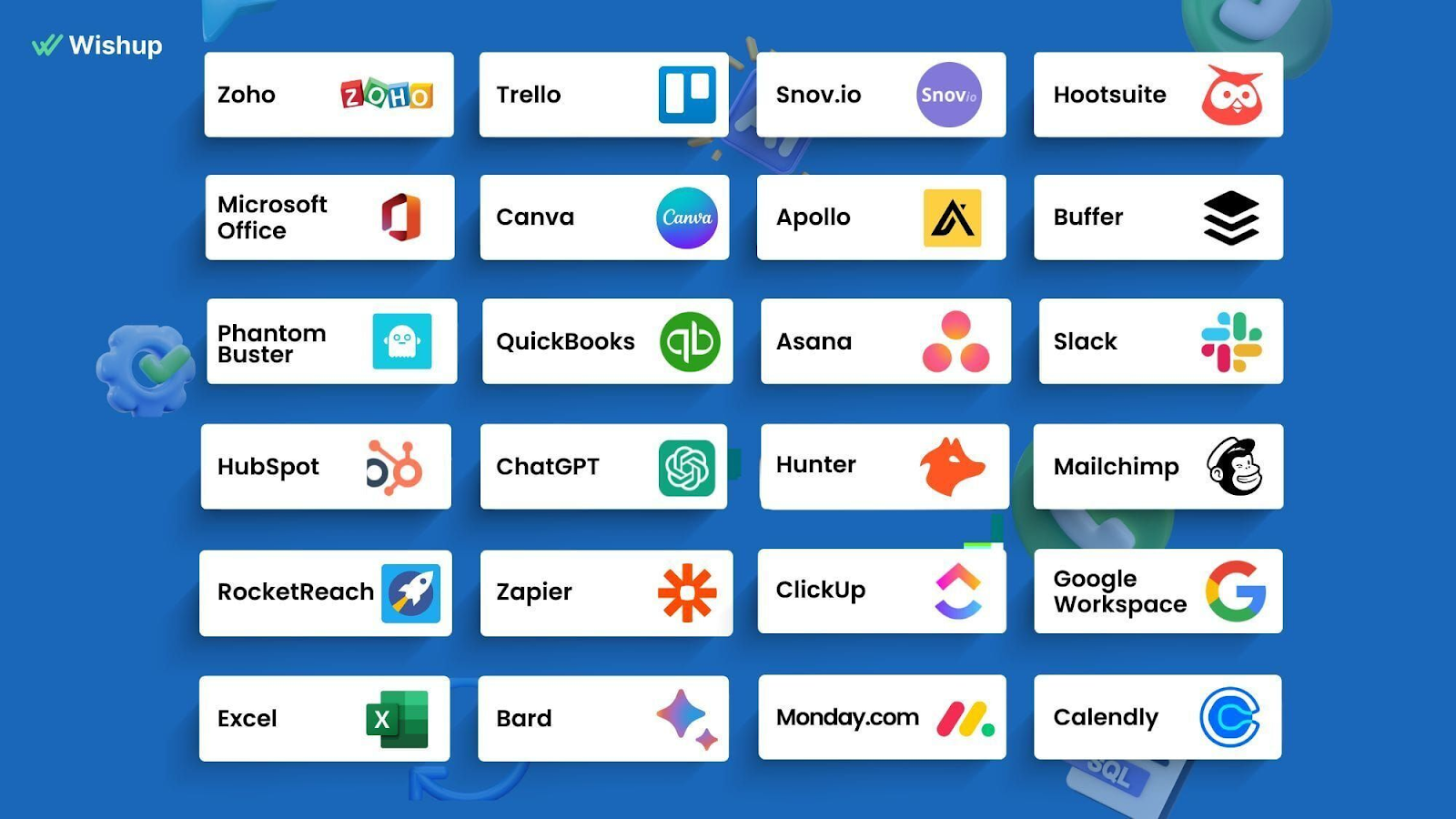
Why wait for a virtual assistant to learn the tools your business uses? Wishup virtual assistants are trained across 120+ tools, including the compliance and vendor management platforms energy operators run on. The training, assessment, and monitoring are done by the manager provided by Wishup itself so that no task yields an undesired result.
Hire a Virtual Assistant for Oilfield Services Companies from Wishup
Wishup provides pre-vetted virtual assistants trained specifically for oilfield services, energy, and renewable operations. Every virtual assistant clears an 8-week training program and a 0.1% acceptance rate before placement, and arrives ready to work inside your lease, compliance, and vendor systems from day one.
What's included with every engagement:
- 60-minute onboarding, which is the fastest in the virtual assistant industry.
- Dedicated account manager who monitors task quality and handles escalations
- Instant replacement guarantee where you get a trained backup who steps in same-day if your virtual assistant is unavailable
- 90-day supervised deployment where all the task outputs are reviewed before going live to vendors, landowners, or regulators
- Lastly, an NDA is included so your lease terms, royalty data, and financial records stay protected
You can browse Wishup’s pre-vetted virtual assistants and published plans and interview before you commit. Get matched with a trained virtual assistant in under 60 minutes.
What Makes a Wishup Virtual Assistant for Renewable Energy Different From Others
A Wishup renewable energy virtual assistant is trained specifically on the workflows the sector runs on, including interconnection paperwork, incentive and rebate tracking, and O&M reporting. It is not generic admin support relabeled for the industry. Moreover, our VAs:
- Are AI-enabled and trained in AI tools that can help decode the data your integrated AI agents produce.
- Have the highest retention rate, 98.8%, with most virtual assistants being retained for more than 3 years in their respective fields.
- Go through one of the rigorous 15-module training sessions. We do it to ensure that you get the creme-de-la-creme in the industry.
- Have the knowledge to automate processes that can save you time and money.
With the goal of saving you time and resources in operational and administrative roles, our virtual assistants have automated many processes. Here’s the proof.
Automation Workflows an Oilfield Services VA Can Build
A VA can connect your CRM and email systems to remove repetitive onboarding and client communication work.
Zoho CRM + Outlook Client Onboarding
Oilfield Services · Sales & Operations
New contact added to Zoho CRM
A new user is added to the Contacts module in Zoho CRM.
Paid User is selected
The Paid User option is selected for the contact in Zoho CRM.
Zoho workflow fires automatically
The selection triggers the configured workflow inside Zoho CRM, eliminating the need for a manual follow-up action.
Welcome email is sent through Outlook
The client receives the appropriate welcome or onboarding email without the operations team having to send it manually.
CRM record is updated
Contact details and communication history are updated in the CRM, keeping the onboarding record current.
Where a freelance marketplace virtual assistant needs weeks to build context and learn the ropes to get accustomed, Wishup's virtual assistant is deployed already trained on the systems and terminology the role demands.
What Does Oilfield Services Automation Cost With a Virtual Assistant?
Automating oilfield back-office work through a virtual assistant costs from $1999 a month. It is far less than buying and configuring separate automation software plus the staff to run it.
Instead of a per-seat automation tool nobody operates, the virtual assistant builds the workflows inside the systems you already run, Zoho CRM, Outlook, QuickBooks, and your lease and AFE platforms and handles the exceptions the automation flags.
In one live oilfield services deployment, a virtual-assistant-built CRM-to-email onboarding automation saved 15 hours a month, roughly $900, on top of the admin hours the virtual assistant already covers.
Automate your process by hiring an automation expert from Wishup at $1999.
How Much Does a Virtual Assistant for Oilfield Services Companies Cost?
A virtual assistant for oilfield services companies costs $1,299 to $2,999 per month through a managed service like Wishup, or $8 to $18 per hour through a freelance marketplace.
But that has a catch. The tasks may not be supervised; you may have to check the tasks, and on top of that, you may not get a replacement. However, Wishup includes vetting, training, and replacement coverage; freelance rates do not.
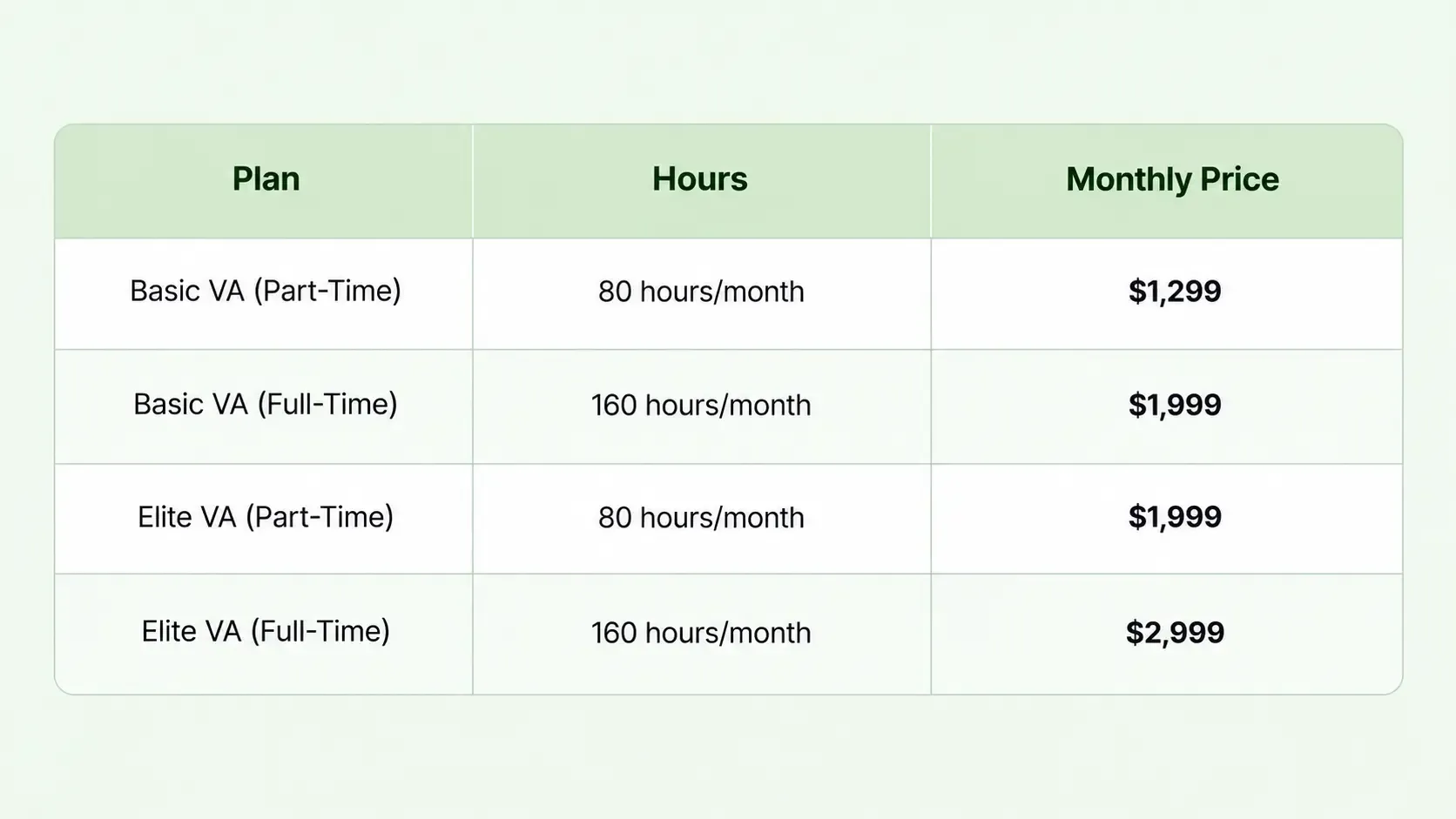
A full-time Wishup oilfield services virtual assistant costs $23,988 per year which can save you up to a saving of roughly $26,000 annually, with onboarding in 60 minutes instead of a multi-week hiring cycle.
Wrapping Up
Oilfield and energy operators don't lose money at the well site; they lose it in the administrative and operational bottleneck. An energy sector virtual assistant closes that gap without adding headcount or overhead.

FAQs on Oilfield Services Virtual Assistant
How much does an energy sector virtual assistant cost?
Managed services like Wishup range from $1,299 to $2,999 per month depending on hours and tier. Freelance marketplaces charge $8 to $18 per hour but leave vetting, training, and continuity risk with you.
Can a virtual assistant handle AFE tracking and vendor budget reconciliation?
Yes. A trained virtual assistant logs AFE requests, monitors approval status, and flags spend that exceeds the approved budget before it's coded to the account.
Is a virtual assistant for renewable energy different from an oilfield services virtual assistant?
The core admin skill set overlaps. A renewable energy virtual assistant leans further into interconnection paperwork, incentive and rebate tracking, and O&M reporting specific to solar, wind, or battery storage assets.
How is an energy sector virtual assistant different from a general virtual assistant?
A general virtual assistant manages inbox and calendar work with no industry context. An energy sector virtual assistant works inside AFE and lease tracking systems, understands regulatory filing deadlines, and knows the difference between a routine permit renewal and one tied to an active project timeline.
How quickly can I onboard a Wishup energy virtual assistant?
60 minutes from consultation to first shift. A 90-day supervised deployment period follows, during which task outputs are reviewed before going live.
